

Saving children’s lives through nutrition services
In the Rohingya Refugee camps, nutrition support helps malnourished children survive and thrive.

- বাংলা
- English
Three-year-old Sharif is getting a check-up at a UNICEF/WFP Integrated Nutrition Facility (INF) in the Rohingya refugee camps. Drinking contaminated water and unsanitary conditions resulted in a life-threatening illness. He was unconscious when he was hospitalised and spent two days in the emergency room. When the child’s life was no longer in danger, he was referred to the INF for assessment because he had lost a lot of weight.
When children like Sharif arrive at the INFs, they are weighed, measured, documented and put on a treatment plan based on their nutritional condition. Rohingya children aged under 5 years routinely visit INFs and participate in growth monitoring sessions to measure weight, and height, and receive counselling, which is an essential element of primary health care. It also serves as a diagnostic tool for early identification of a child with growth faltering.
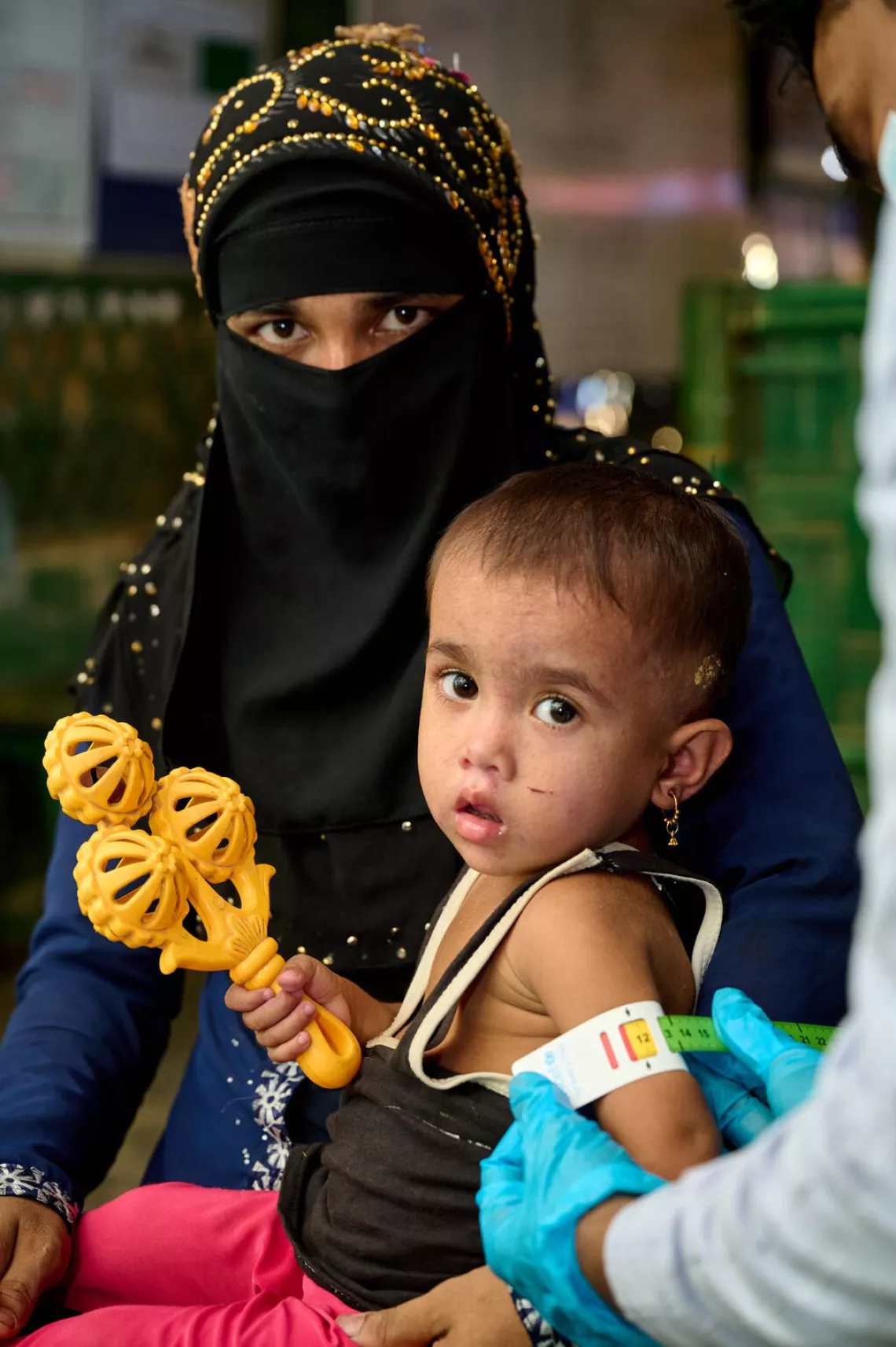
A simple colored band (MUAC tape) is used to identify children suffering from acute malnutrition (SAM or MAM). Green means ‘healthy’, orange means ‘warning’ or moderate- and red means ‘extreme danger’ or severe acute malnutrition.
In 2021, UNICEF supported facilities in the Rohingya refugee camps treated 6,923 children with SAM under the age of five, reaching 107 per cent of the annual target. Among them, 869 Rohingya children aged 6 to 59 months with no medical complications were admitted for SAM outpatient treatment at UNICEF-supported integrated nutrition facilities supported generously by Ks Relief.
SAM, also known as severe wasting, is the most visible and lethal type of malnutrition. It is caused by a lack of nutritious food and repeated bouts of diseases such as diarrhoea, which compromise a child’s immunity.

Baby Nur Kayas, 23 months, was admitted to the Integrated Nutrition Facility, following acute diarrhea. From her first screening, nutrition workers were able to diagnose her with severe acute malnutrition and work with her mother Sajida to come up with a nutrition plan which included regular follow up and counselling to get her healthy and happy again.
UNICEF provides treatment to Rohingya refugee children with severe acute malnutrition like Nur Kayas. This treatment programme is supported by King Salman Humanitarian Aid and Relief Center (KS Relief) and includes screening, deworming, regular follow ups, counselling and the provision of ready to use therapeutic food (RUFT). RUFT is packed with calories and nutrients that children need to recover.
In December 2021, one-third of all Rohingya children under five years were found stunted, or too short for their age. This high level of malnutrition can be caused by factors such as inappropriate infant and young child feeding (IYCF) practices, limited access to diversified and nutrient-rich foods as well as poor water and sanitation conditions in the Rohingya camps.

To improve the IYCF related knowledge and practices among Rohingya mothers, UNICEF conducts nutrition counselling and promotes breastfeeding and optimal complementary feeding practices. One-on-one counseling is provided in the nutrition facilities by a counsellor, and at home by trained community-based nutrition volunteers.
Sajida, 23, was one of the mothers who benefitted from these preventive services. “Nur Kayas is my first child. I didn’t know anything about breastfeeding and how beneficial it is for the baby. I learned that it should continue up to two years of age. My daughter is almost two, and I’ve introduced other types of food to her”.

With generous contributions from KS Relief, UNICEF and partners were able to provide IYCF counselling to 14,000 pregnant and lactating mothers. In addition to feeding recommendations, they received parenting information on nurturing care. Just as healthy food is required for a child’s physical growth, stimulating play and cuddling are needed for his or her brain development.


