Water at last in remote villages of Afghanistan
Climate-resilient water systems transforming daily life for children and families in Ghor and Nangarhar provinces

Until recently, women in Jonobe Badgah village would start their walk at dusk, following narrow footpaths through the rocky mountains of Ghor Province, Afghanistan, where the search for water shaped the rhythm of daily life.
Among them was Rohima, accompanied by her seven-year-old daughter, Farnoosh. Their journey could take hours. They carried back heavy containers filled with water, which was sometimes dirty and unsafe to use for drinking and cooking but still necessary. By the time they got home, much of the morning was gone.
"It was difficult and tiring to bring water home," Rohima recalled. "The water was not clean, and I was always worried that our children would become sick."
For years, life in this remote village revolved around finding water. Children learned early that their first task of the day was not school or play, but helping their families get enough water for drinking, cooking, and washing.
For girls like Farnoosh, this routine often defined their childhood.
“I missed school and playing with my friends,” she said softly. For families already struggling to find water, recurring droughts and floods made life even harder. Water sources became less reliable, children's health suffered, and school attendance was often disrupted. The impacts of climate change made life increasingly difficult for vulnerable families already living on the margins.
Then, slowly, life in Jonobe Badgah started to change.
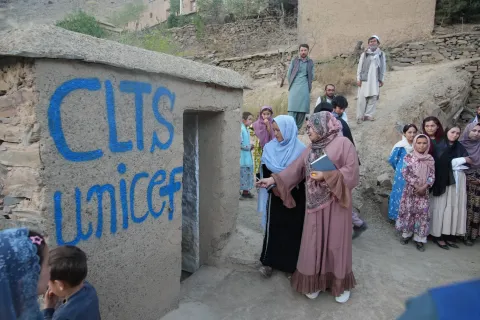
With generous support from the Government of the Republic of Korea, UNICEF established climate-resilient water systems in several villages across Ghor and Nangarhar provinces, to bring safe water closer to homes, schools and communities.
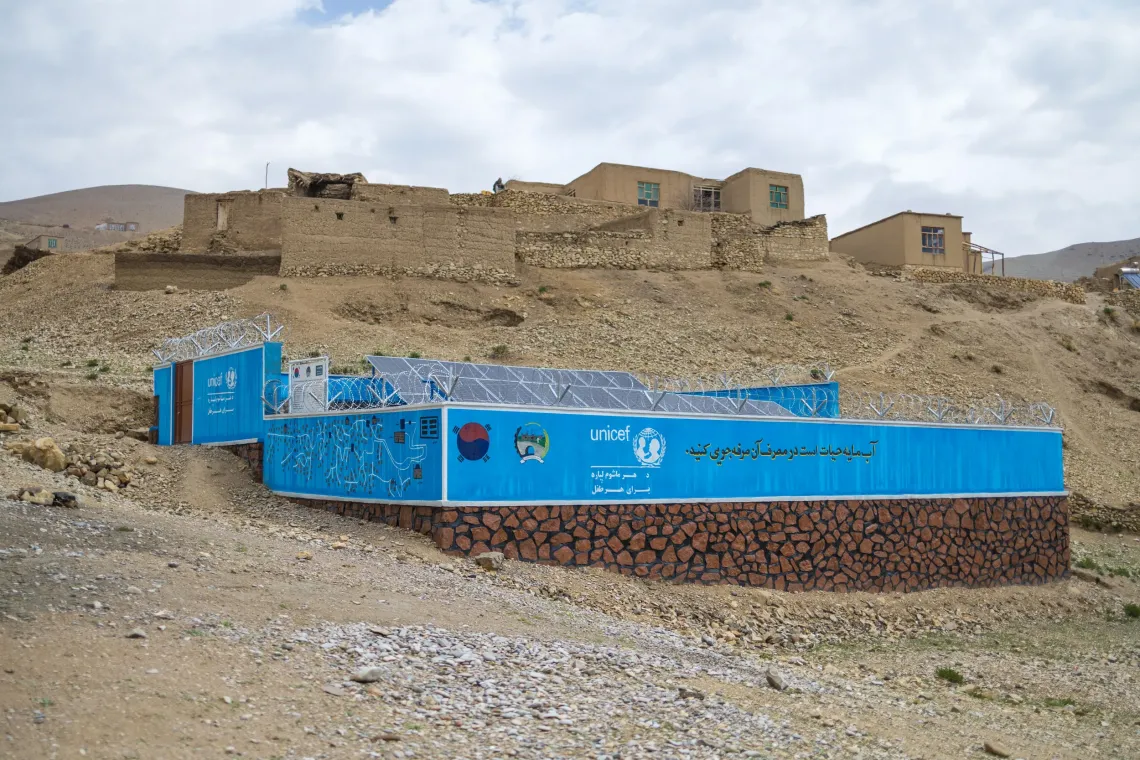
Today, a solar-powered borehole pumps water into an 80,000-litre storage tank that sits above the Jonobe Badgah village. Water then flows through pipes to nearby communities, bringing safe water home to over 3,150 people.
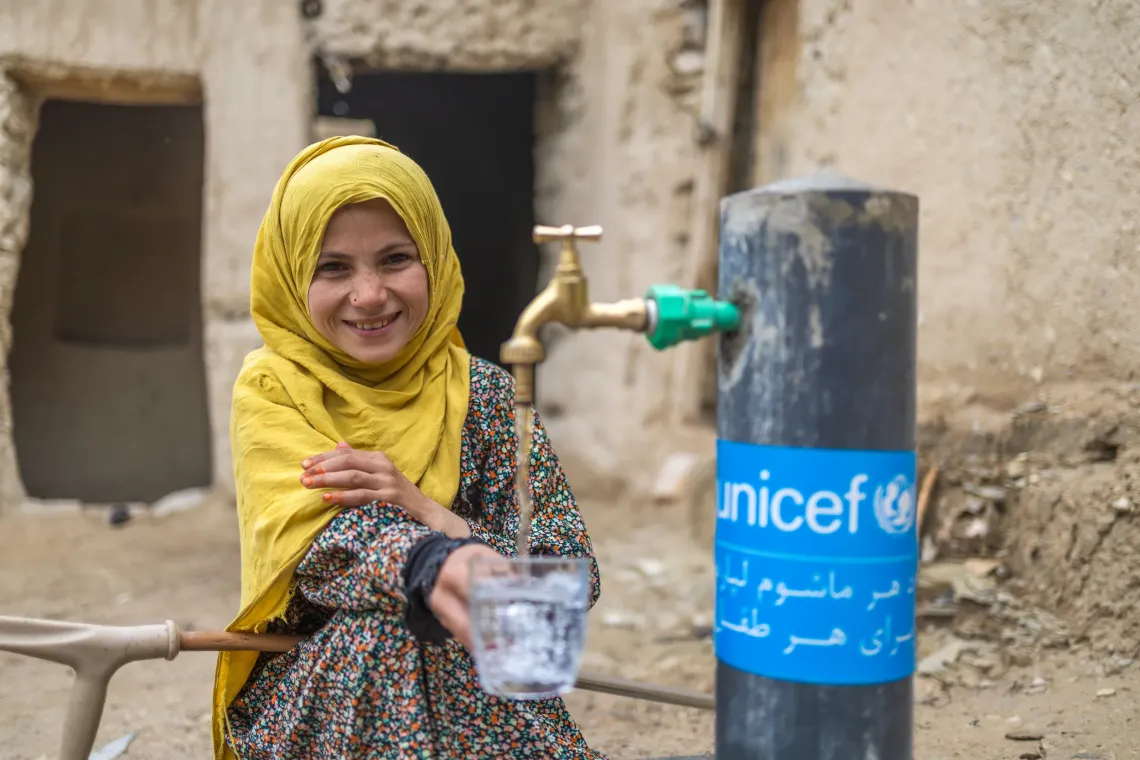
“I never imagined water could be this close to our home," Rohima said with a smile. "Now my children have time to go to school, study and have time to play."
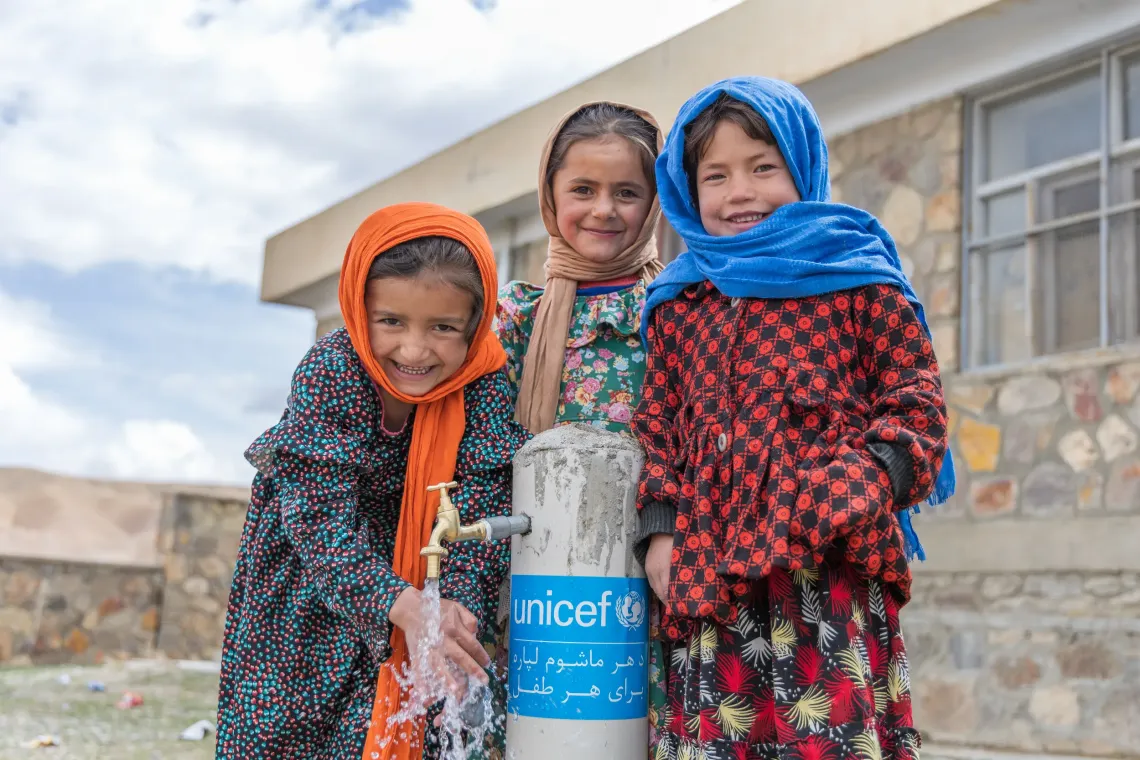
The benefits extend well beyond households.
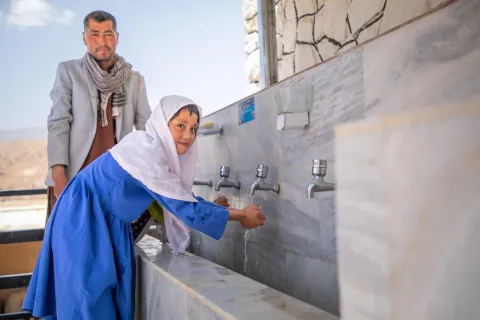
At Badgah school, where more than 400 boys and girls study, safe water is now available after the community requested an extension to the school. This change has led to better attendance and improved hygiene. Handwashing is a daily routine, and children are focused on learning instead of worrying about water challenges and domestic chores.
“Before water was piped to the school, children faced many challenges,” said Mullah Gul Ahmad, the headteacher. “Illness was common, and hygiene standards were low. But now attendance has improved, with fewer disruptions caused by water shortages.”
A few miles away, beyond the mountain ridges surrounding Jonobe Badgah, the village of Tagab Ghalmin has experienced a similar transformation.
Here, a solar-powered borehole pumps water into three elevated storage tanks that together hold 60,000 litres providing water for more than 2,200 people in nearby communities.
Twelve-year-old Humaira remembers growing up with little water, and school often seemed out of reach. She would travel with relatives, sometimes by donkey, to collect water from far away. Now, the water is close to her home.
“Water has changed my life,” said Humaira. “I have time for school, study, and to play with my friends.”
Today, more than 39,585 people across 19 villages in Ghor and Nangarhar provinces have better access to safe water.
What was once a daily struggle is now part of everyday life, flowing through homes, schools, and communities. For children like Humaira and Farnoosh, change means more than convenience. It means healthier childhoods, more time to learn, grow and thrive.
UNICEF continues to expand access to safe water and essential services across Afghanistan through investments in climate-resilient systems and community-led management, helping ensure that these gains are locally owned and endure long after the project is complete.