Protecting Farhana’s childhood
In Afghanistan, many young girls are at risk of early marriage
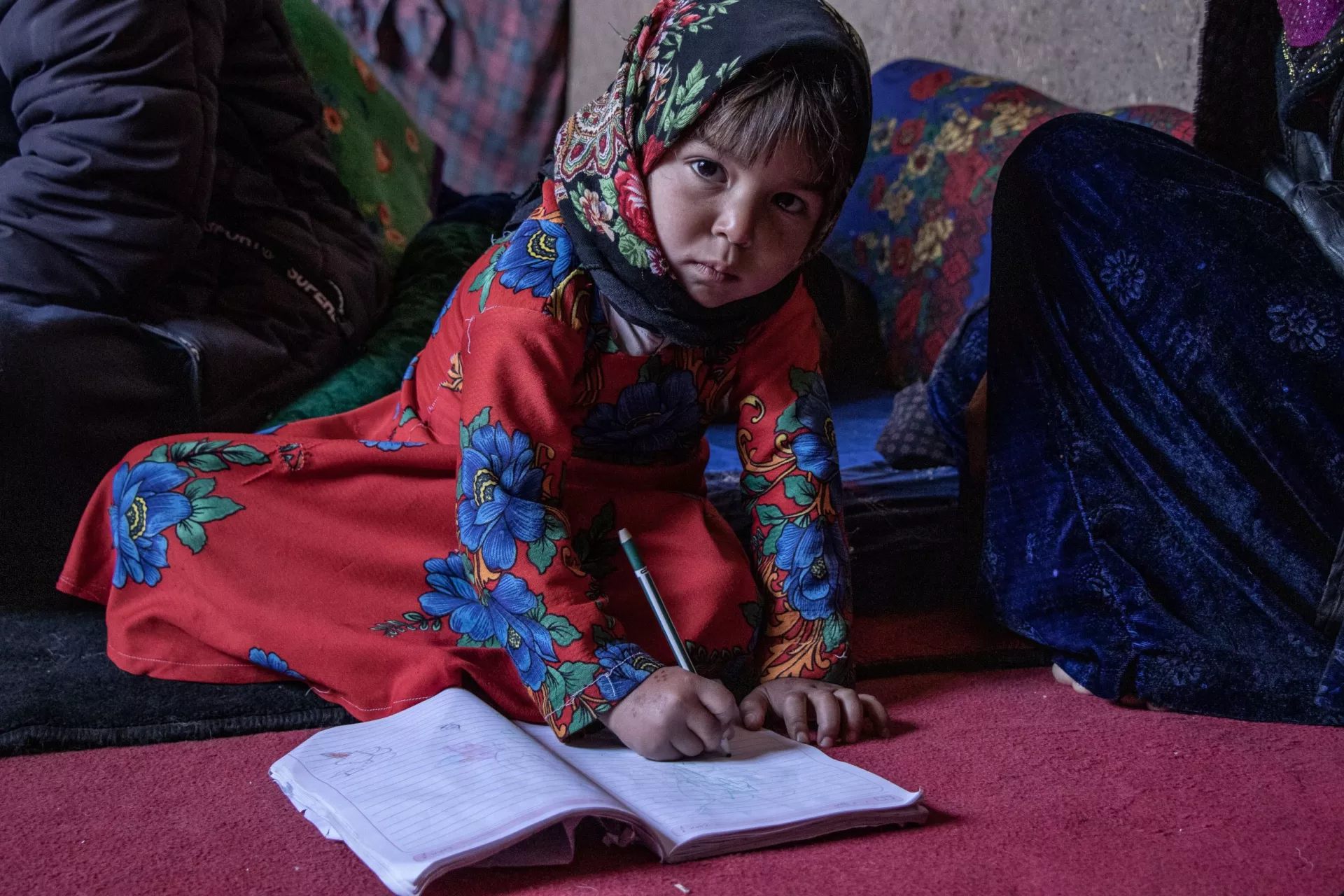
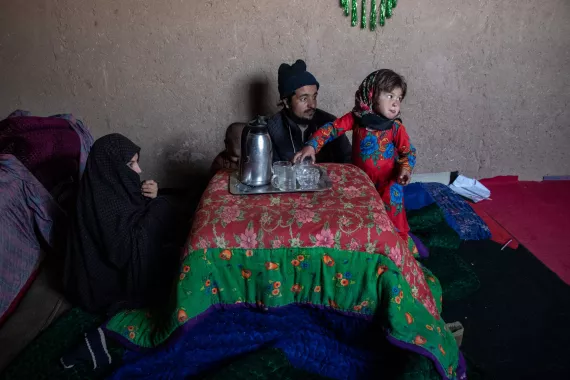
HERAT, AFGHANISTAN - “Do you also want some tea, Farhana?” asks Nasrin as she pours a cup for herself and her husband Karim. Little Farhana, 5, nods with a smile on her face. She puts her toys aside – a few bottle caps and an old pencil – and snuggles beside her father around an old and worn out Sandali (a traditional low table with a blanket over it).
January is the peak winter month in Afghanistan and temperatures drop as low as -15 degrees Celsius at night. The family’s one-room mud-walled house is cold and dark. They are rationing the little firewood they have left to warm the room at night.
For now, hot water with a few leaves of green tea is all the family can afford to keep themselves warm.
A tough year gets tougher
Karim used to run his family’s livestock business in his hometown in Ghor Province in northwestern Afghanistan. However, an ambitious goal to expand the business failed and left the family with crushing debts totaling 115,000 Afghans (approx. US$1,143). Unable to repay the loan and fearing their lives, the family fled their hometown in the dark of the night.
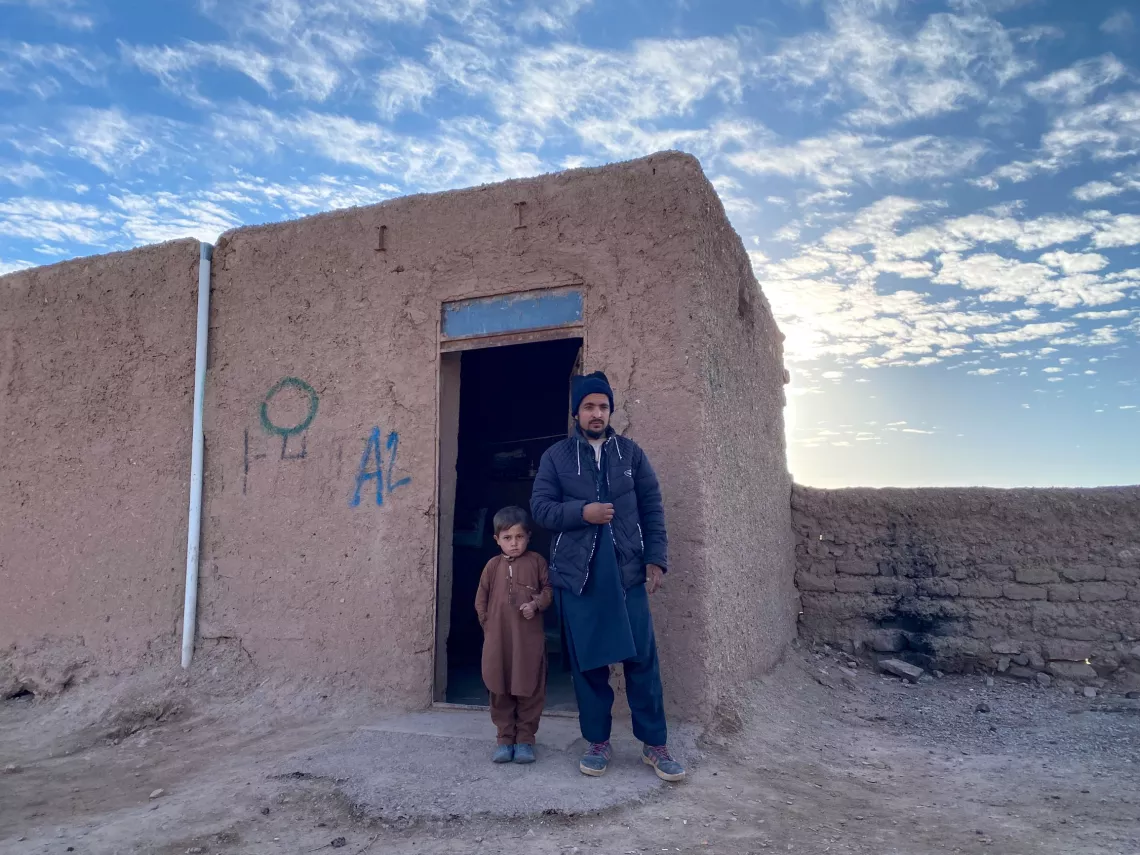
For a year now, the family of four have been living in a rented single-room mud-walled house in an Internally Displaced Persons (IDP) Camp on the outskirts of Herat city.
This year’s winter has been exceptionally tough for Karim and Nasrin, exacerbated by the country’s deteriorating humanitarian situation, rising violence, joblessness, and food insecurities. Karim and Nasrin worked odd jobs around Herat to keep the family sheltered and fed. The camp is home to nearly 40,000 families. Jobs were becoming increasingly harder to find.
Then one day, the lender showed up at Karim’s doorstep in Herat. Karim was in no position to repay any of the debt. Taking advantage, the lender forced Karim into agreeing to give Farhana as a child bride to repay the debt. Karim has six months to pay his debt or give away Farhana.
Nasrin was away at work and never knew about this arrangement.
“I felt a piece of my heart was ripped away that day,” says Karim. I had no choice but to agree or risk putting everyone in my family in harm’s way, or even killed.”
Karim desperately tried to find a solution. He even tried crossing into Iran illegally to find work there but failed. To make matters worse, he suffered a ruptured appendix and was left bedridden for months. The medical expenses piled on more debt. For months, Nasrin’s part-time job cleaning grapes at a resin factory barely kept the family fed.
The lender came knocking again, this time to take Farhana away forever. There was no eluding the inevitable this time. A violent altercation ensued, and this is when Nasrin found out about the arrangement with Farhana. Her heart sank.
“She is only five years old! My daughter cannot survive without me,” cried Nasrin.
Rescuing Farhana’s childhood
With no alternative in sight, Nasrin ran to her neighbours for help. Her cry for help attracted a crowd, including the camp’s Community Protection Committee members.
UNICEF helped establish these community-led Child Protection Committees with elders and local leaders as members. The committee meets regularly to discuss matters related to children wellbeing in the camps and to mitigate incidents of child rights violations such as child marriages, violence against children and girl education. UNICEF staff attend the meeting every month and work closely with the committee to operate children-friendly spaces and learning centres; and to deliver child protection, health and nutrition services to all children living inside the camp. Given these are community-led, the committee now operates very organically, helping to sustain the momentum around children wellbeing and to protect UNICEF investments for years to come.
The Community Protection Committee was successful in convincing the lender to not take Farhana away for now and reassured that Karim will pay off his debt soon.
The lender left, much to Nasrin’s and Karim’s relief. But he may return to take Farhana away if the debt is not paid.
Keeping Farhana protected
Karim is yet to recover fully. Nasrin remains the sole bread earner. But the money she earns can barely feed the family once, let alone nutritious food such as milk for her children.
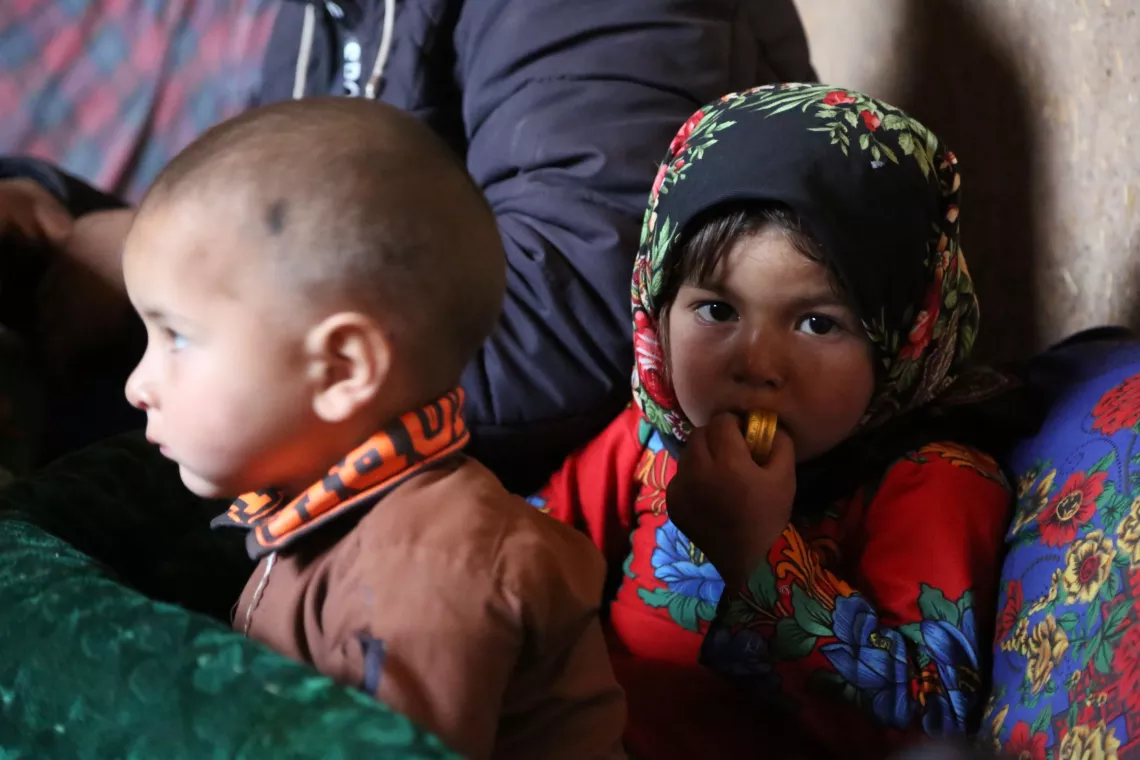
Since the incident, UNICEF and its partner, War Child UK, meet Karim and Nasrin frequently. Farhana and her 2-year-old brother have been spending their afternoons at the UNICEF-supported child-friendly space while Karim’s eldest son is attending classes at the UNICEF-run community-based education centre. The family is also receiving hygiene kits, winter kits including warm clothes and blankets for children and are regularly referred for free health services.
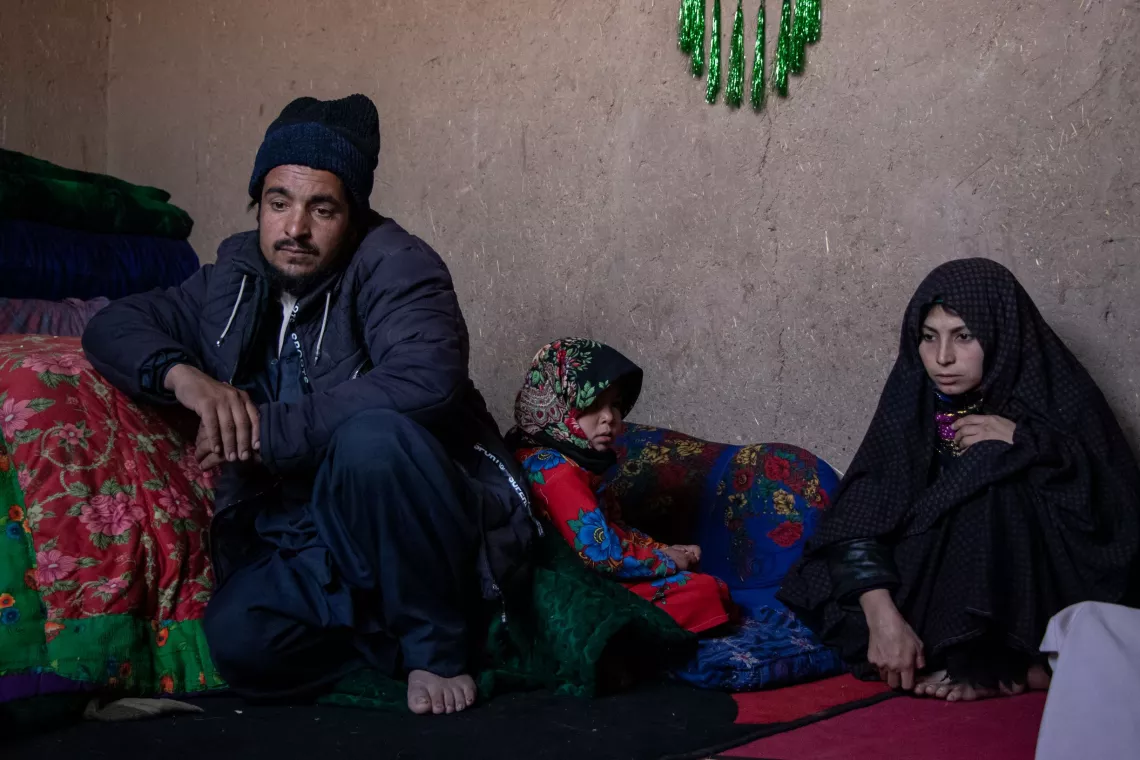
The fear of the lender returning keeps Karim and Nasrin awake at night. Karim hopes to get back on his feet soon and try again to find work in Iran. He will not let anyone destroy the future of his daughter.
“I want a better future for my children,” says Karim. I want my little Farhana to stay in school. Maybe one day she will become a doctor.”
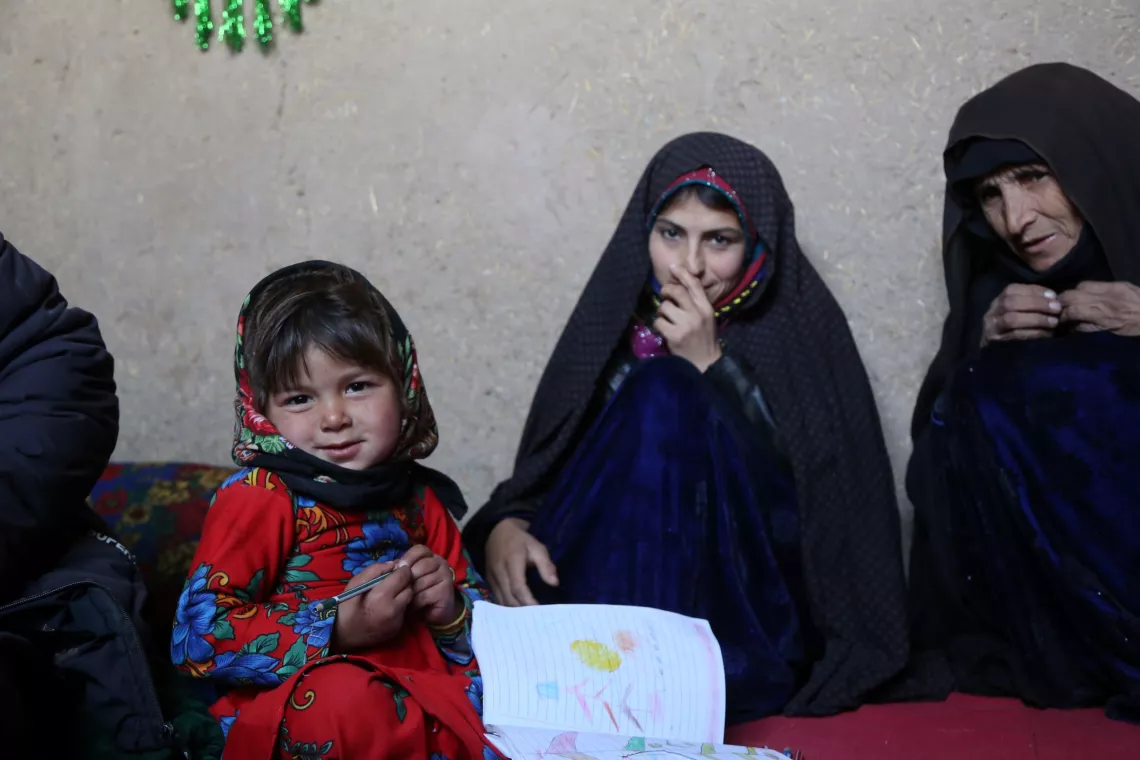
Nasrin is trying to save money to buy a sewing machine and open a tailoring business. She was married at an early age and knows what it would mean for her little Farhana.
“I want my daughter to become a teacher, not a child bride like me,” she added.
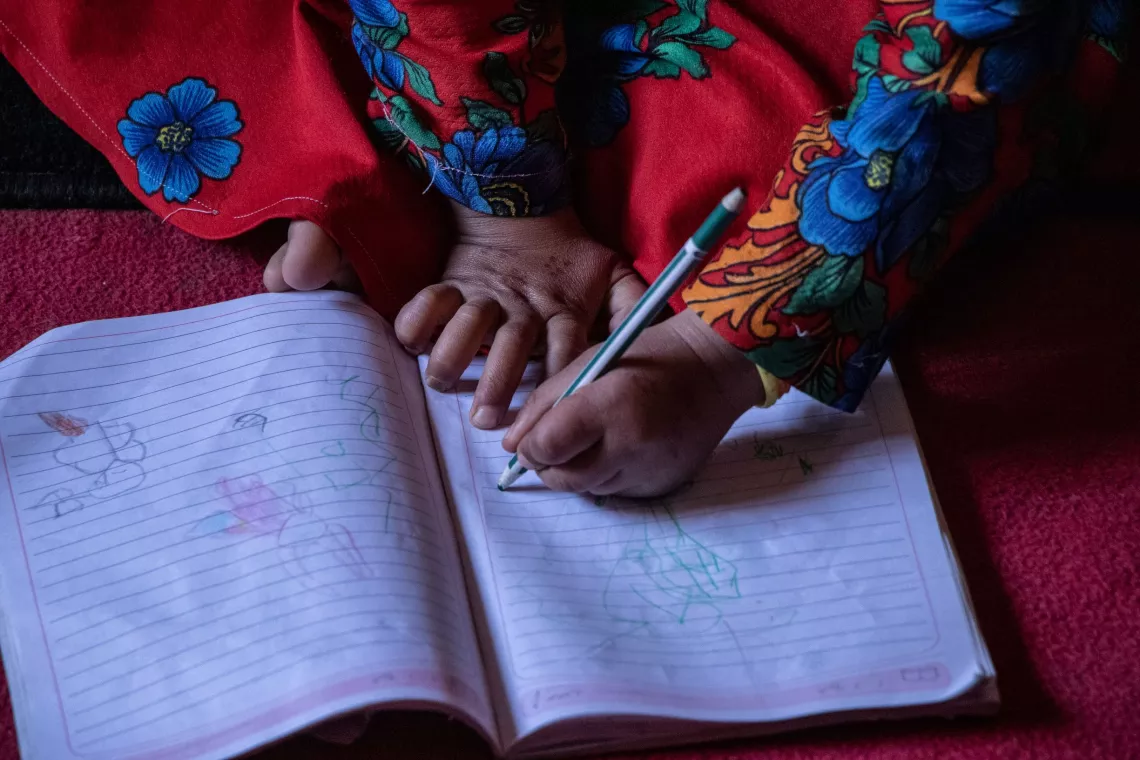
For now, Farhana’s childhood is protected.
Farhana’s story is one that many poor and desperate families in Afghanistan are also unfortunately experiencing. The deepening humanitarian crisis, food insecurity, joblessness and the freezing winter is impacting everyone.
In January 2022 alone, UNICEF successfully prevented 2 children from early child marriage.
UNICEF is working closely with parents and religious leaders to raise communities’ awareness of the risks for girls if they are married early. Additional support in the form of cash assistance, hygiene and winter kit distributions, and operating child-friendly spaces and learning centres are helping offset the risk of hunger, child labour and child marriage among the most vulnerable families.
However, many cases of child marriages are never reported. As the humanitarian crisis deepens, the situation will only get more distressing, and many Farhanas will forever lose their childhood. Ending child marriage is the only way to break the vicious cycle of poverty and enable girls and women to reach their full potential.
*Names changed for anonymity