Hugs, happiness and healing
How UNICEF is addressing children’s struggles with mental health through child-friendly spaces and psychosocial support
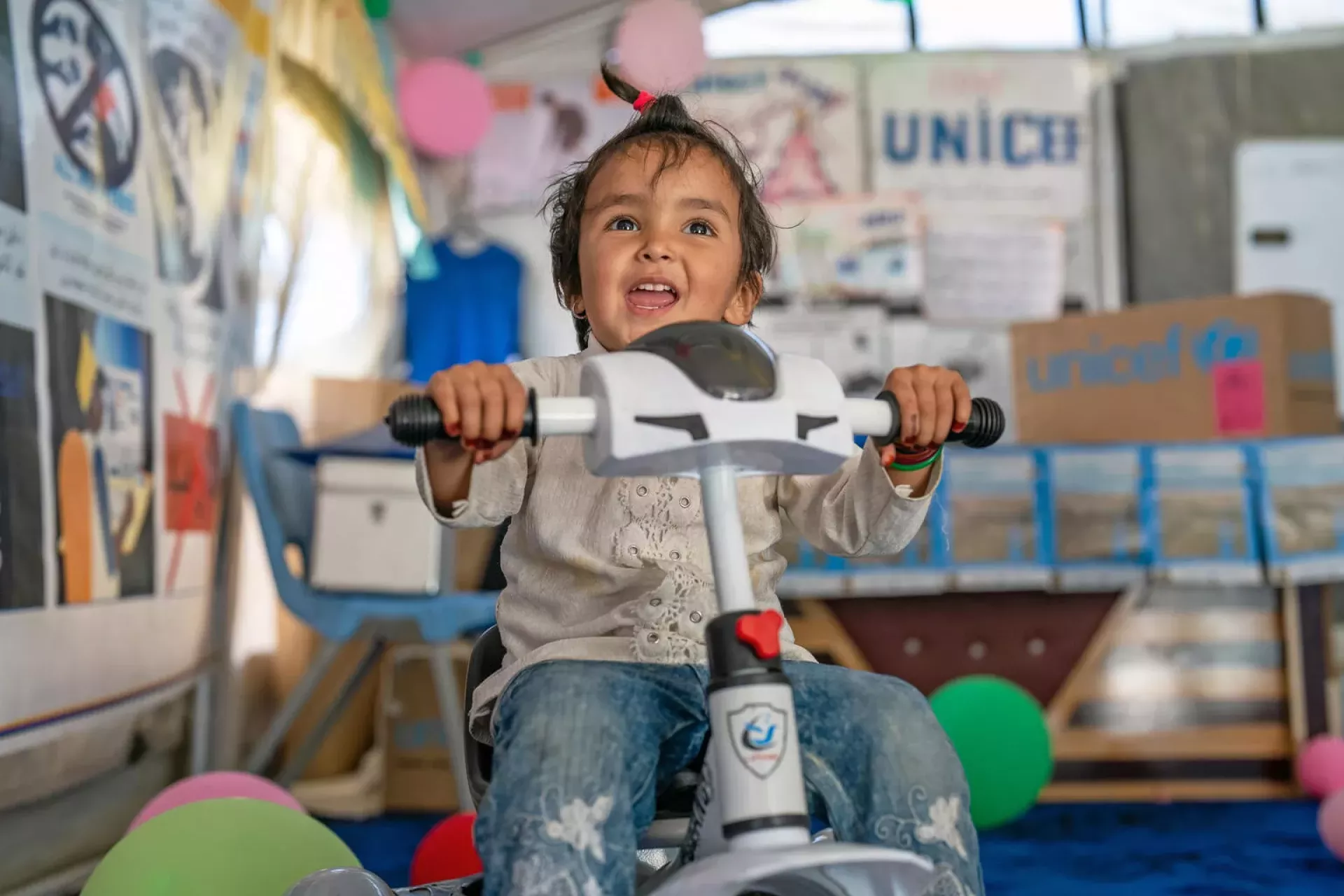
3-year-old Kubra pedals around happily on a bicycle, circling the child-friendly space she attends each day.
Kubra and her father just crossed the border, returning to Afghanistan from Pakistan. Kubra’s father, Gulbuddin, was worried about Kubra’s mental health after the difficult journey.
“It was a long and tiring trip,” he recounts. “My children were not happy. But now, seeing them laughing and playing here gives me so much joy.”
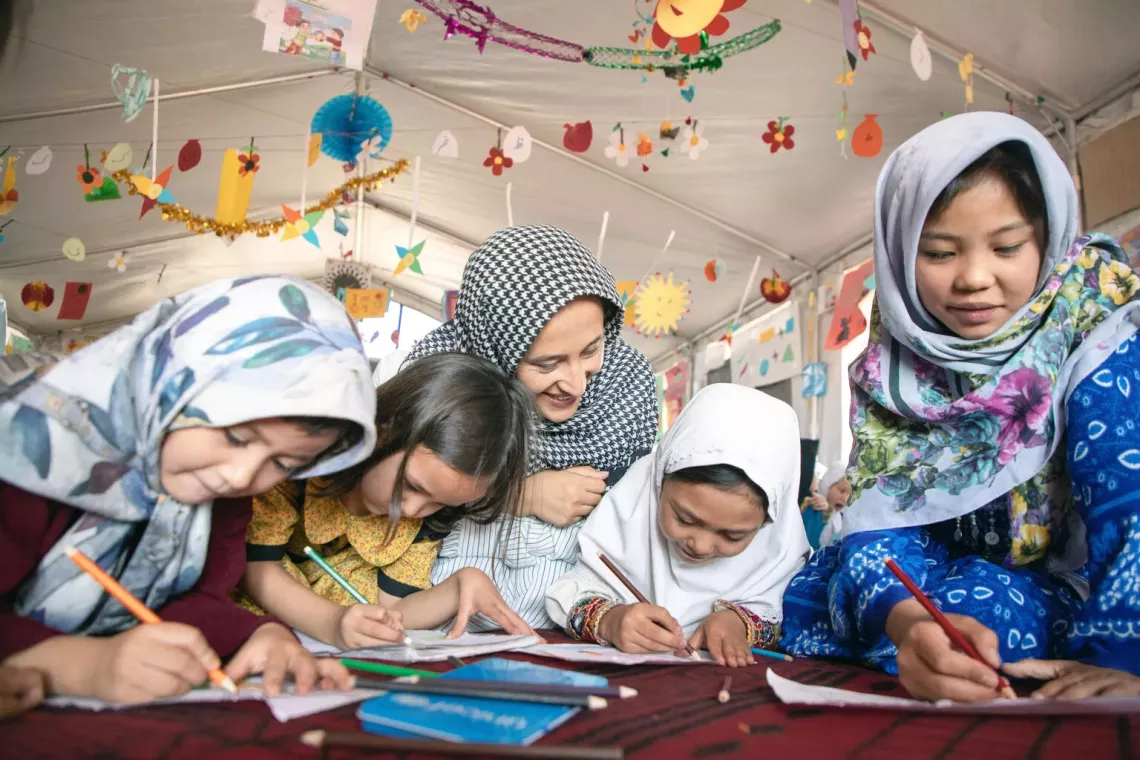
Child-friendly spaces like Kubra’s provide a nurturing, secure and supportive environment for children. The spaces are meticulously designed to children’s diverse needs, offering psychosocial support, recreational activities and educational opportunities. Through structured play, creative outlets, and interactions with trained facilitators, children and their caregivers are supported to navigate their emotions, develop coping strategies, and gain a sense of normalcy into their lives.
In the long term, child-friendly spaces improve mental health and well-being, enhance social and emotional development, and increase children’s access to other protection services.
Mental health challenges among Afghan children
Children in Afghanistan face severe mental health concerns. More than 24 per cent of children between ages 5 and 17 experience anxiety – a rate 10 times higher than the global average. Nearly 15 per cent experience depression.
The legacy of conflict, family migration and displacement, recurrent natural disasters, high levels of poverty, and risks of harm from explosive ordnances all exacerbate these mental health challenges. In times of crisis, children face heightened levels of stress, trauma and disruption to their routines.
Compounding these challenges is the persistently restrictive measures on girls’ education, limiting their hope for employment and a better future, as well as their access to basic services like healthcare and mental health support. This is only compounded by social stigma surrounding mental health and seeking assistance.
How UNICEF provides mental health support
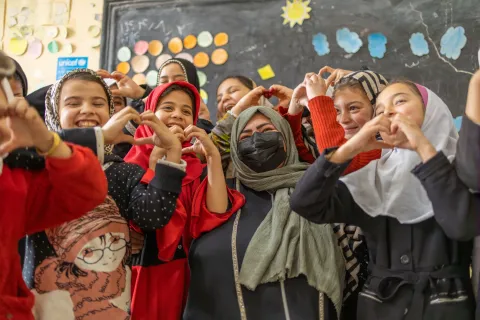
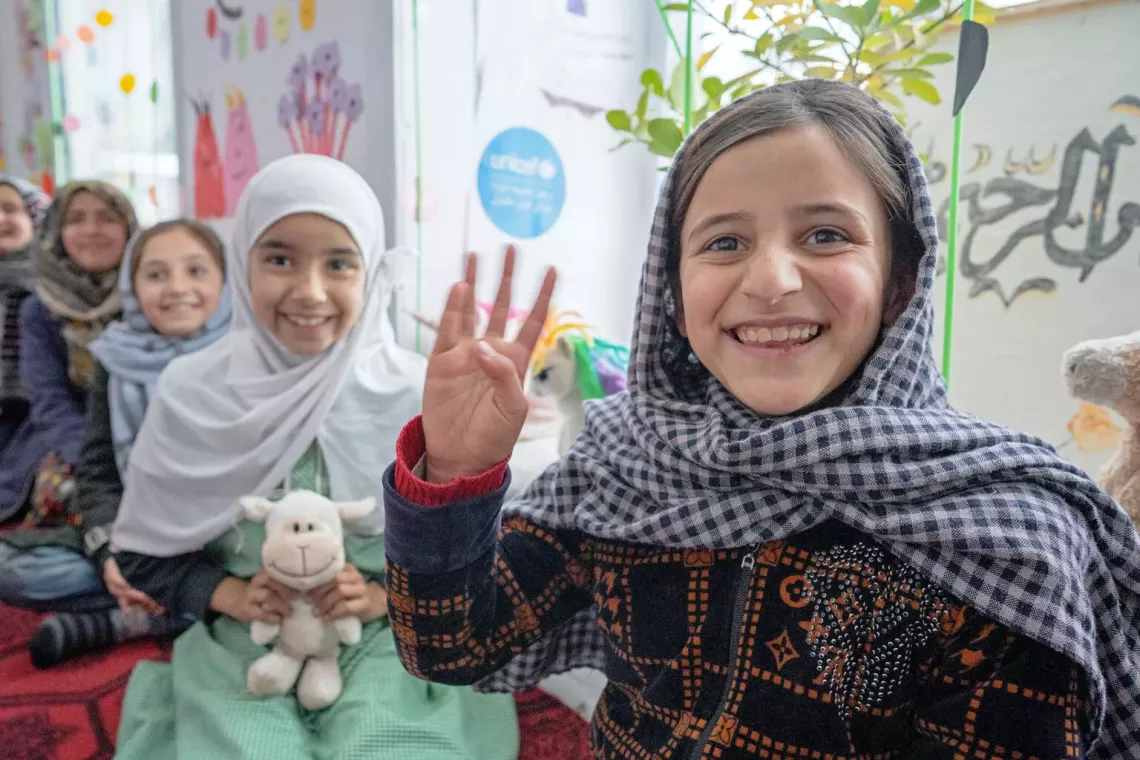
8-year-old Kawsar smiles and raises her hand, eager to participate in the group learning activity. She attends a child-friendly space with 25 other children. Established by UNICEF, the space is now run by the community, supporting children from impoverished families in her village.
“I want to be an artist when I’m older,” she says. “There are so many toys here. I always make sure to sit next to the window where the most toys are.”
Throughout Afghanistan, UNICEF operates over 750 active child-friendly spaces, with separate spaces for girls and boys. Each space is bright, welcoming and comfortable, filled with colourful decorations and plenty of activities to help children feel at home.
In such environments, when children feel safe and connected to others, they are more likely to open up and discuss about their challenges, discuss what troubles them, what they worry about, and speak openly to a social worker or counsellor. In the absence of a formal child protection system in Afghanistan, child-friendly spaces are one of the best ways to reach children who need mental health support – especially girls.
Last year, UNICEF provided mental health and psychosocial support to nearly 4 million children and caregivers across all 34 provinces of Afghanistan, largely through child friendly spaces.
Training counsellors and mental health providers
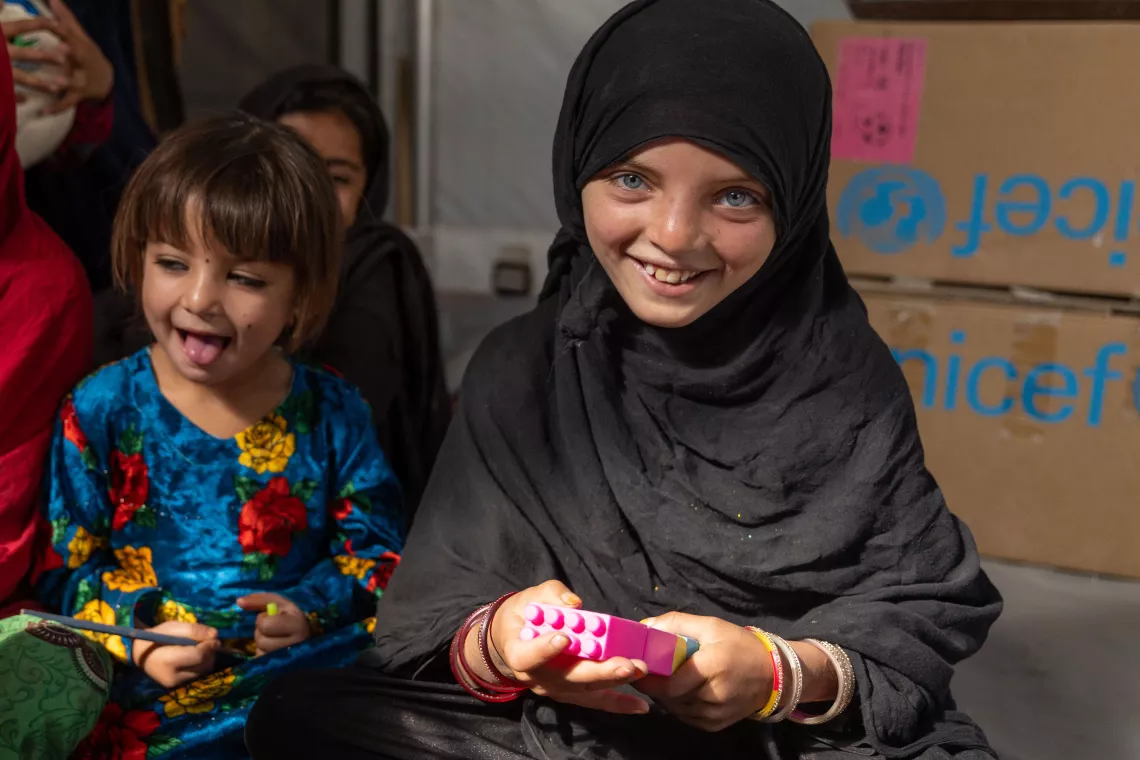
Seven-year-old Naghma lost her father in Afghanistan’s major earthquake in 2022. Since then, she has found comfort in her village’s new child-friendly space, speaking every day with her social worker who facilitates the child-friendly space.
"I have learned so many things here. I come every day with my brother, and we are happy."
Unfortunately, counsellors, mental health providers, psychologists and social workers are in short supply in Afghanistan.
Child-friendly spaces provide an environment for addressing mental health challenges, but UNICEF also helps train mental health providers to better address children’s psychosocial needs. UNICEF also builds awareness for caregivers and community members, who in turn spread important messages on destigmatizing mental health and how to seek support.
In 2023, UNICEF trained nearly 3,000 social workers in Afghanistan, nearly half of whom were women. Capacity building sessions focused on how to effectively support children’s mental health, especially immediately following an acute crisis.
Emotional resilience and psychosocial well-being
By establishing more child-friendly spaces, training more mental healthcare providers, and expanding discussions on mental health into schools and healthcare facilities, UNICEF aims to reach 3.6 million more children and caregivers with mental health and psychosocial support in 2024.
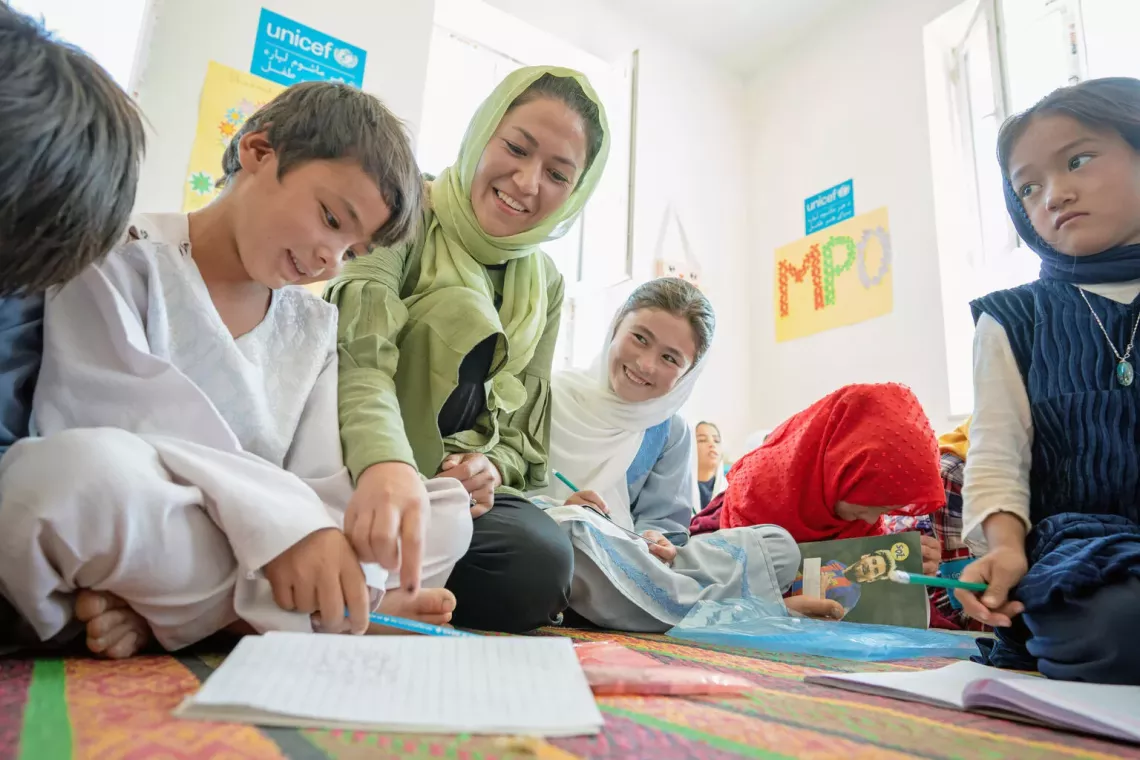
Rubaba, facilitator of a child-friendly space in central Afghanistan, knows how important this support is for children. Her child-friendly space provides children a place to play and practice crafts in the absence of parks and playgrounds, and she gives mental health support to boys and girls who want to talk to her.
“As you can see from my classroom, I do extra to make the classroom a happy place for the children,” she says. “I feel so proud of my job.”