Healthcare “anytime, anywhere”
In villages nestled between mountains, Zahra serves children in Afghanistan as a dedicated Community Health Worker, volunteering time and expertise to bring healthcare to their doorstep

DAIKUNDI, AFGHANISTAN – “Saving a mother and a child is like saving a village to me.”
Zahra is a 30-year-old Community Health Worker in remote Daikundi province, where thousands of children and mothers struggle to access primary healthcare.
In Daikundi, villages are nestled between steep mountains. Without reliable health facilities in their villages, women must often travel long distances to seek healthcare in the provincial capital, Nili. A visit to the doctor means a long journey along unpaved roads, usually on foot, and often carrying their smallest children.
Community Health Workers like Zahra bridge this gap, bringing first line health care to women and children in their homes.
The families Zahra works with often complain of poor water quality, diarrhoea, respiratory issues and anaemia. Zahra says that many people lack awareness of how to take care of their children, such as treating diarrhoea or feeding them healthy diets.
But Daikundi’s challenges cannot stop Zahra.

“I go house-to-house to guide and heal,” says Zahra, “because I understand the burdens that mothers have, and thar the journey can be difficult for them.”
Today, Zahra walks through the sunshine, on her way to visit 28-year-old Rubaba, and her two-year-old daughter, Razia.
Zahra will complete her fifth screening session with Razia today, following a severe case of diarrhoea a month ago.
“When I first brought Razia to Zahra for treatment, my daughter had lost weight due to diarrhoea and lack of appetite. She could not eat, and I became so sad. The only thing I could do was to reduce her fever with a damp cloth.”
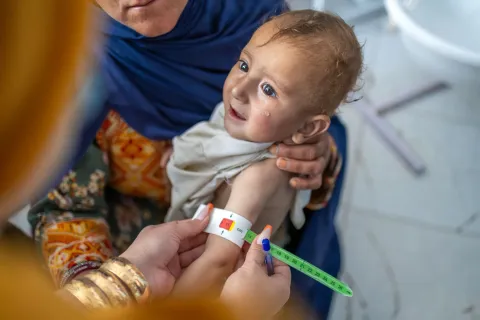
Zahra says, “I first visited Rubaba during my regular rounds in her village. I weighed baby Razia, measured her arm circumference, and discovered her diarrhoea had caused malnutrition.”
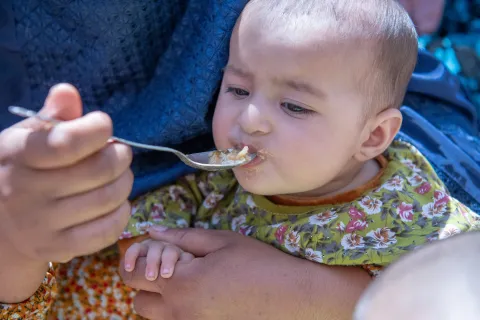
“I provided oral rehydration solution for Razia and gave Rubaba nutritional advice on feeding her daughter healthy foods to help her recover," Zahra says.

Rubaba kisses her daughter and says, “Razia is currently healthy and has gained weight.”
Zahra showed me how to treat diarrhoea by giving rehydration powder and preparing nutritious food.
As Zahra climbs the hill and says goodbye to Rubaba for today, she says, "Saving a child is saving a generation. Every child I treat today could become a doctor, a teacher, or an engineer in the future, and help other people. Each time I imagine their potential, I am more motivated to help."

Everyone knows Zahra in the village. Even when she is not scheduled to visit families they know where to find her. Zahra’s home doubles as the local health post, where mothers can seek healthcare advice, treatment for basic injuries and illnesses, referral for specialist treatment, and receive medicines and multivitamins.
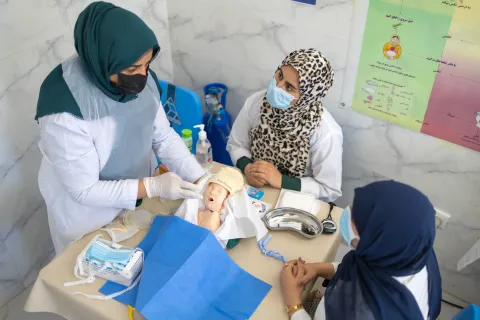
Zahra is one of 30,000 Community Health Workers supported by UNICEF across Afghanistan. Through partnership with the World Bank, UNICEF provides the medical supplies and educational materials for the health posts and supports regular training sessions for Community Health Workers enhance their skills, and better serve their communities.
“Through UNICEF’s training courses, I learned about preventing the spread of diarrhoea in children, and how to screen for malnutrition and provide guidance to mothers on hygiene,” Zahra says. “Every day, I take my box of, first aid equipment, educational posters and essential medicines, and I pass on my knowledge to the mothers in the villages.”

As a mother of a young child, Rubaba is grateful for Zahra’s expertise.
“All the mothers in this village learned many things from Zahra; not just me. We are happy with her because she is hardworking and volunteers her time for our community.”
Zahra says, “I provide health services for people anytime, anywhere. Every time I heal a child, I see joy on their mother’s face.”