From doubt to devotion
A religious leader’s journey to save his community children
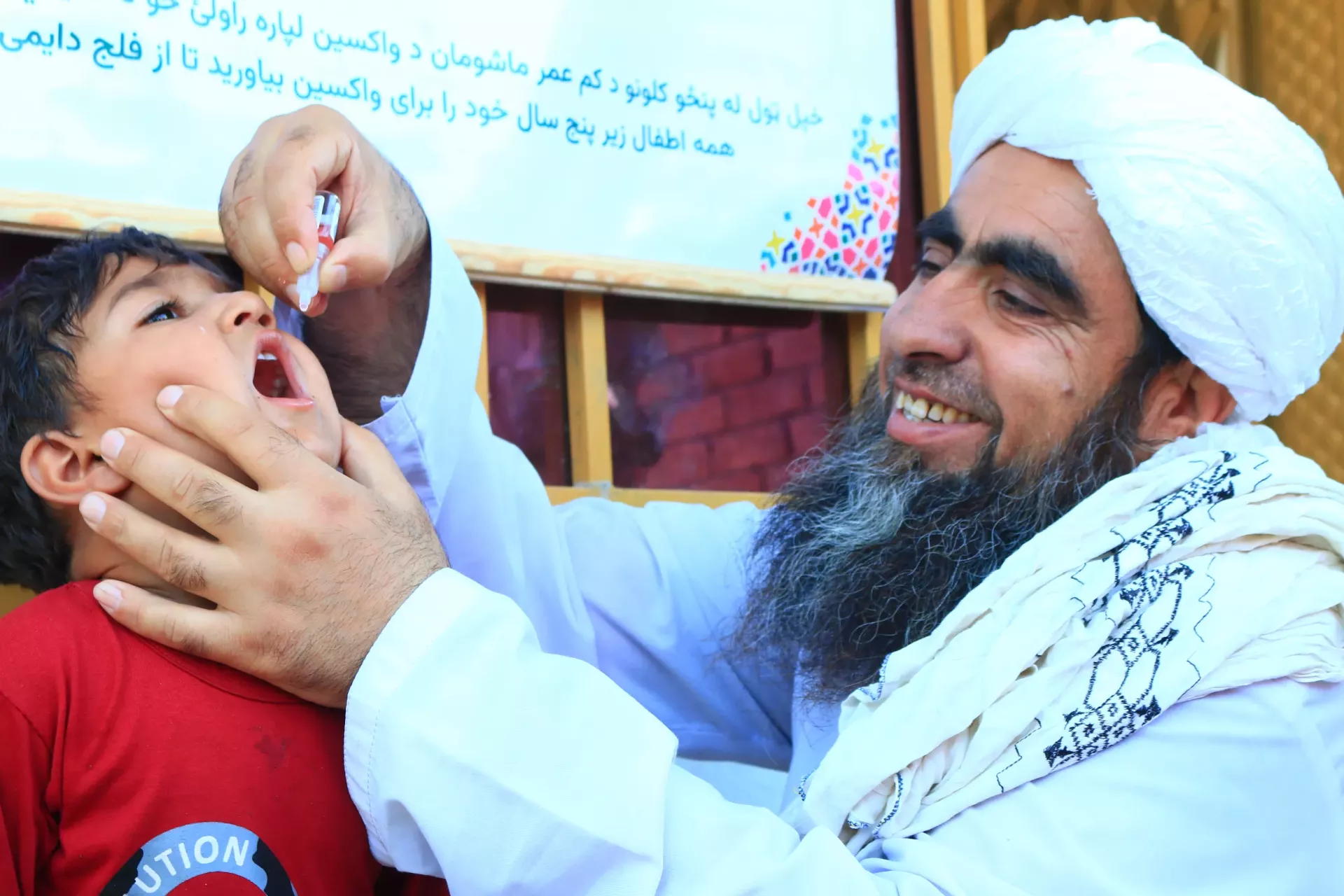
In the peaceful village of Charbagh Safa in Surkhrud district, tucked among the hills of Afghanistan’s Nangarhar province, Fazal Rabani, a 44-year-old Imam, lives and serves, not just as a spiritual leader, but as a trusted guide for his entire community.
Rabani is a famous man for his advice, Friday sermons, and for the decisions that affect his community. He leads Friday sermons at Jama-e-Abo Bakr Sediq Mosque, located in Sorkhrud district, teaches and oversight the activities of over a hundred students at his Madrasa, and helps solve local health issues as part of the village health council. He used to speak against the polio vaccine, he was not trying to mislead anyone, but he just did not have the full picture and knowledge, and fear filled in the gaps where facts were missing.
“For years, I was against the polio vaccine, I did not let my own children get it. I had heard things from people said it was not halal and it includes the meat of pig,” he says in his low voice.
“Some even believed it was part of a foreign plot and it could make children infertile,” he added.
And because his voice carried weight, many families in the village followed his lead. They shut their doors to vaccinators, thinking they were protecting their children.
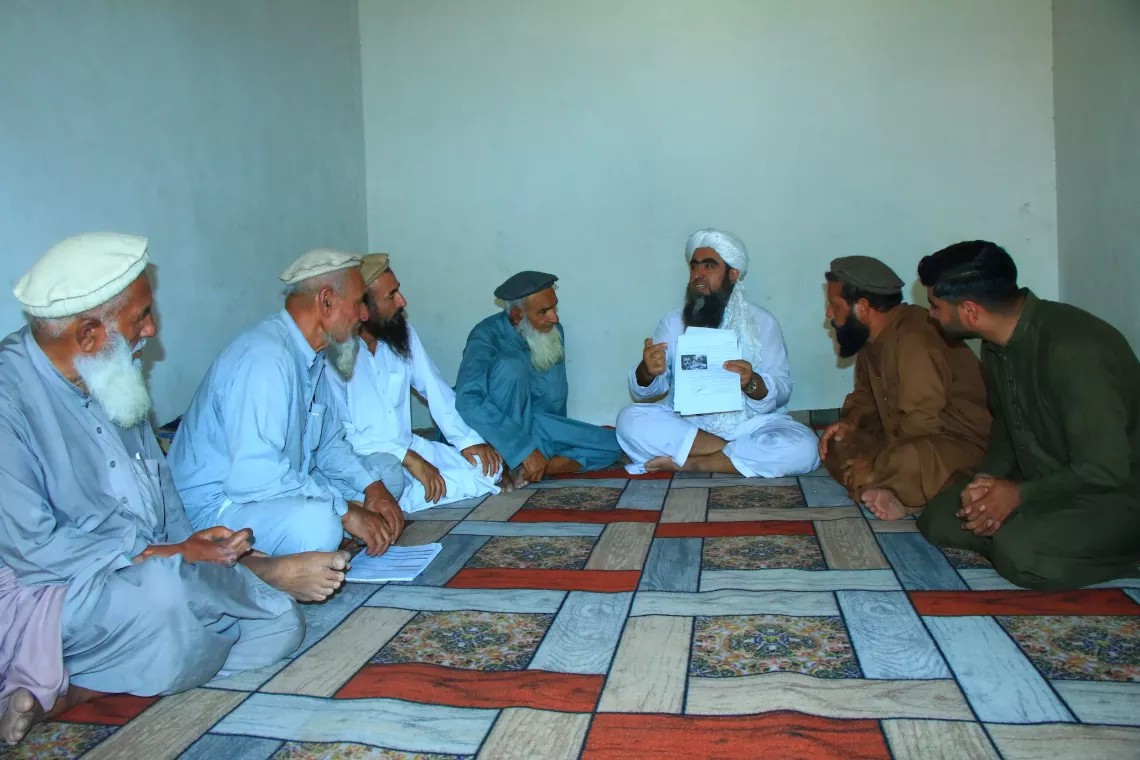
The turning point came during a gathering of religious leaders in neighboring Nangarhar. There, someone handed Rabani a collection of Fatwas from Al-Azhar University in Egypt, one of the most respected Islamic institutions in the world. These religious rulings made it clear that the polio vaccine was not only permissible, but it was also necessary.
Still, he was not convinced. “I had my doubts,” he stated. But he kept going to those gatherings and started reading more.
“I looked into what the Prophet, peace be upon him, said about preventing disease. And the more I learned, the more I realized that this vaccine is not haram.” He explained. “It is a way to protect our children.”
That realization hit hard. “I had spent years telling people not to vaccinate. I thought I was doing the right thing.”
The first thing he did was vaccinate his own children. Then, standing at the same mosque where he once warned against the vaccine, he spoke from the heart.
Rabani said he had been open to people, admitting he had made a mistake. But he also told them that he had learned from it, and that staying silent was no longer an option. Of course, not everyone took it well at first. Some pushed back, reminding him that he was the one who had once warned them the vaccine was dangerous.
“You told us the polio vaccine was dangerous, how can we believe you now?” Asked some of his followers.
Rabani explained that what changed was that he finally did what he should have done from the start, he asked questions, looked for real answers, and came to see the truth and that the vaccine could actually save lives.
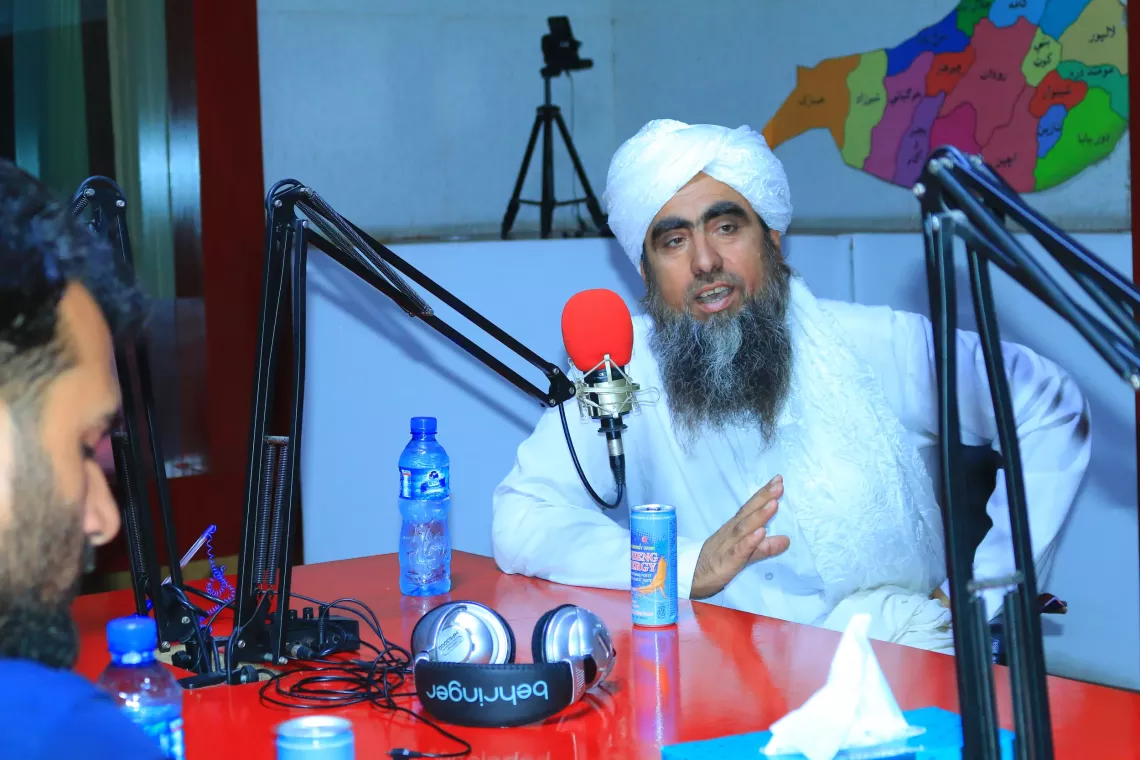
Since 2014, Fazal Rabani has been one of the strongest voices for polio vaccination in his province, Nangarhar. He speaks on local radios, raises awareness during Friday sermons, and visits families, especially those still unsure.
He tells them, “I used to be afraid too. But fear fades when you know the facts.”
Today, many families in Charbagh Safa of Surkhrud district who once refused the vaccine now welcome health workers. The rumors that once spread doubt are being replaced with understanding. Thanks in large part to one man’s courage to admit he was wrong, and to lead his community toward a safer future.
Thanks to generous funding from the Bill and Melinda Gates Foundation and Rotary, UNICEF polio programme employed over 2300 religious leaders like Rabani across Afghanistan, who reduces misconceptions about polio vaccination.
Rabani’s message to fellow religious leaders is simple: “If you don’t know, then learn. Read and ask. It is okay not to have all the answers, but it is not okay to stay silent when lives are at risk. We must guide with knowledge, not fear.”