A dignified return
In partnership with the Government of China, UNICEF ensures that returning Afghan families reach home with a kit of essential hygiene supplies


For thousands of Afghan families recently returning from Pakistan, the journey home can be filled with uncertainty. In the first two weeks of April, as many as 8,000 people returned to Afghanistan every day. Some are parents with children, but some are children on their own, separated from their families or caregivers. For those just arriving at the Torkham border crossing, they are often exhausted, vulnerable, and in urgent need of basic supplies.
Thanks to the generous contribution from the People's Republic of China, UNICEF is delivering life-saving hygiene kits to thousands of returnee families – providing not just items, but a message of care, dignity, and solidarity.

A first-ever partnership in Afghanistan
In November last year, UNICEF and the Government of China partnered for the first time in Afghanistan to support children’s urgent hygiene and sanitation needs, especially for communities facing urgent needs due to migration, natural disasters and diarrhoeal diseases. Through this partnership, UNICEF aims to reach over 28,500 households – or around 289,000 people – with hygiene and water purification supplies.
At the Torkham border alone, UNICEF has distributed more than 5,700 hygiene kits to returning families.

What’s in a hygiene kit?
Each one contains 14 essential items, including soap, shampoo, reusable sanitary pads, toothbrushes and toothpaste, nail clippers, towels, and water storage containers.
These kits have been positioned across Afghanistan’s southern, western and eastern regions, ready for distribution to help protect families from acute watery diarrhoea and other preventable diseases.
Distributions like this one are part of UNICEF’s emergency preparedness strategy, ensuring families have the tools they need to stay healthy from day one. As climate change accelerates and displacement increases, this support is more vital than ever.

Why are hygiene kits so important for returnee families?
Afghanistan is one of the most climate-vulnerable in the world, with over 12 million people lacking access to safe and clean water for drinking, bathing and cooking.
Years of drought, waterborne disease outbreaks, and a declining water table have left communities exposed to deadly risks – especially children under five.
As families return to the country and begin to resettle, these hygiene kits are a first step toward safety, health, and stability. They represent more than just supplies – they represent solidarity and support for Afghan children and their families.

Armed with supplies and information
In addition to distributing the kits, UNICEF conducts hygiene promotion sessions, teaching families about the importance of handwashing, water safety, and menstrual hygiene. These sessions help families understand how to use each item in the kit effectively, and how to protect themselves from disease in challenging environments.
At Torkham, more than 40,000 people have participated in these hygiene promotion sessions, both at the border zero-point and at the reception centre.

Health and dignity for every returning family
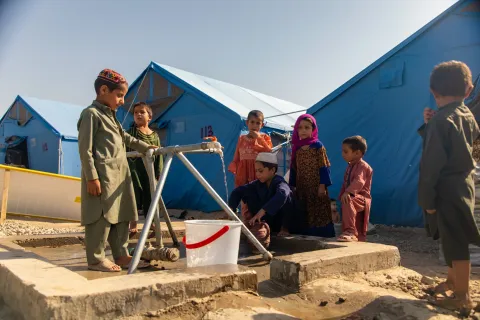
Hygiene is only one component of health and dignity for returning families. UNICEF is also providing clean drinking water through water trucks and permanent wells, so far serving more than 42,000 families at the border, and has installed nearly 200 toilets to keep the reception centre safe and clean.
Beyond immediate relief, this partnership strengthens UNICEF’s broader water, sanitation and hygiene efforts, which last year provided nearly 690,000 people with access to safe drinking water through solar-powered systems, provided more than 500,000 people with access to basic sanitation, and declared nearly 1 million communities open-defaecation free.