As COP30 Begins, Afghanistan’s Children Face a Crisis They Didn’t Cause
One of the world’s lowest emitters is facing one of its worst water crises

I’m not attending COP30 climate summit in Brazil this year. Nor is anyone there to speak on behalf of children in Afghanistan. Yet it is among the countries most exposed to climate impacts while contributing almost nothing to the crisis.
The destruction caused by the recent earthquakes in east and north Afghanistan is very visible. You can see it in the trail of collapsed homes, the makeshift tents now bracing for winter and the worry etched on parents’ faces.
This includes Amanatullah, a father who lost four sons and a daughter during a devastating earthquake in Kunar province in August. “The children I lost had such bright futures ahead of them,” he told us. Still reeling from grief, Amanatullah's family, like millions of others, need shelter, warmth, safe water and sanitation ahead of the brutal Afghan winter.
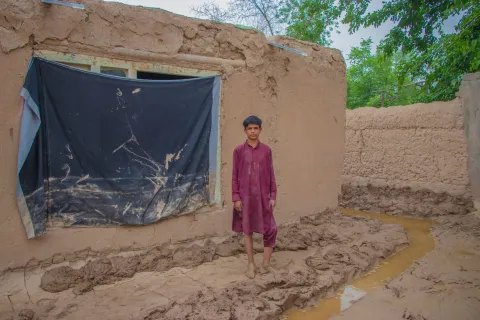
What’s less visible is the impact of the climate and water crises are having on families in Afghanistan. It is the long trek Amanatullah must make to get water, the dangerous diseases his family risks contracting from contaminated water sources, his children’s lost school hours due to illness and chores.


Climate change is more than an abstract talking point being debated at COP. For people in Afghanistan, it is the lived experience of the most vulnerable families. Despite their resilience, earthquakes and climate-induced disasters like drought and flash floods are eroding children’s health, nutrition and potential.
The impact of climate change on the country is truly a silent emergency: over half of water points in key drought-prone provinces have dried up. A staggering 8 out of 10 Afghans now drink contaminated water and sanitation systems in urban areas are collapsing under the strain of disasters and environmental degradation, leading to escalating outbreaks of waterborne diseases. Against this backdrop, Afghanistan remains one of the world’s most underfunded humanitarian crises with only 5 per cent of the funding needed for safe and climate resilient water and sanitation access currently available.
Despite funding constraints, UNICEF and partners continue to be on the ground working around the clock to provide relief to families and children facing multiple emergencies. Just in the past three months, two earthquakes have hit the country and the influx of tens of thousands of Afghan returnees continues at multiple border points. To response to these emergencies, we are providing emergency shelters, latrines and nutrition supplies and repairing damaged water infrastructure and provision of emergency sanitation services.
Yet as we provide relief for multiple emergencies, we are also working to build climate resilience.
In Logar and Paktia, we are harnessing the sun for sustainable and safe water by installing solar powered pumps and training the community on their maintenance. In Jalalabad, UNICEF is building a Managed Aquifer Recharge system - which captures water during high rainfall, replenishing and storing it underground for use when the next drought hits. And in Kabul, we are piloting advanced mapping technology which uses electrical pulses to help calculate the location of underground water reservoirs with more ease and accuracy than ever before.


These are not temporary fixes, they are lifelines, and they are proof that building resilience is possible. But scaling them needs something that humanitarian actors in Afghanistan currently don’t have; urgent flexible funding that allows us to both respond to the immediate climate emergency and plan for the future.
Amanatullah’s remaining children need more than just hope; they need action, innovation and investment.
As world leaders take the stage in Brazil, I ask them to remember the countries not present in the negotiation halls. Remember the children who walk for water with empty containers. The mothers who boil what should not be drunk. The parents who bury children whose deaths could have been prevented. They did not cause this crisis. Yet they are enduring its worst consequences.