Bringing health care home
Sakina, an experienced Community Health Worker, bridges gaps in rural healthcare for her neighbours – one home visit at a time.
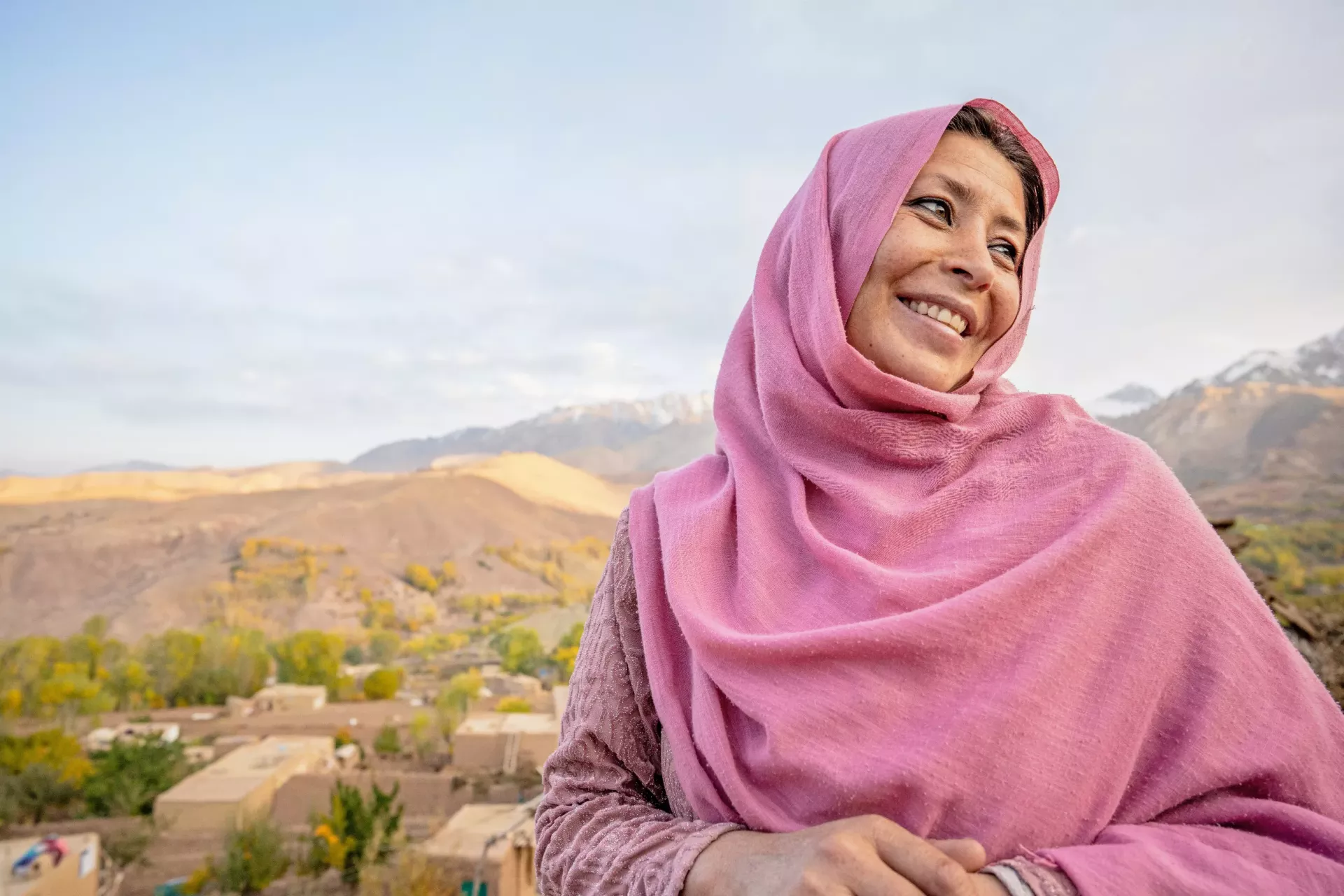
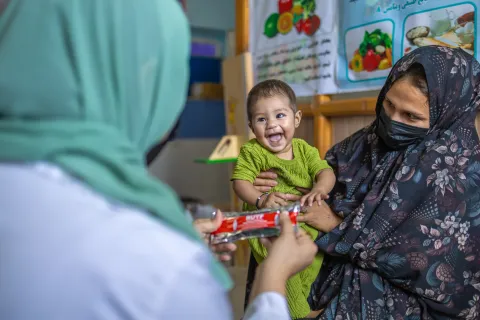
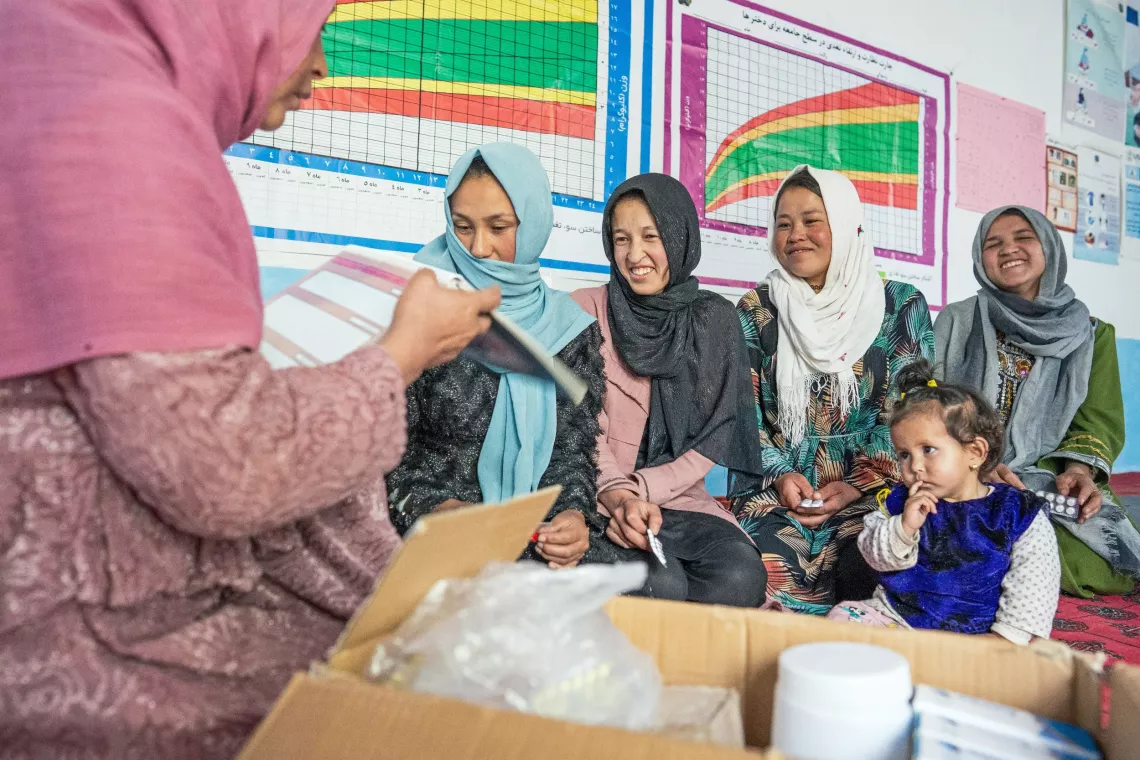
Once a month, Sakina’s home comes alive. Women fill her living room, clustered together on floor cushions and carpets. They drink tea and giggle as their babies crawl around them. They converse, cook a meal and share parenting tips.
But these rendezvous are no social affair. Sakina presides over these sessions as a seasoned Community Health Worker. She has served her community for 15 years, forming a critical link between rural community health care and the formal health care system.
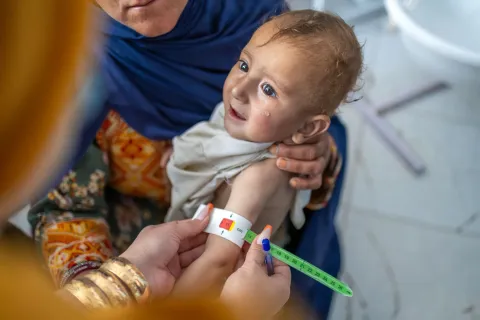
“Each month, pregnant or breastfeeding mothers come to my home for these sessions,” Sakina explains. “I monitor their babies’ growth. I weigh the children, measure their height, and screen for signs of malnutrition.”
“I also lead cooking demonstrations. Many do not know how to cook healthy meals, so I teach them, using ingredients we can find in our village.”
In Sakina’s village in Bamyan province, in the heart of Afghanistan’s central highlands, health care can be prohibitively expensive. Static facilities are distant; transportation is costly. For some families, the hidden costs of visiting a hospital – childcare while parents are away, or lost wages from missed days of work – mean Sakina is the only health care they can afford.
“I am responsible for over 100 households,” says Sakina. “The nearest clinic is 9 kilometres away, so for many of my neighbours, I have to bring health care to them.”
Sakina’s work is voluntary, performed alongside other jobs and responsibilities. She is a new mother herself; each day, her 13-month-old, Hawnia, is by her side while she works.
“I wake up early and clean the house, prepare my family’s breakfast and make a plan for the day,” Sakina shares. When not hosting the monthly nutrition sessions, “I make home visits,” she says. “Two or three a day, or only one if it is far.”
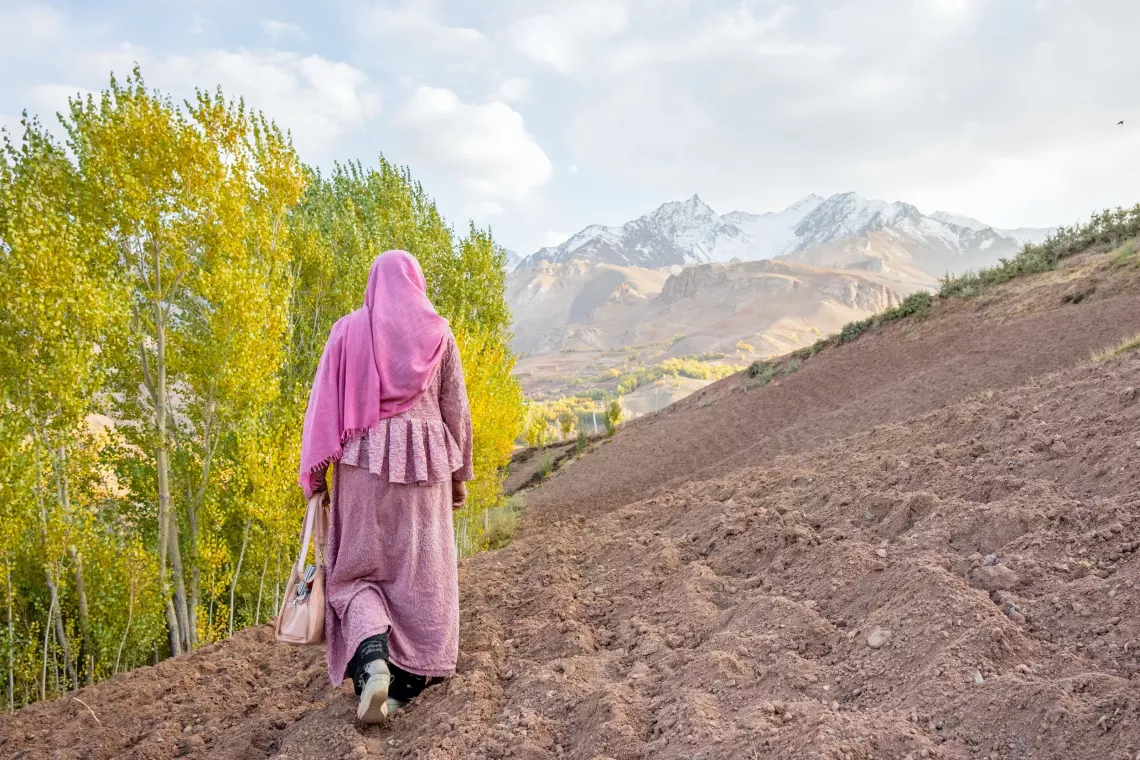
Home visits here are strenuous. Sakina must walk up and down steep, unpaved mountain paths which wind between flat-topped mud homes. In the winter, these paths are even more perilous, covered in snow and ice.
Sakina has also availed her home as the community’s health post – a hub where mums and little ones come to acquire basic medicines for common ailments or ask advice if they have a more serious concern.
Parents pop in and out, requesting paracetamol for a fever, antacids for a tummy ache, or antihistamine for a stuffy nose. She also has authority to refer patients to health facilities. If she identifies serious signs of malnutrition, or her neighbour’s illness is beyond the scope of her care, she advises them when and where to see a doctor.
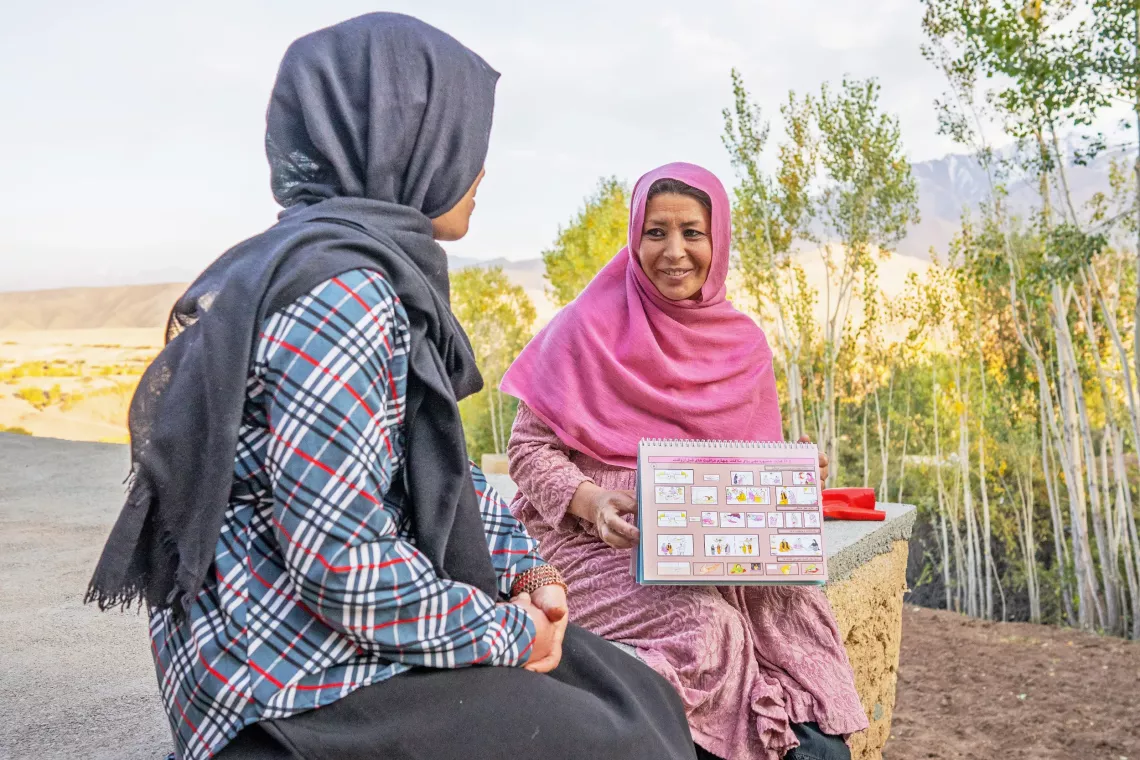
As trusted members of their communities, these volunteers are often the first health workers families turn to for information or care.
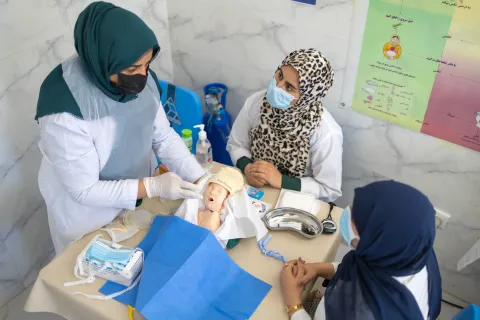
UNICEF supports 30,000 Community Health Workers with training courses, keeping their skills and knowledge current, plus reimbursement for operational expenses, materials for monthly sessions with mothers and essential medicines to stock the health posts.
“Three years ago, there was a little boy, Seytash, who was very sick with diarrhoea for over a month.” Sakina recalls. “His parents brought him to me; I gave him Oral Rehydration Solution and zinc and he recovered right away.”
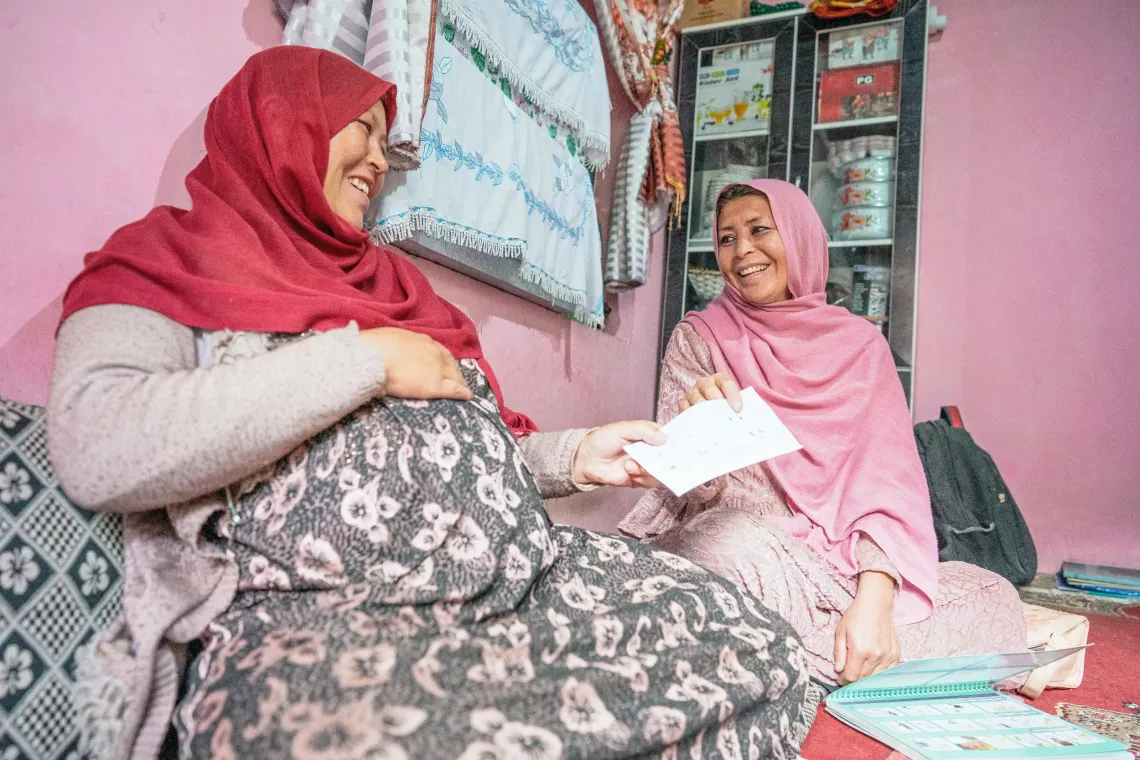
As her last act of the day, Sakina visits Rosia, a woman 9 months pregnant with her second child. She greets Rosia with a smile and a hug. The two women sit down to talk, discussing her health and pregnancy masqueraded as a casual chat between neighbours.
All is well with Rosia. Sakina concludes the visit after just a few minutes.
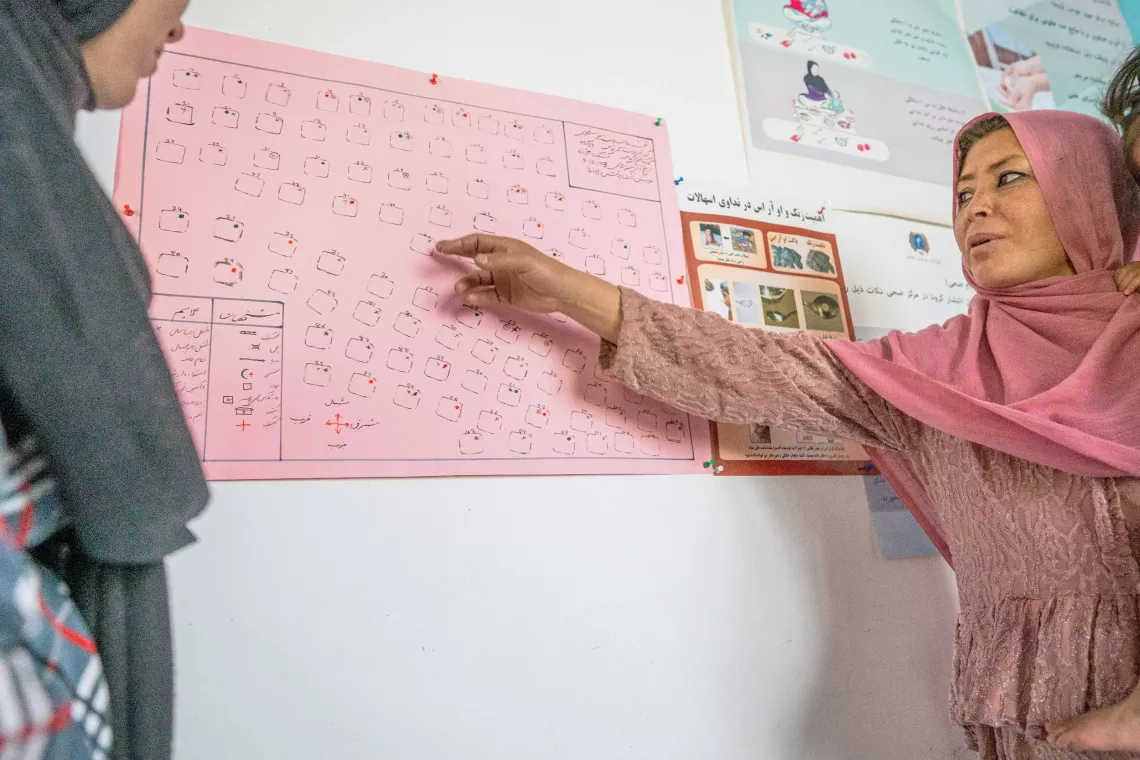
“I have mapped every home in this village,” Sakina says, picking her way carefully up the hill towards home and her waiting daughter. “I know the families with a child under two years, under five years, where a woman is about to give birth… I know where people need my care.”
Training for Community Health Workers in Afghanistan and some operational costs, like transportation reimbursement, are funded by the Asian Development Bank and the World Bank. Supplies for Community Health Workers and medicines for health posts are also supported by the Government of Canada.