UNICEF Afghanistan goes black for World Children’s Day

KABUL, Afghanistan, 19 November 2021: In solidarity with the children of Afghanistan who are bearing the brunt of a rapidly escalating humanitarian crisis, this year, as UNICEF marks World Children’s Day (WCD) globally, UNICEF Afghanistan will not celebrate. Today, UNICEF Afghanistan is ‘blackwashing’ its WCD online assets and, tomorrow, November 20, the day on which UNICEF typically ‘goes blue’ for children, UNICEF Afghanistan will close its digital channels, going dark to reflect the challenges that children in Afghanistan are facing.
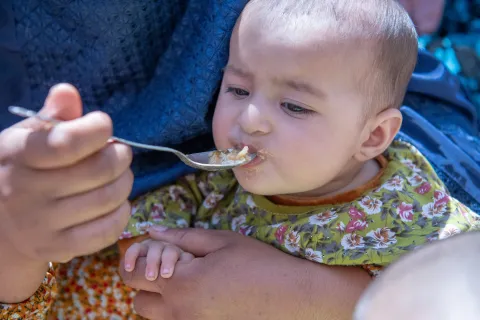
After a dry winter and a weak harvest, drought and food insecurity continue across the country. Almost 14 million children in Afghanistan do not have enough food to eat. Many don’t know where their next meal is coming from. In addition, UNICEF warns that over 1 million Afghan children are at risk of dying due to severe acute malnutrition (SAM) -- unless they receive immediate treatment. Measles outbreaks are putting children’s lives at risk.
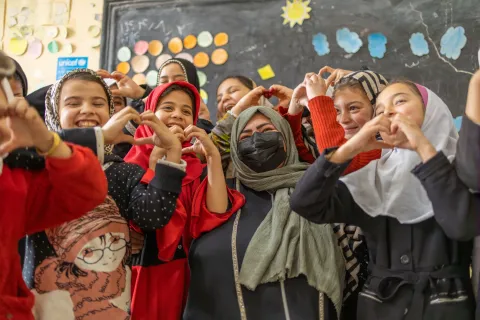
As families become increasingly desperate, UNICEF is seeing worrying trends: from a reported rise in cases of early marriage and child labour, to recruitment by armed groups, and children not returning to school. Over 4 million children are out of school; more than half of them are girls.
“It is difficult to celebrate being a child in Afghanistan right now. By closing our digital platforms on World Children’s Day, we want to send a message to donors urging them to support Afghanistan’s children,” said Alice Akunga, UNICEF Acting Representative in Afghanistan. “Those least responsible for this crisis are paying the highest price.”
In response to the crisis, UNICEF is scaling up its programmes for children. For example, in the last month, UNICEF has:
- Doubled the number of people providing nutrition services in the field – from 36 to 72
- Treated an estimated 30,000 children under five suffering from severe and acute malnutrition
- Doubled the mobile health and nutrition teams
- Provided 150,000 women with nutrition counselling services on maternal and infant and young child feeding in October alone
UNICEF is also working with partners to raise communities’ awareness of the risks of child marriage which can lead to a lifetime suffering. Girls who marry before they turn 18 are less likely to remain in school and more likely to experience domestic violence, discrimination, abuse and poor mental health. They are also more vulnerable to complications in pregnancy and childbirth.
UNICEF calls on global leaders to place the rights and welfare of Afghan children at the heart of their discussions around funding the humanitarian crisis.
###
Media contacts
About UNICEF
UNICEF works in some of the world’s toughest places, to reach the world’s most disadvantaged children. Across more than 190 countries and territories, we work for every child, everywhere, to build a better world for everyone. For more information about UNICEF and its work for children in Afghanistan, visit www.unicef.org/afghanistan.
Follow UNICEF Afghanistan on Twitter, Facebook and Instagram.