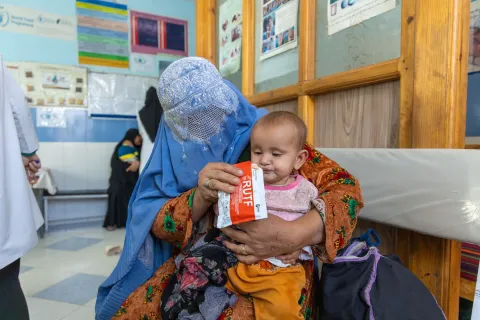
Second Additional Financing for the Health Emergency Response (HER) project in Afghanistan funded by the World Bank
Environmental and Social Commitment Plan (ESCP) and Stakeholder Engagement Plan (SEP)
About
The World Bank is providing funding for the Second Additional Financing of the Afghanistan Health Emergency Response (HER-AF2) project, which is implemented by UNICEF, WFP, and their respective NGO Service Providers (SPs), Cooperating Partners (CPs), and Contractors. This project aims to deliver essential health and nutrition services to the population of Afghanistan.
The project development objective (PDO) for the Second Additional Financing is to enhance the utilization and quality of essential health and nutrition services in Afghanistan. The project comprises three components:
- Urgent provision of essential primary and secondary healthcare (UNICEF)
- Strengthening service delivery and project coordination (UNICEF)
- Strengthening demand and access to enhance nutritional outcomes among the most vulnerable (WFP)
This page presents the HER-AF2 Environmental and Social Safeguards instruments, including the Environmental and Social Commitment Plan (ESCP) and the Stakeholder Engagement Plan (SEP). These documents were developed under the Afghanistan Health Emergency Response (HER) Project and align with the World Bank's Environmental and Social Framework (ESF), UNICEF’s policies and procedures, and Afghanistan's national laws and regulations.
The Environmental and Social Commitment Plan (ESCP) outlines UNICEF’s commitments to manage project risks and impacts, ensure compliance with commitments, engage stakeholders, build the capacity of SPs and Contractors, monitor the implementation of mitigation measures, and maintain functional grievance mechanisms for stakeholders, including interested and affected parties.
The Stakeholder Engagement Plan (SEP) details the steps for information disclosure and consultation, outlining how the UNICEF and WFP project team, SPs, CPs, and Contractors will engage with stakeholders. Additionally, the SEP includes a mechanism for stakeholders, including affected individuals and interested parties, to raise concerns, provide feedback, or lodge complaints regarding the project and its related activities.