Tool: Tips for a great interview
Planning, preparing and interview tips

Useful tips to plan, prepare and conduct a successful interview.
Choose an interesting person to interview...
Choose an ’interviewee’ who has experiences or knowledge to share that is related to something that you want to learn. ... Remember that most people are interesting! Be ready for a surprise.
Give an enthusiastic invitation
When you reach out to an interviewee, let them know why you want to speak with them. Show that you are excited and interested in what he or she has to say, and that you value what you might learn.
Respect your interviewee’s wishes
Make sure your interviewee understands how you will use and share the information and stories from your interview. Respect his or her wishes if he or she does not want you to share them. If he or she is not comfortable with the purpose of your interview, consider finding someone else to interview.
Plan a good time for your interview
Find a time when both you and your interviewee will have time to have a complete interview. A good length for an interview is often 30-90 minutes.
Choose a good place for your interview
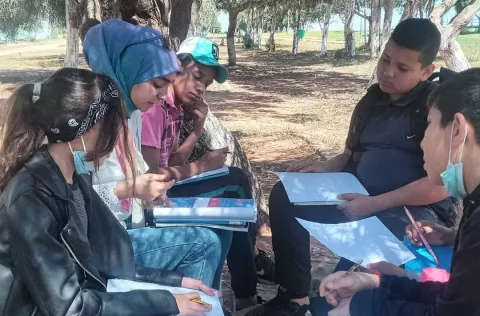
Find a place where you and your interviewee can speak and hear each other, and you can write or record his or her answers. You and your interviewee should be in a place where you feel comfortable and safe. Holding an interview in a public place such as a park, café, or library may be appropriate. Avoid places where you feel others will want to gather around you and listen, so neither of you feels self-conscious or embarrassed.
Come prepared
Always bring a pen or pencil and paper so that you can make notes. Bring someone else along if that will help you to feel more comfortable and ask him or her to help you to record notes during the interview.
Plan your interview questions in advance
Great interview questions include mostly open-ended questions that interviewees can answer with stories and descriptions, and a few closed-ended questions that ask for specific information that is useful or important to understanding their stories.
Sample open-ended questions:
- What do you remember about your time in primary school?
- How did you first begin learning how to dance?
- Why did you decide to start a business as a tailor?
Sample closed-ended questions:
- When did you move to this community?
- How old were you when you first started to be interested in studying medicine?
Don’t ask about difficult experiences
Don’t ask your interviewee to share personal stories about difficult experiences. If you and others have lived through a conflict or a disaster, don’t ask questions about that experience, but let him or her tell you about it if he or she is interested in doing so. Pay attention to your own comfort level too. If your interviewee wants to talk about difficult experiences that bring up difficult memories or experiences for you, feel free to pause or redirect the interview. (For example, say “I understand your feelings, and these are difficult memories for me, too. Can we go back to talking about...?”)
Show your interest
Use the body language that is appropriate in your culture to show that you are listening to your interviewee and are interested in what he or she says. Depending on your cultural context, this may mean showing respect by looking toward him or her, or looking downward, nodding, remaining silent, or saying something encouraging. (For example, say “I never knew that!”)
Ask follow-up questions
Do not feel you can only ask the questions you wrote down before the interview. Improvise and ask questions to better understand or hear more about what your interviewee said. (For example, say, “Could you tell me more about that? What was it like?”)
Let your interview take its own path
Let your interviewee talk about topics other than the ones you chose to focus on in your interview. He or she may have interesting and surprising stories to share. Letting him or her talk about other topics may help him or her to feel more comfortable in the interview.
...But bring the conversation back to the main topic that interests you
If your interviewee is not focused on your topic, or only wants to talk about something else, try to bring him or her back to the topic. (For example, say, “Your advice is very helpful. Could we also talk more about the steps you took to open your hardware store?”)
Close your interview and share your thanks
No matter how long or short your interview, there will come time to finish. A great way to close an interview is to ask, “Is there anything else you wanted to share or ask me?” When you have completed your interview share your thanks with your interviewee.
Feel free to mention anything you especially enjoyed or learned from them
Follow up with more thanks, and updates about how you are using the information or stories from your interview.
Consider writing a note to your interviewee to thank him or her. Share any articles or stories you write based on the interview, or updates on a project to which your interview findings contributed, so your interviewee knows how he or she has been helpful.
Have a follow-up interview, or interview someone new
If you and your interviewee are interested in talking more, schedule a follow-up interview. If you didn’t gain what you were hoping to gain from your interview, consider finding someone new to interview.
Highlights
Useful tips to plan, prepare and conduct a successful interview.