Tool: Glossary
Definitions of terms used in the Adolescent Kit

This glossary provides definitions of terms used in the Adolescent Kit for Expression and Innovation (Adolescent Kit). Users can adapt or replace these terms to make them more culturally appropriate or adolescent-friendly.
Adolescent: The Adolescent Kit refers to an adolescent as a child between the ages of 10 and 18 years. Early adolescence often refers to children between 10 and 14 years, and late adolescence to 15 and 18 years.
Adolescents with disabilities: The Adolescent Kit refers to adolescents with disabilities as those who have impairment which are physical (e.g. wheelchair users), mental (e.g. clinical depression), intellectual/learning, or sensory (e.g. deaf, blind).
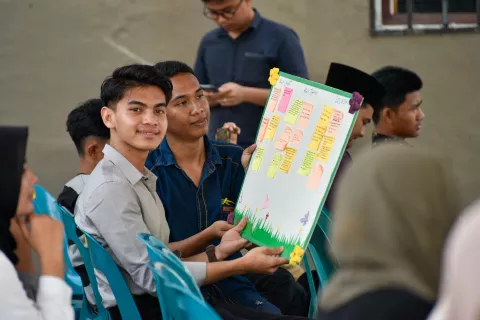
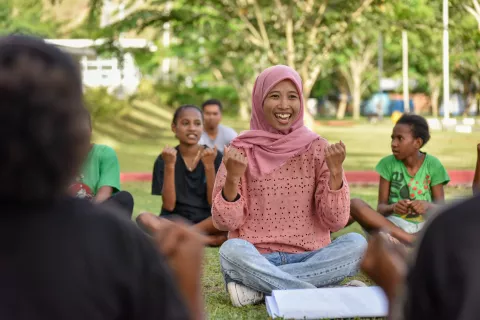
Circle (as in Adolescent Circle): A group of adolescents who gather to learn, practice skills, socialize, express themselves, build a team, and take action in their communities.
Cognitive processes: Mental processes such as thought, imagination, perception, memory, decision-making, reasoning and problem solving.
Community: A group of people with a common identity related to factors such as geography, language, values or interests – In the Adolescent Kit, community often refers to the area in which adolescents live and the other people living there. It could be a refugee or Internally Displaced Persons (IDP) camp, permanent settlement, neighbourhood, village, town or city.
Community mobilization: Activities that encourage community members to participate in the various aspects of an intervention; examples include meetings with community leaders, large community meetings and events, forming an issue-based group.
Competencies: Knowledge, attitudes, and skills that are essential for the wellbeing and healthy development of adolescents, particularly those who have been affected by crisis and conflict.
Coping: The process of adapting to a new life situation – managing difficult circumstances, making an effort to solve problems or seeking to minimize, reduce or tolerate stress or conflict.
Demographics: Information about the characteristics of a population or community, such as age, gender and ethnicity.
Do no harm: A basic principle for successful programming; cautions against the unintentional harm that may be caused to those who are supposed to benefit from any intervention.
Facilitator: A trained professional or volunteer who works directly with a group of adolescents to facilitate activities and run sessions; related terms: teachers, coaches or animators.
Gender: Refers to the social roles and identities of adolescent girls and boys; gender roles vary in different cultures, change over time and shape routine aspects of daily living.
Gender equality: Means that adolescent girls and boys enjoy the same rights, resources, opportunities and protections.
Inclusion: The fair and equitable participation of all adolescents in all spheres of their life, school, community, programmes and services, regardless of their age, gender, ethnicity, family, culture, geographical location, language, religion, ability, or financial situation.
Life skills: Abilities for adaptive and positive behaviour that enable individuals to deal effectively with the demands and challenges of everyday life; can be general (for example, communicating effectively and making decisions) or relate to specific topics such as HIV prevention, peacebuilding, health promotion or child protection.
Participation: In the Adolescent Kit, participation refers to adolescents’ informed and willing involvement in matters that concern them, both directly and indirectly. This involves giving adolescents opportunities to express their views, influence decision making and achieve change. Children’s right to participation is encoded in the Convention on the Rights of the Child.
Peacebuilding: Involves a range of measures to reduce the risk of a lapse or relapse into conflict by addressing both the causes and consequences of conflict.
Phase (as in Circle phase): A series of sessions linked by a common outcome, goal or theme.
Programme or intervention: Used interchangeably to refer to any type of formal or informal programme, initiative or scheme that uses the activities, tools and guidance in the Adolescent Kit.
Programme coordinator: A general term to describe a staff member who has a key role in designing, managing or running a programme or intervention that uses the activities, tools and guidance in the Adolescent Kit; includes programme managers, programme officers, technical specialists or other staff within UNICEF or partner organisations.
Psychosocial: Refers to the close connection between a person’s mind, thoughts, emotions, feelings and behaviours, and their social world, e.g. relationships with family, friends and community networks, cultural traditions, economic status and life tasks such as work and school.
Psychosocial support: Refers to actions that address both the psychological and social needs of adolescents and promote their wellbeing; includes support provided by family, friends, neighbours, teachers and the wider community, and may also extend to care and support offered by specialised psychological and social services.
Psychosocial wellbeing: A positive state of being where someone thrives as a result of their psychological and social needs being met; One of the foundations of psychosocial wellbeing is access to basic needs (food, shelter, livelihood, healthcare, education services) together with a sense of security that comes from living in a safe and supportive environment.
Referral pathways: The individuals or institutions available to respond to the needs of adolescents when special support or services are needed.
Resilience: In the Adolescent Kit, resilience refers to adolescents’ ability to react or adapt positively to a difficult and challenging experiences, and to ‘bounce back’ and recover.
Session: The period of time that adolescents spend working together on individual or group activities, usually with support from a facilitator; generally lasts between one to two hours.
Stakeholder: A person, group, organization or system that affects or is affected by something in a programme, initiative or community.
Steering committee: The group of people who are responsible for overseeing and making decisions about the programme or intervention where the Adolescent Kit is used; may include representatives from UNICEF, implementing partners, local or national government officials, parents, and adolescents.
Sustainability: The ability to maintain something into the future – in this context, an intervention with the Adolescent Kit – Active adolescent and community participation in planning and running interventions encourages ownership and strengthens the likelihood of sustainability.
Vulnerability: A range of factors that may decrease an adolescent’s ability to cope with challenges or difficulties, e.g. poverty, mental or physical health disabilities, lack of a social network, lack of family support, age and gender; particularly vulnerable adolescents may include: unaccompanied and separated adolescents, adolescents in institutions, adolescents with disabilities or special needs, marginalized adolescents, unregistered adolescents in humanitarian settings, adolescents who are pregnant or mothers, and girls and boys in adolescent-headed households.
Highlights
This glossary provides definitions of terms used in the Adolescent Kit for Expression and Innovation (Adolescent Kit). Users can adapt or replace these terms to make them more culturally appropriate or adolescent-friendly.