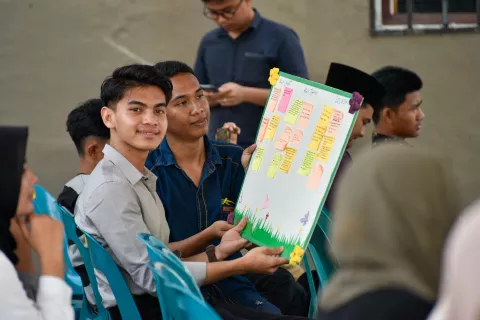
Tool: Creating positive and inclusive ways of working
Every adolescent girl and boy should have the opportunity to participate equally in activities with the Adolescent Kit

Encouraging inclusive participation doesn’t mean forcing adolescents to participate in activities when they don’t want to, or making them contribute to every group discussion. However, it does mean being aware of adolescents’ different needs and abilities, and making sure that they can participate if they want to. It also means finding ways to overcome stigma or discrimination toward particular groups, such as girls, adolescents with disabilities, children affected by HIV and AIDS, and others.
Use this tool to create an environment where every adolescent girl and boy feels comfortable, and is able to participate in activities on an equal footing with others in their group.
Do
- Call each of the participants by name
- Group adolescents with different backgrounds, experiences and skills, (including girls and boys with disabilities, and the most vulnerable adolescents) so that they can learn from each other
- Support adolescents to set rules for working together that give everyone a say in decisions, and that encourage girls and boys to listen to each other
- Give every participant an equal opportunity to voice their opinion, take on tasks and roles, and to participate in activities
- Plan a mix of energetic/restful, creative/problem solving and other activities so that everyone gets to do something they enjoy or are good at
- Vary activities so that adolescents with different skills and abilities have opportunities to participate and no one is forced to sit on the side lines – for example, if you play football (which adolescents with physical disabilities may not be able to participate in equally, or girls in some cultures may not find of interest), make sure that you also organise other, different types of activities that other participants may enjoy
- Tailor activities to adolescents’ age and abilities, and adjust them if they seem bored, frustrated or overwhelmed
- Consult with adolescents to determine if activities are accessible and enjoyable for everyone involved
- Do teambuilding activities that encourage adolescents to make joint decisions and work together
- Focus on activities that allow adolescents to share and celebrate their different backgrounds, abilities and cultures
- Create a light, positive atmosphere where everyone is valued and all contributions are acceptable (as long as they meet the group rules)
- Smile, make jokes, be friendly and kind
- Make adolescents feel valued and respected
- Encourage adolescents to take turns
- Encourage all members of the group to feel that everyone’s contributions are of interest
- Observe and interpret adolescents’ responses – verbal or non-verbal
- Invite (but don’t force) quieter participants to speak up or participate
- Let everyone voice their opinion, take on tasks and roles and participate in activities
- Find ways to adapt activities for adolescents who may be less literate, have disabilities or are very shy about participating
- Respect adolescents’ religious and ethnic backgrounds and give them space for prayer time if appropriate
- Make sure that activities are accessible and appropriate for girls, adolescents with disabilities and other marginalized groups
- Check that the activity space is accessible and safe to adolescents with disabilities
(for example, for those with wheelchairs or assistive devices).
Don't
- Make assumptions about what different groups of adolescents can and cannot do (e.g. girls or those with disabilities)
- Discriminate against adolescents based on their gender, religion, background or abilities
- Form ‘disabilities only’ groups or circles
- Favour some adolescents over others
- Ignore some adolescents’ contributions
- Dominate the conversation
- Force ideas onto adolescents, preach, lecture or dictate what should be discussed
- Let anyone monopolise activities or discussions
- Pass judgement, criticize or make anyone feel ashamed, embarrassed or inferior
- Allow anyone to be isolated, bullied or ridiculed or prevented from taking part in activities
- Let adolescents interrupt or talk over each other
- Pressure anyone to participate in activities or discussions if they seem very shy or resistant to do so.
Highlights
Encouraging inclusive participation doesn’t mean forcing adolescents to participate in activities when they don’t want to or making them contribute to every group discussion.
However, it does mean being aware of adolescents’ different needs and abilities and making sure that they can participate if they want to. It also means finding ways to overcome stigma or discrimination toward particular groups, such as girls, adolescents with disabilities, children affected by HIV and AIDS, and others.