Guide: The four activity phases
“Four phase” approach to plan and adapt sequences of activities for adolescents

This section of the Facilitators’ Guidance outlines a process for facilitators to plan sequences of activity sessions with and for adolescents through four phases - flexible modules, with sequences of sessions and activities that facilitators and adolescents (when ready) plan together. Using phases instead of pre-planned modules enables facilitators to adapt activities and sessions to the developmental level and circumstances of each group of adolescents, and, more importantly, to adolescents’ own goals for the time they spend together in sessions. The Four Phases range from simple sequences of sessions with varied fun and restful activities in each, to complex sequences that involve adolescents working together on tasks or projects that they carry out over the course of several sessions.
The Four phases are designed so Adolescent circles can move along at their own pace. An Adolescent circle can stay in any phase for as long as the adolescents feel comfortable and interested. Adolescents can move on to a more complex phase if they are beginning to feel bored or are ready for a new challenge. They can also move to a simpler phase if they would like to take a break from more ambitious tasks, build team relationships with new adolescents who have joined a circle, or take more time to practice new skills.
The facilitator’s role
The facilitator’s role is to work with adolescents to choose an activity phase that will work best for them, and then to plan activities and sessions using the guidelines and recommendations for that phase. The facilitator will also aid adolescents in assessing their circles’ progress and help them decide if and when they are ready to move to a different phase. Facilitators can use the guidance and tools in this section to:
- understand which phases work best for different groups of adolescents, and choose a phase for their Adolescent Circle that is likely to work well;
- understand how adolescents may be developing, practicing and using competencies in each phase, so that they can choose and adapt activities according to appropriate emotional, social, learning and action goals;
- plan day-to-day sequences of activities for the phase they choose;
- run sessions with appropriate timing, processes and flow for each session; and
- assess whether and when adolescents may be ready to move on to a new phase.
Facilitators can use and adapt resources from the Activity Box as they plan phases with and for adolescents. The Activity guides and Energizer cards include specific recommendations for the phases within which they could be used. Facilitators can and should consider using and adapting activities from other different phases, based on their understanding of each adolescent circle’s interests and goals. They can also use the Inspiration cards to stimulate more ideas for adolescents’ activities or plan new activities themselves drawing from their own ideas.
Tip: See the introduction to the Activity Box for more explanation of how to choose, adapt and use the Activity Guides, Energizer Cards, Inspiration Cards, and Facilitator Tools.
Detailed overview of each of the Four phases
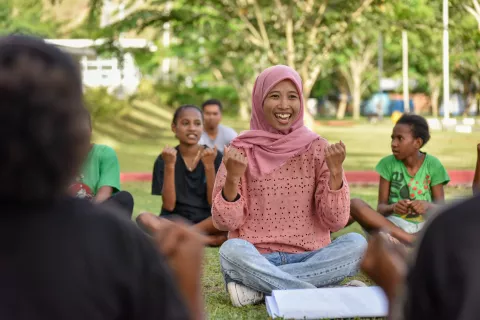
Starting our circle: This phase helps a group of adolescents who are coming together for the first time to get to know each other and feel comfortable participating in activities together.
Knowing ourselves: In this phase adolescents explore their identities and to learn more about themselves and each other.
Connecting: In this phase adolescents learn skills for building healthy relationships, working together and connecting with their communities.
Taking action: In this phase adolescents learn how to work closely as a team and to take action in their families, schools and communities.
Phase 1: Starting our circle
The Starting our circle phase provides adolescents with ways to build a strong circle when they gather for the first time. It enables adolescents to establish rules for their sessions, to begin working as a team, and to prepare for future learning and challenges.
The Starting our circle phase can also help to create the feeling of a new start in circles where members already know each other. For example, this phase works well when adolescents need to welcome many new members to the circle, or in situations where adolescents only attend sessions sporadically.
In the Starting our circle phase adolescents will:
- Gather for the first time
- Create a safe space
- Form rules for their sessions
- Get to know each other
- Become comfortable around other members of the circle
- Learn how to work as a team
How are adolescents developing and using competencies in the Starting our circle phase?
In this phase, the emphasis is on creating a safe space where adolescents can escape from the stress of their daily lives and participate in activities at their own pace. As adolescents get to know each other and become more comfortable with other members of the circle, they learn how to express themselves through play, discussion, quiet reflection, drama, writing and art. This helps them to interact positively and creates a foundation for building stronger relationships and skills as they take on more complex challenges.
The overall goal of the Starting our Circle Phase is for adolescents to become comfortable being together and participating in activities together, as a first step toward feeling comfortable and safe enough to try new things and take on new challenges together. In the Starting our Circle Phase, adolescents are developing, practicing and using competencies, but only at a very basic level. The following chart provides an overview of how adolescents may be developing and using competencies in the Starting our Circle Phase:
Communication and expression: Learn and practice new ways to communicate and express themselves, for example, through drawing and physical movement.
Identity and self-esteem: Learn ways to describe themselves in words and through other forms of expression.
Leadership and influence: Take a break from the stress of their circumstances, as a first step toward exploring and pursuing their priorities.
Problem solving and managing conflict: Take a break from the stress of their circumstances and get to know other adolescents, as a first step toward being comfortable with others in the circle and learning interpersonal skills.
Coping with stress and managing emotions: Engage in both quiet and energetic activities for relief from the stress of their circumstances.
Cooperation and teamwork: Engage in simple, interactive and collaborative activities with other adolescents, as a first step toward developing cooperation skills.
Get to know other adolescents, as a first step toward developing a sense of team membership.
Empathy and respect: Get to know other adolescents, as a first step toward developing tolerance and empathy.
Hope for the future and goal setting: Engage in both quiet and energetic activities for relief from the stress of their circumstances, and as a first step toward feeling hopeful and setting goals.
Critical thinking and decision making: Take a break from the stress of their circumstances and get to know other adolescents, as a first step toward feeling comfortable, experimenting and taking on new challenges.
Creativity and innovation: Learn and practice new ways to express themselves creatively, especially through the arts.
How are adolescents working together in their circles in the Starting our Circle Phase?
During this cycle, adolescents get to know each other and gradually become comfortable together by participating in simple, fun activities that allow them to learn more about each other, but don’t require a strong sense of teamwork.
The Knowing ourselves phase gives adolescents a chance to learn more about who they are and what they feel. During this cycle adolescents explore their identities and learn new ways to express themselves, through different arts and forms of communication.
The Knowing ourselves phase works well for adolescents in a circle who have had a chance to get to know each other, and are ready to explore new ideas and skills. The foundations that adolescents build during these sessions will help them to communicate with others, develop empathy and respect each other’s similarities and differences.
In the Knowing ourselves phase adolescents will:
- Participate in sessions on a more consistent basis
- Learn more about who they are and what they feel
- Explore and recognize aspects of their identities, including their own strengths, qualities and interests
- Begin to build stronger relationships with others in their circles, and practice working together
- Learn new ways to express themselves, through different arts and forms of communication
- Become more comfortable exploring new ideas and skills with other adolescents in their circle.
How are adolescents developing and using competencies in the Knowing Ourselves Phase?
Adolescents in the Knowing Ourselves Phase are especially focusing on developing competencies at the intrapersonal level. They are learning to know and understand themselves, to build a strong foundation to develop positive relationships with others, and to feel confident to take on new challenges.
Communication and expression:
- Learn about their own styles of communication and methods for personal expression, including through arts and physical movement
- Practice techniques for effective listening and speaking
Identity and self-esteem
- Learn ways to describe themselves in words and other forms of expression, explore their identities, and recognize their strengths and value, as well as their weaknesses; Learn about what influences their own identity
- Practice appreciating their positive qualities and caring for themselves
Leadership and influence
- Learn about their own styles of leadership and strategies for influencing others; Begin to explore their priorities and interests, as a next step toward actively pursuing them
Problem solving and managing conflict
- Begin to build healthy relationships with other adolescents in their circles, as a step toward being ready to learn, practice and use challenging interpersonal skills
- Learn techniques for gathering information, analyzing problems and presenting ideas
- Learn strategies for negotiation, mediation and dialogue
Coping with stress and managing emotions
- Learn about their emotions and practice techniques for managing difficult emotions
- Practice expressing feelings in a healthy way, also through artistic and creative methods
Cooperation and teamwork
- Learn more about other adolescents in their circles, as a next step toward feeling like a team and preparing to work together
- Learn healthy habits for working in teams
- Learn how to trust others and recognize the benefits of cooperation
Empathy and respect
- Learn more about other adolescents and themselves, as a next step toward developing tolerance and empathy
- Learn about the challenges and struggles of diverse groups and individuals
- Learn to imagine themselves in the situation of another person, to understand their feelings and needs
Hope for the future and goal setting
- Begin to explore their priorities and interests, as a next step toward actively pursuing them
- Learn about potential alternatives to the current situation, for a more positive future for themselves
- Learn strategies for organization, time management and making an action plan
Critical thinking and decision making
- Learn more about themselves, as a first step toward exploring issues that interest them and making decisions that reflect their priorities
- Learn basic concepts of stereotype, prejudice, discrimination and other related terms; Reflect on their own thoughts on stereotypes and causes of prejudice and discrimination
- Practice doubting, questioning, analyzing, testing and making conclusions
Creativity and innovation
- Practice brainstorming and other techniques to generate creative ideas; Learn to take healthy risks
- Practice patience, observation and attention to detail to enable them to perceive opportunities when they arise
How are adolescents working together in their circles in the Knowing Ourselves phase?
During this cycle, the circle gets stronger and adolescents participate more regularly. As adolescents learn to express their strengths and value, the circle becomes stronger and mutual trust develops.
In this phase participants learn more about themselves and each other, and practice skills for working together. They also learn to connect with people and places beyond their circle. The curiosity, relationships and skills that adolescents develop in this cycle help prepare them for working on group projects in the Taking Action cycle.
This cycle is designed for adolescents who feel ready to interact with their peers and surroundings, and who are curious about the world around them and beyond. Adolescents who have been through difficult experiences, and who are still feeling overwhelmed or upset, may not be ready for this cycle. The activities in this cycle work best with a strong circle where adolescents know each other well, feel comfortable and safe working together, and are starting to recover from crisis.
In the Connecting phase adolescents will:
- Learn more about themselves and each other
- Learn to connect with people and places beyond their circle
- Practice skills for working together
- Continue to develop a sense of safety and comfort with other Adolescent Circle members, building more trust with each other
- Work on activities individually and collaboratively, and become more comfortable expressing their interests and goals
- Work on activities with less support, including projects that they continue over the course of several sessions
- Develop stronger social and emotional skills that will help them to relate better to their families, peers and communities.
How are adolescents developing and using competencies during the in the Connecting phase?
During this cycle, adolescents practice the skills that they have developed as they work together as a team and explore the world around them.
Communication and expression
- Practice and strengthen ways to communicate and express themselves, including through arts and physical movement
- Reflect on communication in their family, with friends and peer groups
- Practice ways to communicate effectively with family, friends and peers
Identity and self-esteem
- Further explore their identities, by connecting with their cultural traditions and communities
- Improve their understanding of their strengths and value
- Learn about the cultural heritage, history, customs and practices of their families, friends and peers, reflecting on similarities and differences within those groups
- Practice expressing gratitude and appreciation to others; challenging bullying
Leadership and influence
- Begin to explore their priorities and interests, as a next step toward actively pursuing them
- Reflect on factors that influence the opinions of family, friends and peers
- Practice building trust and having a positive influence on their family, friends and peers
Problem solving and managing conflict
- Learn and practice skills for conflict management, problem solving and negotiation, and apply these skills to building strong, healthy relationships with others in their circle and beyond
- Reflect on issues and concerns of family, friends and peers; Identify causes of conflict in family, friend peer groups
- Discuss ways to solve problems in family, friend and peer groups that are satisfactory to everyone; Practice conflict management skills in family, friend and peer groups
Coping with stress and managing emotions
- Learn and practice skills for managing stress and other difficult feelings
- Learn and understand the emotions of family, friends and peers; Recognize the relationship between feelings and conflict in family, friend and peer groups
- Practice techniques for managing emotions of family, friends and peers
Cooperation and teamwork
- Learn more about others in their circle, and adolescents and adults in their communities, as a next step toward building respect for others
- Practice cooperation and other teamwork skills through group activities and projects with others in their circle
- Learn techniques for working effectively in teams and for cooperative problem solving
- Practice building trust, fostering inclusion and healing pain in family, friend and peer groups
Empathy and respect
- Get to know and learn about other adolescents, children and adults in and beyond their communities, including those from different backgrounds
- Learn about the challenges and struggles of family, friends and peers
- Learn to take the perspective of another person: a family member, friend or peer
Hope for the future and goal setting
- Learn about potential alternatives to the current situation, for a more positive future for their family, friends and peers
- Learn strategies to get family, friends and peers to work together to achieve a shared goal
Critical thinking and decision making
- Explore and discuss their interests and priorities, including approaches to solving problems and taking advantage of opportunities
- Apply all of these approaches to small-scale projects that they design and lead themselves
- Identify and reflect upon stereotypes and bias in their family, friend and peer groups.
- Recognize weaknesses in the reasoning, discourse and arguments of families, friends and peers
Creativity and innovation
- Learn and practice more ways to express themselves creatively, especially through the arts
- Practice techniques for generating ideas in groups
- Reflect on experiences in family, friend and peer groups to imagine innovative alternatives to problems
How are adolescents working together in their circles in the Connecting phase?
During this phase, the circle becomes stronger as adolescents begin to trust each other more and to participate more regularly. The circle’s rituals, routines and group rules continue to provide the framework for working and communicating in respectful and assertive ways. Participants work on activities individually and collaboratively, and become more comfortable expressing their interests and goals. The social and emotional skills that adolescents build help them to work as a team.
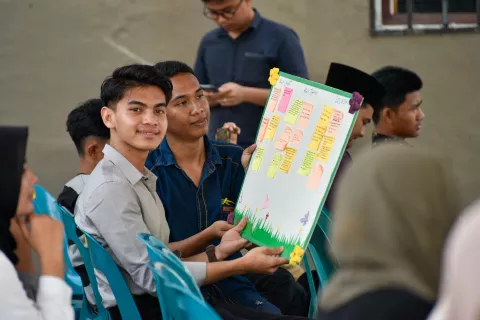
In the Taking action phase, adolescents apply the skills they have developed in the previous three cycles to real-world projects that they plan and carry out themselves. The Taking action cycle provides adolescents with steps to help them to identify their priorities, form ideas, make plans, and work together. They work as a team, using their skills for communication, exploration and decision making. Circles may choose to stay in the Taking action phase indefinitely, repeating a process of planning and carrying out projects. This phase is designed to allow adolescents to continue and sustain their activities together for as long as they wish.
In the Take action phase adolescents will:
- Identify their priorities, form ideas, make plans, and work together
- Put their creativity and problem solving skills to work on projects that are important to them
- Work as a team, using their skills for communication, exploration and decision making
- Learn how to develop project plans, and practice their competencies to set priorities and negotiate solutions to problems
- Develop and use social and emotional skills so they relate better with their families, peers and communities
- Improve and use communication and negotiation skills to help them set priorities, make plans for projects and explore opportunities for supporting their communities
- Engage and be active in their communities beyond their activity spaces
- Develop mutual trust and further friendships.
How are adolescents developing and using competencies during the Taking action phase?
Adolescents in this cycle should know each other well, and have experienced cooperating together in teams. The rituals, routines and group rules they created and reviewed together in earlier cycles provide them with a foundation for working together and communicating respectfully and assertively. Adolescents apply and strengthen the skills that they developed in previous cycles, as they interact positively and develop initiatives to carry out together in the community. During this cycle they learn how to develop project plans, set priorities and negotiate solutions to problems.
Communication and expression
- Use many skills and forms of expression as they work together with others in their circles, communities and beyond
- Reflect on communication patterns in their community
- Practice ways to communicate effectively within their own community and across cultural groups
Identity and self-esteem
- Strengthen their sense of identity and self-esteem by taking positive action in ways that reflect their interest and priorities
- Learn about diverse groups within the community, reflecting on strengths and challenges faced by different community members
- Practice inclusion of marginalized groups and community building
Leadership and influence
- Apply their motivation, new leadership skills, and sense of agency to projects that they lead and design themselves
- Learn about leaders and other people who have influenced the community
- Practice building trust and having a positive influence on their community through community projects and activities
Problem solving and managing conflict
- Apply conflict management, problem solving and negotiation skills as they work together with others in their circle and engage actively with children, adolescents and adults in their communities
- Reflect on issues and concerns of community members; Identify causes of conflict in the community
- Discuss ways to solve problems in the community; Practice conflict management skills in the community
Coping with stress and managing emotions
- Use stress management skills as they work together and take action
- Learn and understand the emotions of community members and persons in conflict; Recognize the relationship between feelings and conflict in the community
- Practice techniques for managing difficult emotions of community members and persons in conflict
Cooperation and teamwork
- Increase their respect for each other through group work that allows every member to contribute their unique skills and strengths
- Practice cooperation and other teamwork skills through group activities and projects
- Practice building trust with diverse community groups, and repairing damaged relationships
Empathy and respect
- Strengthen their tolerance and empathy as they work together and engage positively with other children, adolescents and adults
- Learn about the challenges and struggles of diverse community members
- Learn to take the perspective of other persons in the community, particularly disadvantaged or marginalized groups
Hope for the future and goal setting
- Increase their self-esteem and hopes by taking action on issues that are important to them
- Practice setting and pursuing goals as they take positive action
- Learn about potential alternatives to the current situation, for a more positive future for the whole community
- Learn strategies to get diverse community members and parties to work together to achieve a shared goal
Critical thinking and decision making
- Practice experimenting and learning from results as they apply their skills to small-scale projects that they design and lead themselves
- Identify and reflect upon stereotypes, discrimination and prejudice in the community
- Recognize weaknesses in commonly held beliefs in the community
Creativity and innovation
- Continue to explore ways to express themselves and develop ideas for new solutions and opportunities through ongoing projects
- Practice techniques for learning from community members to generate creative ideas for solving problems
How are adolescents working together in their circles in the Taking action phase?
In the Taking action phase, adolescents grow to feel comfortable in their circle and can use their skills to work together positively in teams. Mutual trust and friendships between adolescents develop further, and adolescents also learn and practice skills for working positively and supportively even with those peers who do not become their close friends. Adolescents develop social and emotional skills through their activities, which help them to work as a team and to relate better with their families, peers and communities. Skills for communication, goal setting, critical thinking, problem solving, creativity and innovation help them to set priorities, make plans for projects and explore opportunities for supporting their communities.
Highlights
This section of the Facilitators’ Guidance outlines a process for facilitators to plan sequences of activity sessions with and for adolescents through four phases - flexible modules, with sequences of sessions and activities that facilitators and adolescents (when ready) plan together. Using phases instead of pre-planned modules enables facilitators to adapt activities and sessions to the developmental level and circumstances of each group of adolescents, and, more importantly, to adolescents’ own goals for the time they spend together in sessions. The Four Phases range from simple sequences of sessions with varied fun and restful activities in each, to complex sequences that involve adolescents working together on tasks or projects that they carry out over the course of several sessions.
The Four phases are designed so Adolescent circles can move along at their own pace. An Adolescent circle can stay in any phase for as long as the adolescents feel comfortable and interested. Adolescents can move on to a more complex phase if they are beginning to feel bored or are ready for a new challenge. They can also move to a simpler phase if they would like to take a break from more ambitious tasks, build team relationships with new adolescents who have joined a circle, or take more time to practice new skills.