Guide: Forming adolescent circles
In order to learn and engage actively (inside and beyond their activity spaces), adolescents participating in any programme need to feel safe, included and valued.

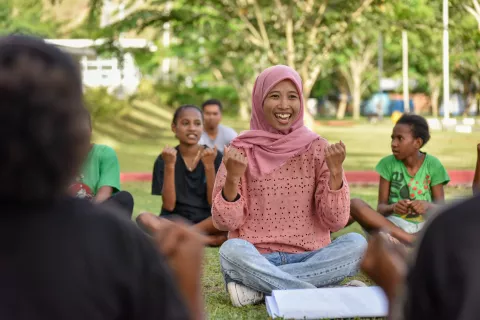
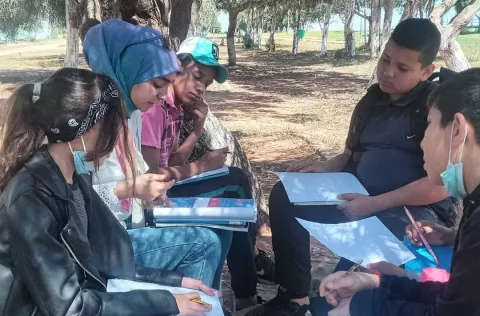
In order to learn and engage actively (inside and beyond their activity spaces), adolescents participating in any programme need to feel safe, included and valued. The time they spend together should give them a chance to connect with their peers, and practice communication, teamwork and other skills as they work, play and have fun together. To foster these positive relationships, facilitators should support the adolescents who participate in their programmes in coming together and forming ’Adolescent Circles’ (‘Circles’) – groups of 7-25 adolescents who regularly participate in activities to learn, have fun or take a break from stressful aspects of their lives, and to practice skills, express themselves, work together, and take action in their community.
Facilitators can use another name for ‘circle’ if they prefer. Other names include ‘team,’ ’group,’ and ‘club.’ Or, let adolescents create their own name for their circle.
Why a ’Circle’?
Everyone fits in a Circle – no one is more or less important. Each member brings their ideas and skills to the Circle, and helps to strengthen it. By listening and supporting each other, members keep the Circle connected.
Circles work together to achieve group goals. This unites them. Ideally, members of a Circle develop a shared identity, even if their ethnic, religious, caste, or other identities differ. This shared identity needs to be fostered with care.
Circles are strong because they are flexible. If a new adolescent joins, the Circle can grow to include him or her as an equal member. If an adolescent needs to step out of the Circle—to help their family, work, or respond to other situations—the Circle shrinks but remains intact.
Who should work together in a Circle?
Who should work together in a Circle?
Keep the Circle size small. Adolescent Circles can include between 7 – 25 adolescents. Circles of this size allow all participants to share their thoughts and opinions during sessions, and get to know each other. They also allow facilitators to get to know each participant, provide them with support, and recognize their strengths, interests and needs. If there are more than 25 in a Circle, participants may feel less sense of belonging, and facilitators may find it challenging to manage activities and keep participants engaged.
Group adolescents by similar age. Circles usually function best if they include participants who are around the same age, so that activities and approaches can be created to fit their abilities and interests. When adolescents are with peers close to their own age, they may feel more comfortable raising and discussing certain topics.
Same-gender Circles often work best. Same-gender Circles provide adolescent girls and boys with a safe space to discuss and learn about topics that are important to them, including topics that may be sensitive or specific to their roles or other aspects of their development. Forming same-gender Circles can be essential to ensure access to and safety in programme activities in contexts in which it is not acceptable for adolescent boys and girls to interact.
Form diverse circles. Beyond gender and age, circles should be diverse and should give adolescents a chance to connect with peers with different abilities, backgrounds and experiences. Circles should be inclusive and should never reinforce discriminatory norms or attitudes.
Facilitators (together with programme coordinators and others in the host community) should take care to ensure that the composition of Adolescent Circles does not prevent any adolescents from participating. However, when forming diverse Circles, they should also take care not to create conditions that adolescents are not prepared to handle safely.
Include all adolescents, for example:
- Remove social barriers to adolescents’ participation– including those that are invisible. In some contexts, adolescents may not be comfortable or may not be supported or permitted by their families or communities, to participate in activities with adolescents of different ages, genders, roles or from other groups. For example, older adolescents may be embarrassed or uncomfortable joining Circles that appear to be for younger children. Adolescents who are married or are parents, and are seen as adults in their communities, may not be interested or permitted by their spouses to play with those who are unmarried and still ’children.’ In these cases, forming separate Adolescent Circles for certain groups of adolescents may be a strategy to reduce or remove these barriers to their participation.
- Build peace and be sensitive to conflict. Learning with and from adolescents from different ethnicities, religions, or other backgrounds can create valuable opportunities for adolescents to develop empathy and respect, among other competencies. Forging positive relationships across these differences can also contribute to long-term possibilities for social cohesion and peace. However, in some conflict affected contexts, it may be challenging for adolescents from different backgrounds or experiences to come together. Work with the community to try to use Adolescent Circles as an opportunity for adolescents to get to know each other and enjoy the bonds that can grow from playing, learning and working together. Do not force adolescents from different groups together if this might exacerbate tensions or undermine the community’s trust in your programme. (See Investigate Adolescents’ Situations for guidance on questions to investigate when planning and implementing programmes for adolescents).
- Support. At least one, and ideally two facilitators should work together to support one Adolescent Circle.
Highlights
In order to learn and engage actively (inside and beyond their activity spaces), adolescents participating in any programme need to feel safe, included and valued. The time they spend together should give them a chance to connect with their peers, and practice communication, teamwork and other skills as they work, play and have fun together. To foster these positive relationships, facilitators should support the adolescents who participate in their programmes in coming together and forming ’Adolescent Circles’ (‘Circles’) – groups of 7-25 adolescents who regularly participate in activities to learn, have fun or take a break from stressful aspects of their lives, and to practice skills, express themselves, work together, and take action in their community.
Facilitators can use another name for ‘circle’ if they prefer. Other names include ‘team,’ ’group,’ and ‘club.’ Or, let adolescents create their own name for their circle.