

ZimLAC data informs food and nutrition action in Zimbabwe
Walking the dusty tracks of Mutasa, ZimLAC leader Clarissa Muzenda turns lived realities into data, guiding policy to deliver vital food and nutrition where it is needed most.
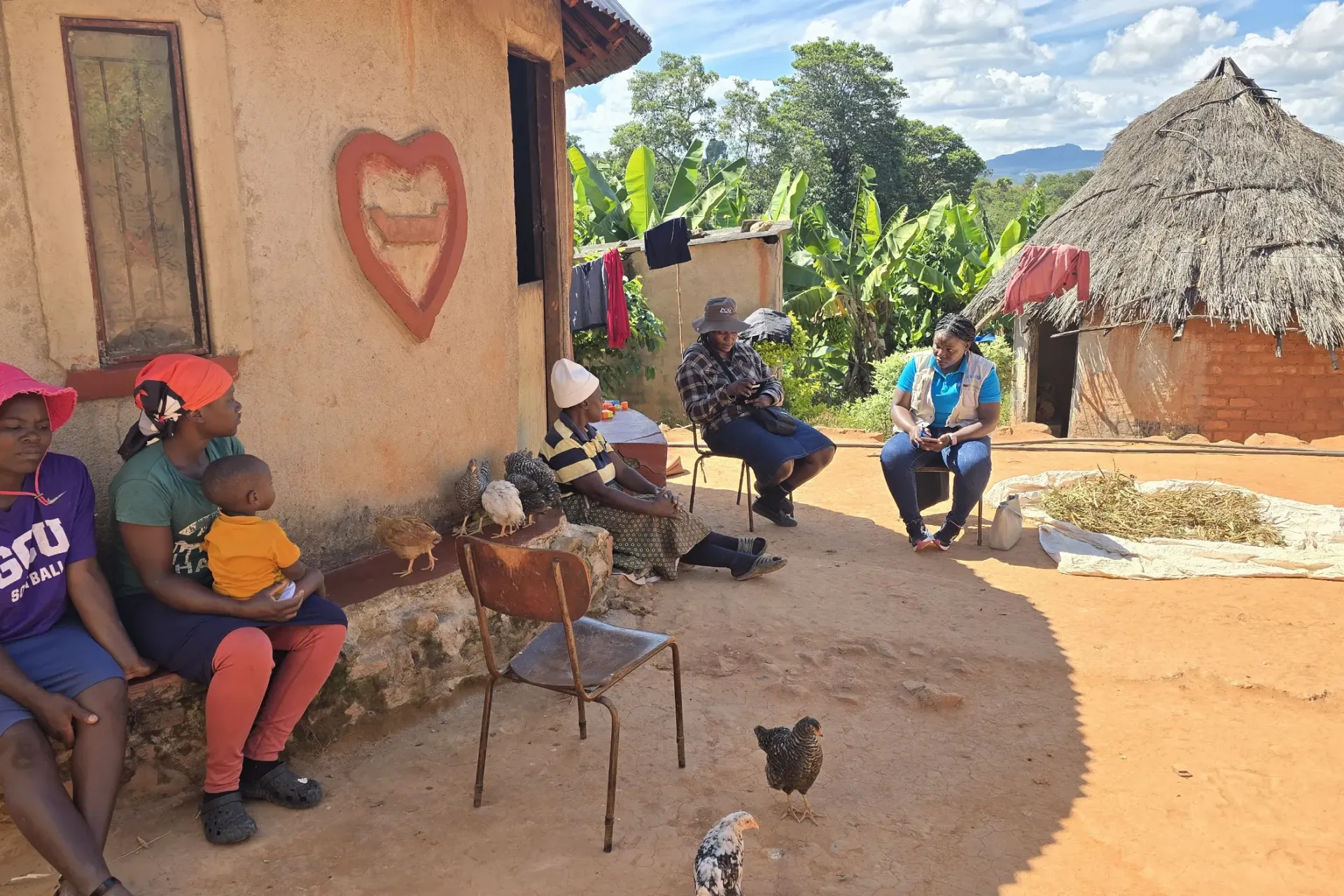
Mutasa, Zimbabwe-Clarissa Muzenda, the ZimLAC team leader for enumeration survey walks along a dusty track in Mutasa District, her notebook tucked under her arm. It is her fourth day in Pangete Village, and the data-collection routine has become familiar.
She pauses briefly as children pass by, watching with curiosity. Ahead, her team moves from one household to the next, working with village guides to reach every family.
Turning to the camera, Clarissa explains the purpose of their visit.
“We are here to understand how people are living,” she says. “We look at livelihoods, income, nutrition, water sources, sanitation, and housing conditions.”
She gestures towards nearby homesteads.
“We also assess food sources—what is grown at home and what is purchased. Crops like maize and bananas, as well as foods such as sugar beans and groundnuts, help us understand household nutrition.”
The work is detailed and time-consuming, but critical.

“This data informs government policy,” she explains. “We analyse a 30-day snapshot of each household—whether they have experienced hunger or shortages. This helps guide decisions on food assistance or agricultural support, such as seeds and fertiliser.”
ZIMLAC’s impact on the nation
The assessment forms part of Zimbabwe’s national Rural Livelihoods Assessment, coordinated by the Food and Nutrition Council (FNC) through the Zimbabwe Livelihoods Assessment Committee (ZimLAC) — a multi-stakeholder platform comprising Government, UNICEF, development partners, NGOs, academia and technical institutions. The assessment is supported by financial contributions from the European Civil Protection and Humanitarian Aid Operations (ECHO).
Chaired by FNC under the Office of the President and Cabinet, ZimLAC plays a central role in strengthening a coordinated, multi-sectoral response to food and nutrition insecurity.
It operationalises Government’s Commitment Six under the Food and Nutrition Security Policy, which calls for an integrated national system that provides timely and reliable evidence on food and nutrition security to guide decision-making and programme effectiveness.
Through this system, FNC and its partners ensure that evidence is not only collected but also actively used to inform planning, early action, and policy direction. The assessment results are also critical for monitoring national and global commitments, including the National Development Strategy, the Sustainable Development Goals, and the Zero Hunger agenda.
The Rural Livelihoods Assessment provides a detailed analysis of rural households, including demographics, education, health, nutrition, water and sanitation, energy use, social protection, income and expenditure patterns, coping strategies, shocks, and food security outcomes. It also helps identify geographic inequalities and measure the effectiveness of programmes at the local level.

ZIMLAC is about saving lives
As Dr Kembo, Director General of the Food and Nutrition Council, notes: “The assessment provides critical evidence to guide policies and programmes, helping us target support to those most in need while tracking progress and addressing inequalities at the community level.”
For communities like Pangete, this process is tangible. Gogo Machena sits beside her grandchildren as health workers measure their MUAC and record their height during the assessment.
“We take part because we know this will help the government understand what we need in our communities,” she says. “When they measure our children and ask questions, we know it is to improve their health and our lives.”
The findings will contribute to a national evidence base that informs both immediate response and long-term planning, including the development of the National Development Strategy 2.
For Clarissa, each household visit is part of this wider system, turning lived realities into evidence that shapes national decisions.
With a brief nod, she rejoins her team and continues to the next home, adding another piece to the understanding of Ward 6.
