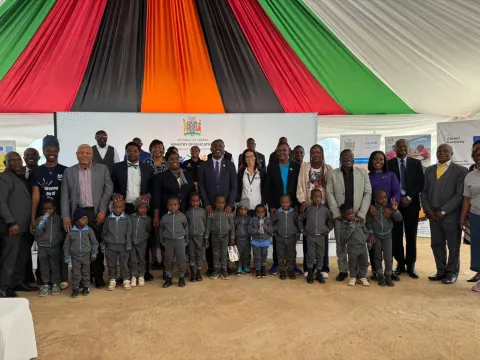
4th Africa Business and Human Rights Forum Calls for Inclusive People and Planet Centered Growth
Held for the first time in Lusaka, the Forum provided a space to reflect on Africa’s progress since the adoption of the UN Guiding Principles on Business and Human Rights

Lusaka, Zambia, 7–9 October 2025 — The Fourth Africa Business and Human Rights Forum brought together more than 600 delegates from across the continent to chart a new course for responsible and inclusive business. Co-organized by the Government of Zambia, UNICEF, UNDP, UN Women, OHCHR, and the African Union, the three-day event focused on the theme “From Commitment to Action: Advancing Remedy, Reparations and Responsible Business Conduct in Africa.”
The Forum convened senior government officials, regional bodies, the private sector, civil society, and youth to ensure that Africa’s economic growth delivers justice, equity, and inclusion. Participants called for a shift from policy commitments to concrete actions that advance human rights, transparency, and accountability in business operations.
Day One – Setting the Tone
The opening plenary set an energetic and reflective tone. Against the backdrop of the Forum’s theme, Zambia’s Minister of Justice, Hon. Princess Kasune MP, challenged delegates to put people at the center of economic progress.
“This Forum is setting the roadmap for implementing the Business and Human Rights agenda. Strengthening human rights is not only good for society but good for business.”
Her words were echoed by Beatrice Mutali, UN Resident Coordinator in Zambia, who reminded participants that shared prosperity must rest on fairness and inclusion. “Prosperity that sidelines workers, communities, or the environment is neither just nor lasting. Respect for human rights is its foundation, “she said
Representing UNICEF, Dr. Nejmudin Kedir Bilal drew attention to children’s rights within the business and human rights agenda: “Every day, businesses — large and small — impact the lives and rights of children. Responsible business is not just compliance; it is creating long-term value for society and for children.”
The day closed with a shared commitment — Africa’s growth must be grounded in justice, dignity, and sustainability.


Day Two – Opportunities and Risks of Digital Technologies for Children in Africa
A panel discussion on Digital Governance for Inclusion and Safety brought together policymakers, private sector leaders, and child rights advocates to explore how Africa’s digital transformation can empower yet also endanger children.
Opening the session, Opal Sibanda of the African Committee of Experts on the Rights and Welfare of the Child emphasized that digital technologies can promote inclusion and learning but also expose children to new dangers. “Digital transformation must be inclusive, safe, and guided by child rights principles. Every child deserves both access and protection,” she said.
From UNICEF, Josianne Barron introduced the Digital Child Rights Impact Assessment (DCRIA) Toolbox, a resource that helps businesses align with the UN Guiding Principles on Business and Human Rights. “Children’s unique vulnerabilities must be considered throughout the technology lifecycle — from design to delivery,” she explained.
Government representatives Bernard Banda from Zambia Information and Communications Technology Authority (ZICTA) and Dr. Jamal Tunza (Cyber Security Authority, Ghana) outlined national efforts such as Zambia’s forthcoming Child Online Protection Strategy and Ghana’s Safer Digital Ghana campaign.
From the private sector, Chanda Mwala of GSMAZ highlighted work to expand rural connectivity and promote online safety. The panel concluded that balancing online safety with children’s freedom of expression requires ongoing dialogue, legal evolution, and shared responsibility.

Day 3 – Building Pathways for Africa’s Youth
Day Three was all about potential — Africa’s young people. During a session on “Barriers and Solutions in Youth Employment Across Africa,” experts, policymakers, and private sector partners explored how to unlock meaningful opportunities for young people.
Ed Dyson from Genesis Analytics presented findings from multi-country youth employment assessments, identifying persistent barriers such as curriculum misalignment, ecosystem fragmentation, and inequitable access to skills and jobs. “To overcome fragmentation, we need national systems brokers — conveners who can drive a unified youth employment agenda,” said Dyson.
UNICEF’s Kimberley Joanna Davis outlined the Generation Unlimited initiative, which leverages technology, financing, and partnerships to create learning-to-earning pathways, especially for young women and focused on digital platforms such as Yoma. “Through digital platforms like YOMA, we’re helping youth build verified digital credentials that open real opportunities for employment and entrepreneurship,” she said.


Representing the Ministry of Youth, Sport and Arts, Mabel Naziwe shared Zambia’s commitment to empowering young people through the National Youth Policy, internship programs, and the forthcoming National Youth Portal. “Too many young people don’t know what opportunities exist for them. The National Youth Portal will make it easier for every young person to access training, funding, and employment opportunities in one place,” said Mabel.
From the private sector, Kabanda Chewa of Yango Zambia described how technology is creating inclusive economic opportunities: “Technology has democratized mobility and created a level playing field for anyone with a smartphone and ambition. Today, young women are driving taxis, running fleets, and earning in spaces once closed to them.”
he day concluded with a call for coordinated youth ecosystems that aggregate opportunities, promote gender equity, and formalize the informal sector to protect labor rights.
From Commitments to Accountability
Day 3, the final day, also focused on implementation and accountability. Delegates discussed advancing National Action Plans on Business and Human Rights and integrating human rights principles into corporate ESG frameworks. Governments reaffirmed commitments to transparent and accountable practices, while private sector representatives pledged to align operations with ethical and inclusive standards.
In closing, the UNDP Resident Representative, Mr. James Wakiaga, reminded delegates: “Africa’s future will be defined by the partnerships we build today — partnerships that respect people, protect the planet, and promote prosperity for all.”
Looking Ahead
As the Forum ended, one message resonated clearly — responsible business is the cornerstone of sustainable development and a better future for every child, family, and community in Africa.