"Never leave a child behind"
In the Diffa region of Niger, more than 1 in 2 children require humanitarian assistance

As a result of the Boko Haram conflict, children have been subjected to violence and abuse, and lost their families, their homes and missed out on years of education. In the Diffa region of Niger, more than 1 in 2 children require humanitarian assistance, including transit care with host families.

"One night, we heard that Boko Haram attacked the village just a few kilometres from ours. They were killing people, looting and burning everything in their path. That day, with no time to take any belongings apart from one dress, we had to flee to the bush." The attack took place in Nigeria in 2014.

Following the attacks, Hadjara took a canoe to cross the border between north-east Nigeria and south-east Niger. She was fleeing the violence of Boko Haram and seeking safe shelter for her and her four children.
After a week, they joined thousands of other Nigerian displaced people who had settled in Lake Chad’s Karamga Island, where they remained for a year.
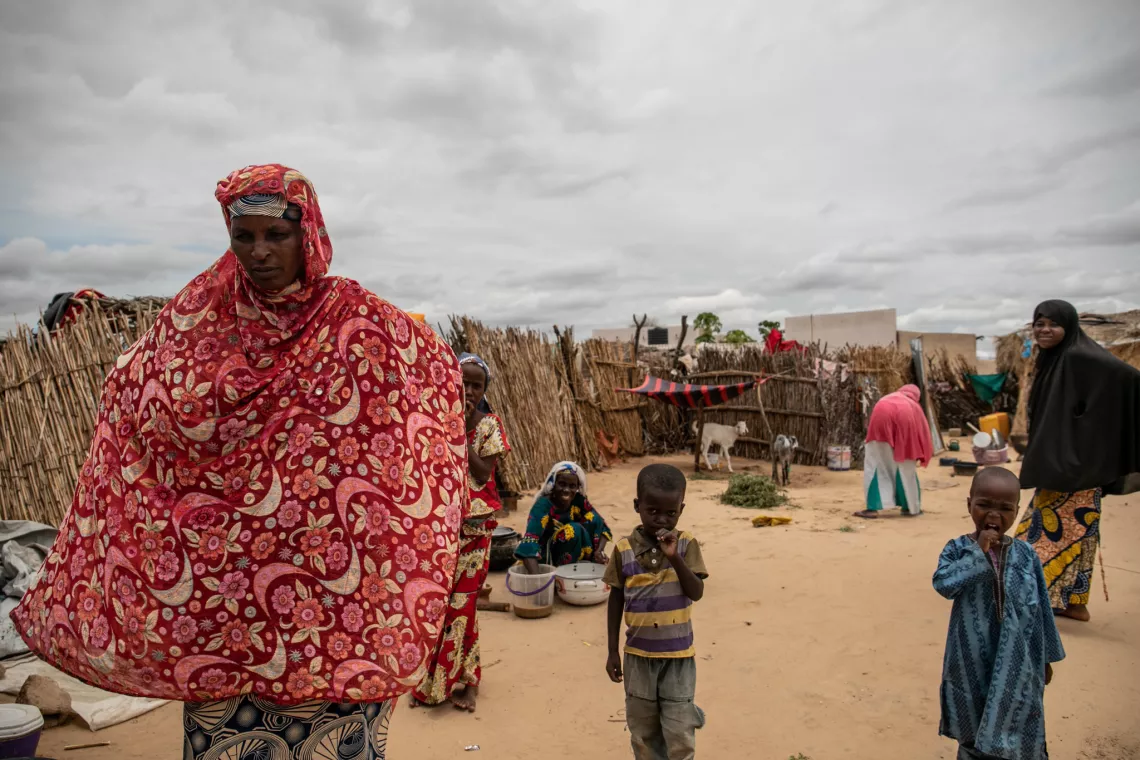
"I knew their mother from our village in Nigeria. We were neighbours and friends. When I met her again in Karamga site, she was very sick and weak. She couldn’t move because of the pain. She died in front of me," recounts Hadjara.

In the Diffa region, host families shows gesture of compassion, love and responsibility welcoming unaccompanied children, boys and girls from any age, and caring for them despite the harsh living conditions following attacks by Boko Haram and displacement.

"The local people and humanitarian organizations were the only ones to provide us with something to eat and drink on our journey. At that time, I had to feed another two children."
After Niger’s authorities evacuated 4,000 Nigerians seeking refuge from Boko Haram in Karamga Island, Hadjara brought with her Shadia and Aisha along with her four biological children to Diffa city. "I couldn’t leave them behind. Never."

A truck brought Hadjara’s new family safe to Diffa city, where the local population hosted refugees and offered them a shared portion of land to build a temporary shelter.
Since 2016, they share the neighbourhood with an estimated 1,000 families including refugees, internally displaced people, or returnees.

"In a normal day, we wake up early to pray, we help a bit at home and then we come to the centre to play with other children and learn something new. I really want to improve my French language. One day I want to be a nurse," says Aisha (left).

To date, 401 unaccompanied children have been identified in Diffa region and 88 have been reunited with their families thanks to the support of UNICEF and child protection actors.
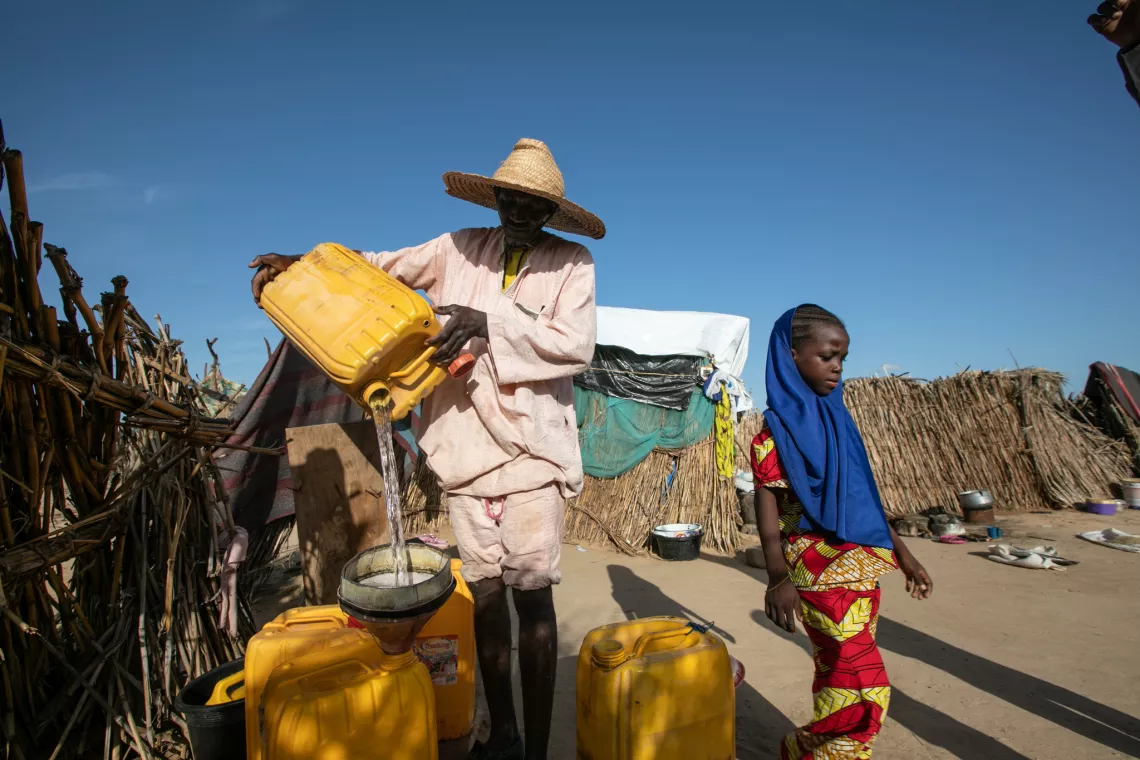
In Diffa region, the percentage of children reunified with their families is low (22%) and the conditions for their reunification are challenging due to security issues and the complexity to identify the families in a context of continuous population movement.
As a result, children can spend several months in foster care. Social workers from the Regional Directorate for Child Protection (RDCP) work with the support of UNICEF and partners to reduce the risks of early marriages and other forms of abuse and exploitation while in transit care.

"Our priority is to protect displaced and vulnerable children, particularly unaccompanied children, from exploitation and violence. Reunification is the best option but the current conflict makes it very difficult to find the biological families so we identify with partners, host families to ensure the wellbeing of children," says Ildephonse Birhaheka, Child Protection Specialist in Diffa region.
Thanks to the Government of Italy's funding support, UNICEF is supporting the local authorities by financing and providing training for RDCP social workers and host families like Hadjara on caring for unaccompanied and separated children. Psychosocial support is also provided, as well as assistance to ensure the follow-up of cases, and support for children placed in host families with hygiene kits, clothing, and access to recreational and creative activities in child-friendly spaces.

"I treat them the same as my own biological children. We have developed a true mother-daughter relationship, they are part of the family now. They even call me mom," says Hadjara.
"I believe that Shadia and Aisha are well cared for here. They go to school, they do recreational activities outside the home, they have friends, and they have me. We are a family now. I just want to see them grow in peace. That’s all."