World Children’s Day 2024 in Viet Nam
For Every Child, a Liveable Planet
- English
- Tiếng Việt
This World Children’s Day, we have an opportunity to answer children’s urgent call for climate action. Why? For children, the future is now. Climate change is here – it isn’t a matter of tomorrow.
Our call to action on this special day is For Every Child, a Liveable Planet.
This is more than an ideal or an aspiration. It is a fundamental right – the right of every child to grow up safe from climate and environmental threats. Climate change isn’t another generation’s problem. It is ours. In Viet Nam, UNICEF works with the government, development partners, children and young people to ensure the most vulnerable communities are prepared and protected from climate hazards.
#Together, let’s work for a liveable planet for all!

#Get inspired – become a climate change agent
Children are the least to blame for the climate crisis, yet they have the most to lose.
But, growing numbers of Vietnamese children are becoming climate change agents to raise awareness and learn how to be better prepared with their communities. See how children are making their voices heard and taking action.

COP29
Climate change is threatening children’s lives – it is time the world’s leaders listened. At the #COP29 climate summit in Baku, Azerbaijan, Nguyen Viet Nhat sent a message to leaders urging them to protect children and do more to tackle climate threats and ensure a liveable tomorrow.
Children, young people and experts who participated in UNICEF’s World Children’s Day event on 20 November raised their concerns, shared ongoing climate action initiatives and discussed the future.

See how more children are joining the climate conversation in Viet Nam
Check out the results of the 1-minute video challenge and see how children have turned a 'green thought' into a 'green action' for a safer, cleaner, and greener Viet Nam for every child.

Young Voices for Climate Action
To help mark World Children’s Day, children took centre stage in Ha Noi at a UNICEF-hosted event to demand climate action for every child, every day. Join Le Nguyen Bao Ngoc and others in listening to these young voices for climate action.
About World Children’s Day
What is World Children’s Day?
It’s the global day of action for children, by children, marking the adoption of the Convention on the Rights of the Child.
It’s celebrated every year on 20 November to promote children’s rights, as enshrined in the Convention on the Rights of the Child (CRC) adopted by the United Nations on that date in 1989. Viet Nam was the first country in this region and second worldwide to ratify the CRC.
This year, UNICEF’s call to action in Viet Nam is For Every Child, a Liveable Planet.
The world's children deserve #ALiveablePlanet and need decisive action now! It's time to protect, prepare and prioritize them.
What is the climate crisis?
The evidence is clear: every child’s ability to survive, grow, and thrive is under threat.
For Viet Nam and its children, as one of the most vulnerable and affected countries by climate change, a safe and liveable future is no longer guaranteed. Increasingly severe climate events – such as drought, typhoons, landslides and floods – are the new normal for millions of children and their families. This means disruptions to essential healthcare, nutrition and education services that can harm children’s health and well-being from pregnancy to adolescence.
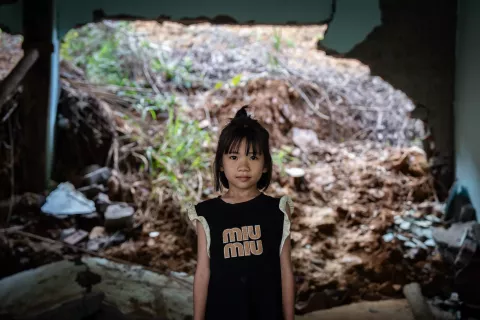
Typhoon Yagi’s recent deadly path of destruction across northern Viet Nam is a stark reminder that devasting climate-driven disasters are now the new normal. See how UNICEF is responding, with emergency assistance reaching children and families in worst-hit provinces.
The State of the World's Children Report 2024
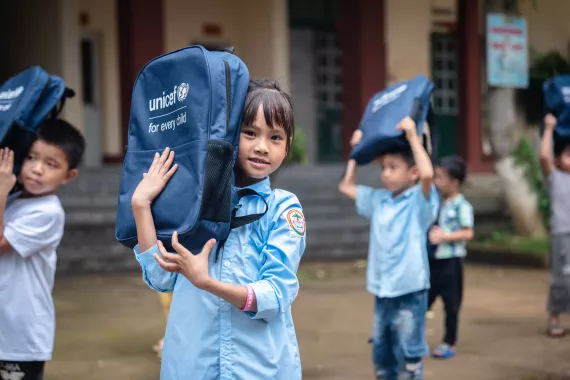
The critical need for further climate action also headlines UNICEF’s flagship State of the World’s Children (SOWC) report released to mark World Children’s Day globally.
The State of the World’s Children 2024: The Future of Childhood in a Changing World warns that future of childhood hangs in the balance if urgent action is not taken to safeguard children against climate and environmental crises, along with demographic change and breakthrough technologies.