

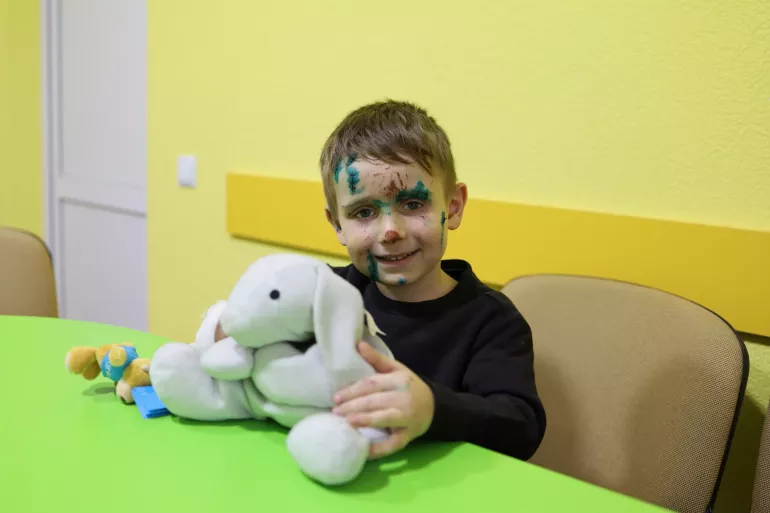
“I was trying to save my candy,” were Valeria’s first words after a massive attack that hit her
neighborhood in Sumy, northeast Ukraine.
Except she wasn’t.
The four-year-old was trying to reason with how one minute she was watching cartoons, and the
next, thrown from the sofa and covered in clothes and dust in the middle of the floor.
“That’s all she remembers from that day,” her mum Kateryna tells us.
From normality to hell
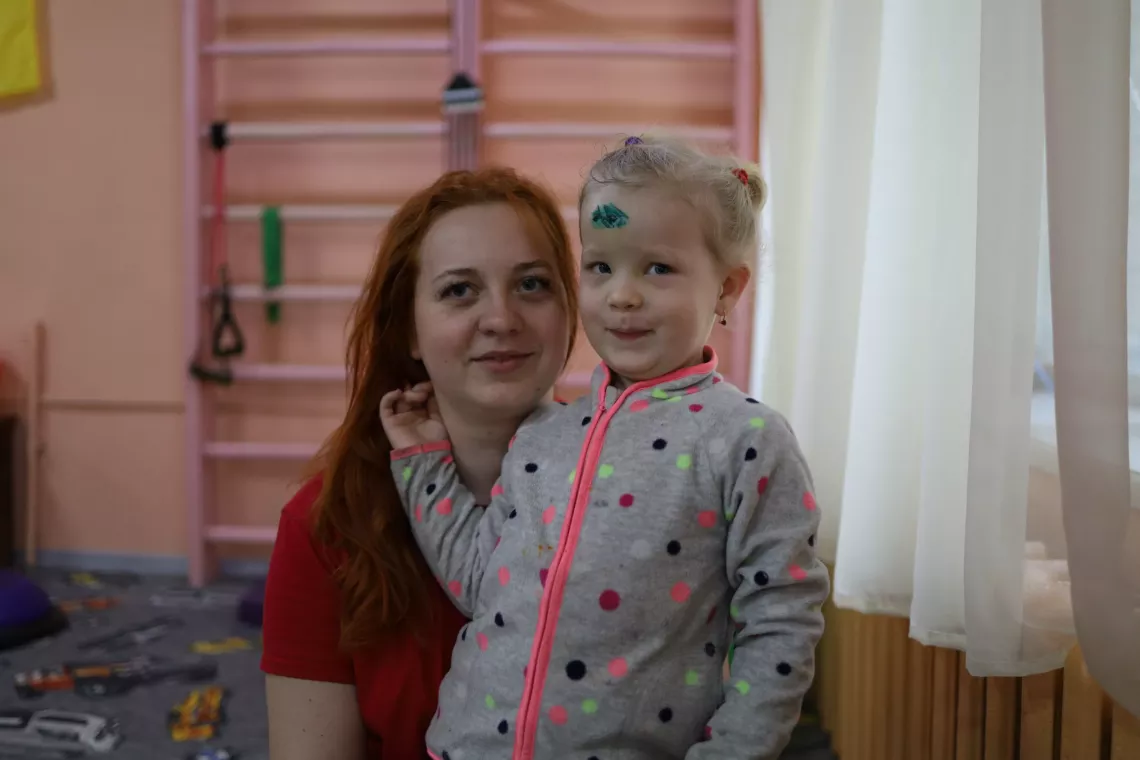
We meet Valeria and her mother at the local children’s hospital where she’s receiving physical rehabilitation and other treatment for her thankfully now minor physical injuries.
The morning of 24 March 2025 was a normal one, or as standard a start to the week as it can be during wartime, until the explosion and its resulting blast-wave ripped through their apartment block, schools, health clinics and other homes nearby.
Kateryna tells us she was at work, across the road from home at the local school. She was promoted to deputy head not so long ago and was attending the Monday management meeting.
Classrooms had only opened two months back after years of online learning.
Our conversation is interrupted by the sound of a jet overhead. “We heard something like that,” Kateryna says. We look out at the sky, silent for 20 seconds as the roar becomes ever more distant and eventually fades out. Kateryna goes on:
“And then the window just blew in on us.”
The fog of survival
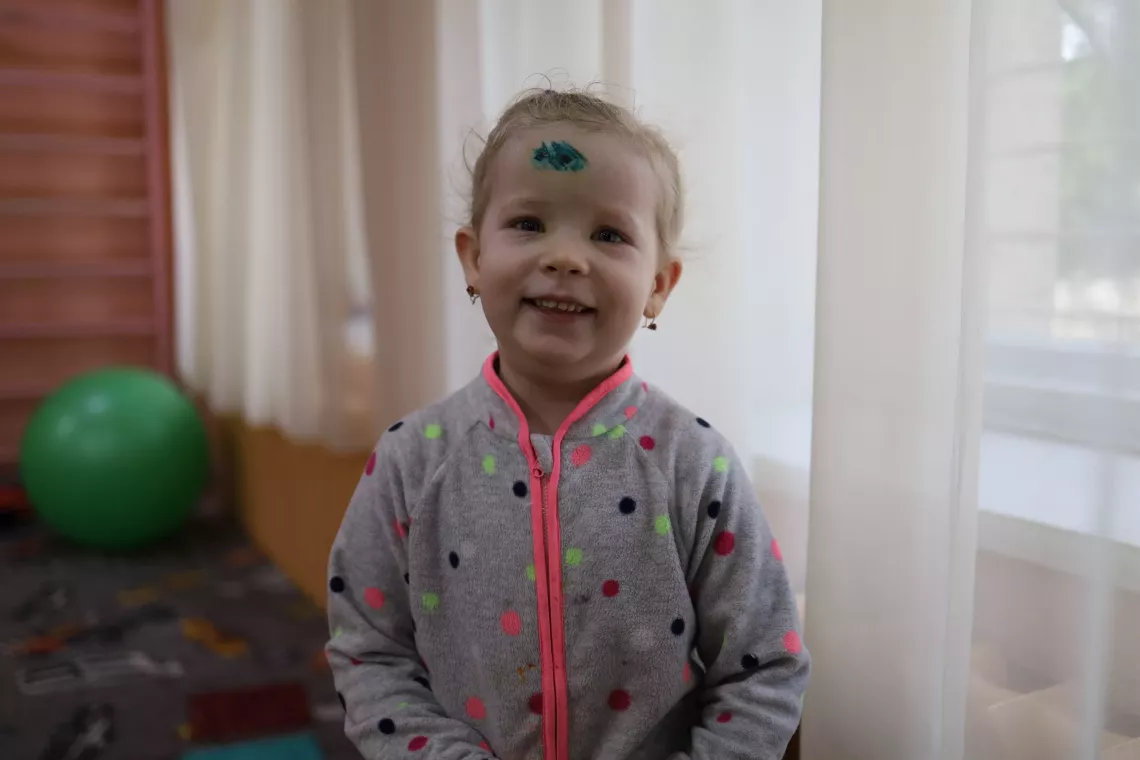
The next few hours were a blur.
Kateryna realized she was ok and then finally got through to her father, who was looking after Valeria, on the phone. As she approached, she saw her apartment on fire.
“I heard something like ‘Valeria and blood’. I went crazy and just ran home to see what happened.”
Meanwhile, on the ground floor of the apartment block, 15-year-old Kira was walking into the building during her break in lessons when the attack hit. We meet her outside the entrance. Debris is strewn around. The windows to her home are boarded up.
Kira’s young life was starting to look up. After such a long-time of online learning, she was happy to be finally back at school with friends since the start of the year. “I just want to be like any other teenager and hang out with my friends,” she says.

But within seconds that renewed positivity was brutally ripped apart, depriving Kira again of her rights to an education, to be with her friends, and to develop her personality, talent and abilities.
“I was just lucky because I covered my face when it happened.”
When she looked out again, she saw blood but realized it was from her friend who was standing with her. The corridor of the building protected them from serious injuries.
On the fourth floor, Kateryna struggled up to her apartment trying to find Valeria and her father but after frantically searching, she found out that people in the block helped to get them down and outside to the emergency services who were arriving. They were heading to the hospital.
UNICEF’s partner, the Ukrainian Red Cross, was immediately on the scene providing emergency care, psychological support, and essentials like bottled water and hygiene kits. UNICEF also rapidly distributed cash assistance to help families like Kateryna’s with their essential needs, as they recover from this horrific day.

The long road to recovery
Kira managed to get back into her home to rescue her cat before going to the local hospital for a check-up. Physically she is ok but the healing inside her head will take much longer.
“It’s really sad about the school because we have a lot of good memories from being there and we were hanging out and now it looks like an abandoned site. I’m in Grade 9 and more of my classmates will leave school after this year. We would joke and spend time together. Now, we won’t have this opportunity to see each other again.”
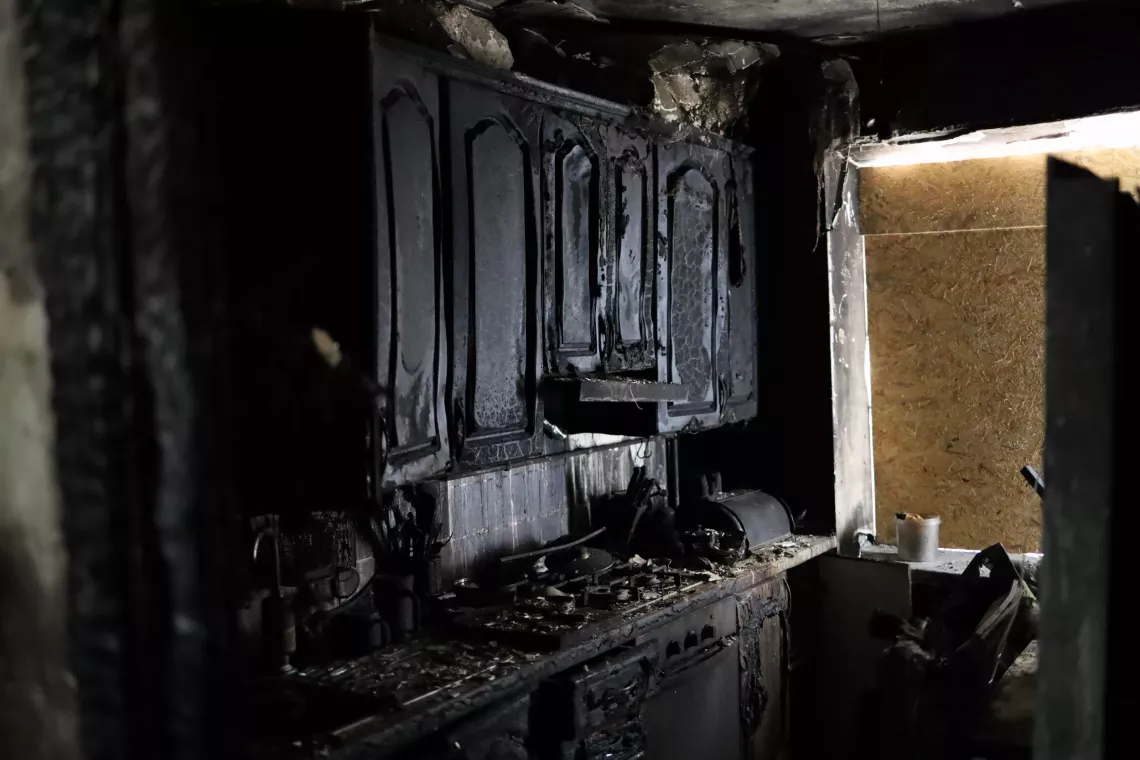
On the fourth floor of the apartment block we visit Kateryna’s apartment, which is largely burnt out. She’s recovering whatever household items and clothes she can.
“Thank God, Valeria is ok,” Kateryna says. “We don’t even think about the apartment anymore because it’s just an apartment. We don’t want to leave the city. Everything is here, our friends, our relatives,” Kateryna tells us. She and Valeria are now staying at her father’s house in the city’s suburbs.
For Kira though, her thoughts of the future have shifted. “Sumy is my hometown. I recall when it was bright, and everything was fine and okay. Life has become more difficult. For me, it’s very important to have teenagers’ things, like hanging out and in person education is very key,” she says.
An uncertain future
The narrative of the war in Ukraine has been heavily dominated by military and political discourse, with the human impact, including on children, at times missing.
Working at UNICEF we see this impact firsthand far too often, as we continue our work across Ukraine and listen to the stories of children and families who have been living through more than three years of war. The experiences and voices of Kira, Kateryna and Valeria articulate how such an attack not only kills, maims and devastates lives in the short term, but also has a longer-term impact, months and sometimes years after the horror of that day.
The next morning, the banks of the city’s Psyol river present a serene scene and it is easy to wonder why any child or teenager should not thrive here. But amid the birdsong, the distinct sounds of war in the distance punctuate the peace, a reminder of the daily reality and threats that children live with here.
