New supplies and training improve vaccine storage in Ukraine
UNICEF and partners have delivered crucial cold chain equipment to vaccine storage sites across Ukraine
- Українська
- English
The United Nations Children’s Fund (UNICEF) and its partners continue to support Ukraine’s immunization programme by supplying special equipment that will enable vaccines to be stored at carefully controlled temperatures.
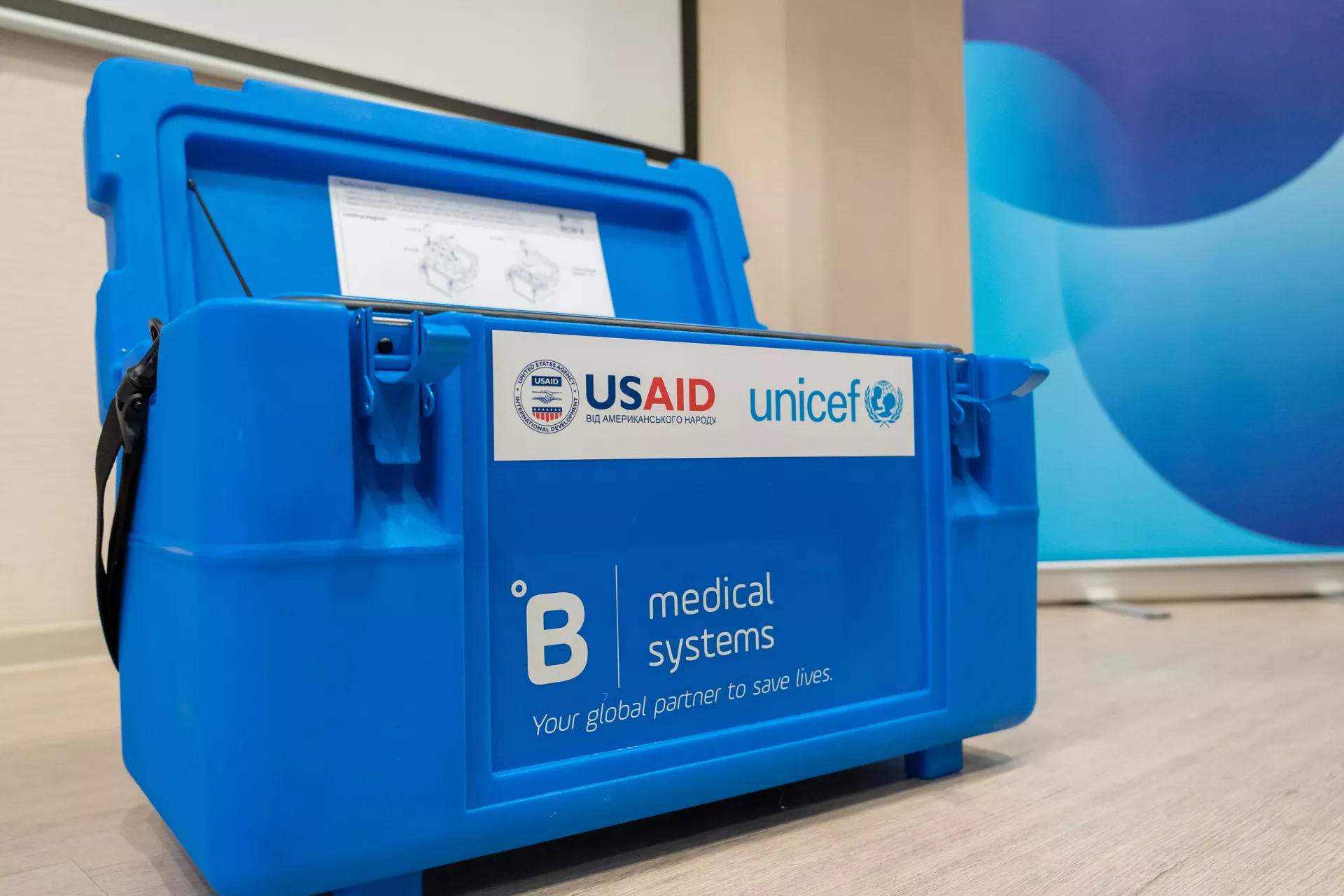
Storage conditions directly impact the effectiveness of a vaccine and most vaccines must be stored at low temperatures. To modernize this cold chain, UNICEF is replacing outdated household refrigerators with special equipment that meets international standards recommended by WHO and UNICEF.
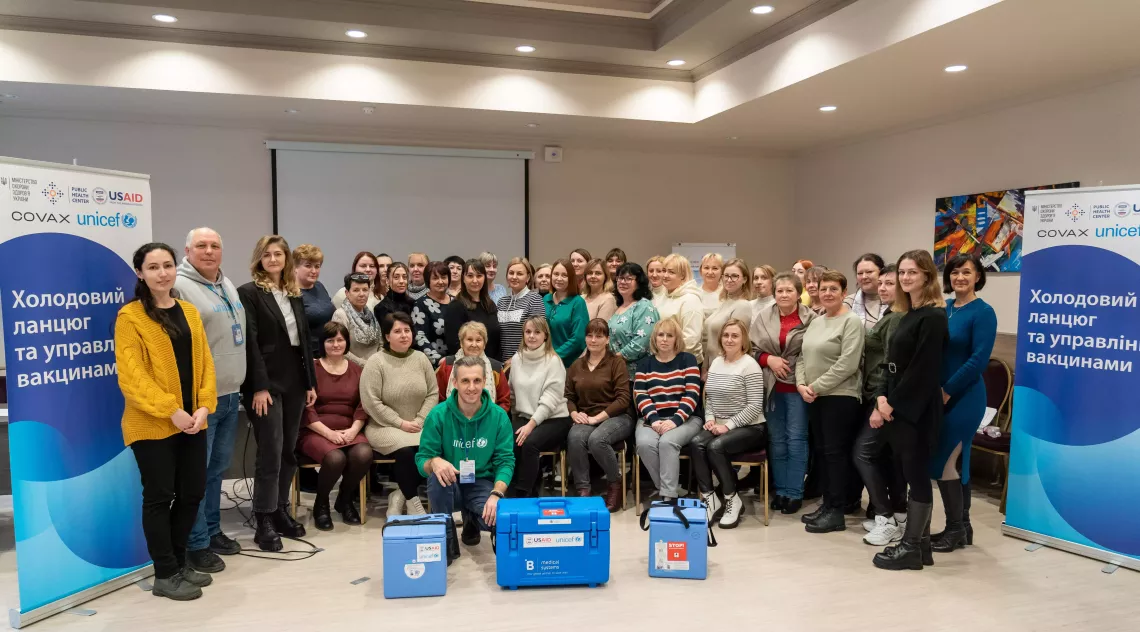
Furthermore, with the support of the United States Agency for International Development (USAID) and the Global COVAX Initiative, UNICEF is conducting training for healthcare workers on how to use this new equipment and to expand their knowledge of vaccine storage and its transportation.
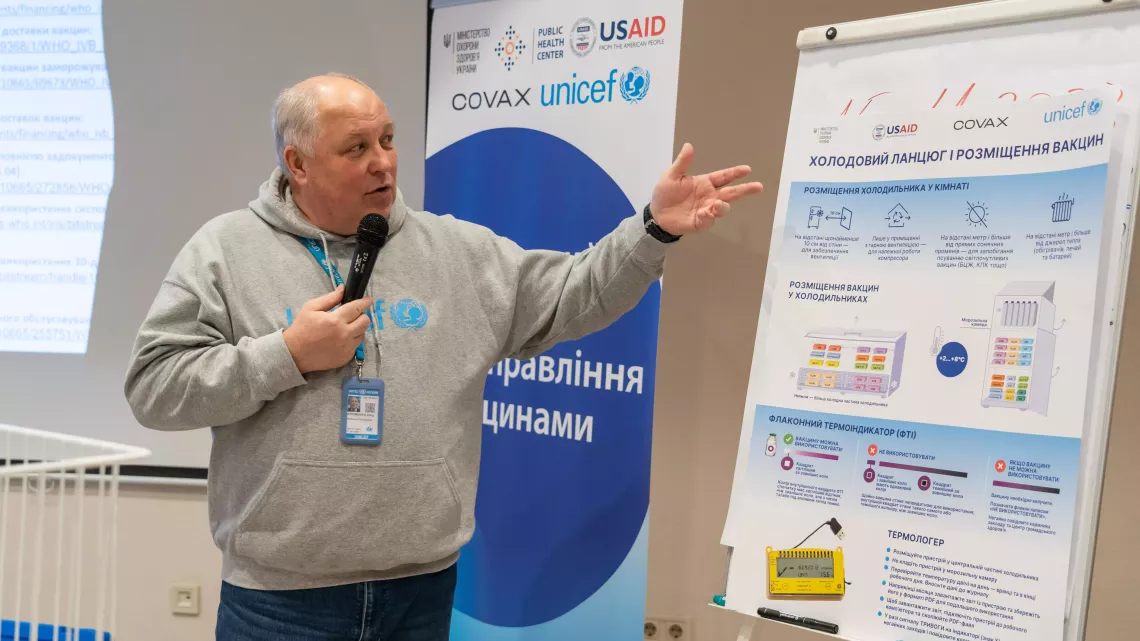
Oleh Khomenko works as UNICEF’s national consultant on cold chain equipment:
"During a one-day session, we teach how to use refrigerators, store vaccines and provide temperature monitoring with special equipment"
Previously, almost all vaccination points in Ukraine were equipped with domestic refrigerators that could not guarantee the correct temperature regime.
The new equipment guarantees precise temperatures and features a voltage stabilizer. Temperatures are recorded every ten minutes and data is stored for a month. In case of power outage, the new refrigerators can still work for 55 to 113 hours, and will maintain the required temperature.
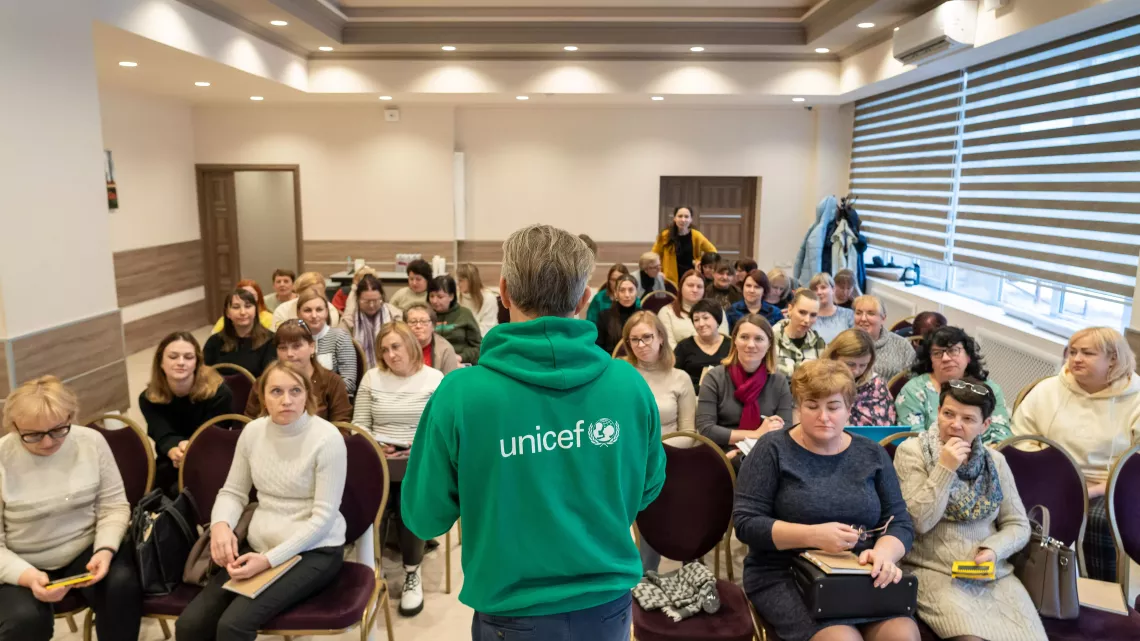
In total, UNICEF trained around 5,000 health workers across Ukraine.
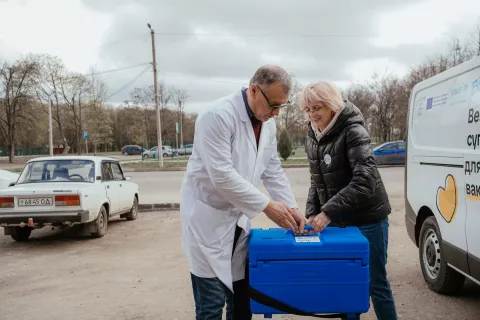
Nataliia Svirgun, an epidemiologist who works at the Bila Tserkva district branch of the Kyiv Regional Center for Disease Control and Prevention of the Ministry of Health, was among recent participants in the training. The branch serves as a district vaccine warehouse, distributing vaccines to vaccination points.
"I learned a lot about modern cold boxes for vaccine transportation,” says Nataliia. “Many of these new things keep developing and there is always room for improvement. Temperature is really important for the vaccine and the cold chain ensures its effectiveness and prolongs its lifespan.”
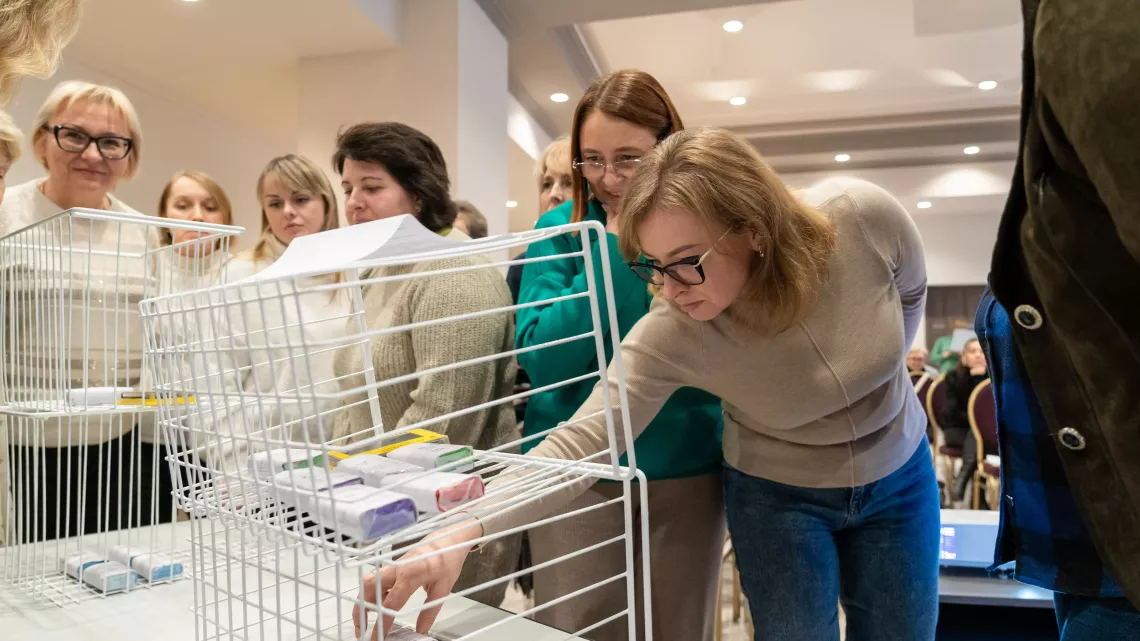
Tetiana Kryvoshienko, another training participant, works as a senior nurse at the Irpin Primary Health Care Center. This centre received new equipment from UNICEF last year and up to 60 vaccinations are performed there every month. According to Tetiana, all personnel working with vaccines already know how to use the new equipment and fully understand vaccine logistics.
"I share all the knowledge with my colleagues. We also underwent online training. In the past, we relied on regular thermometers, which demanded continuous monitoring to measure temperature. Now, we use electronic loggers, ensuring precise temperature monitoring and secure data storage for 60 days.”

As of the 2021 baseline assessment, approximately 93 per cent of vaccine storage sites in Ukraine were furnished with non-standardized equipment. Currently, thanks to UNICEF and other International partners, roughly 80 per cent of these sites are now equipped with standardized professional cold chain equipment and electronic temperature loggers. This is a critical step in efforts to ensure that children in Ukraine are vaccinated with effective vaccines and remain healthy.