From Finding Support to Giving Hope: Hanna’s Story
Stories of children and families rebuilding their lives and finding hope and support at the Tsarychanka Community Resilience Centre

- Українська
- English
“I put off that moment as long as I could, but we had to leave,” Hanna recalls.
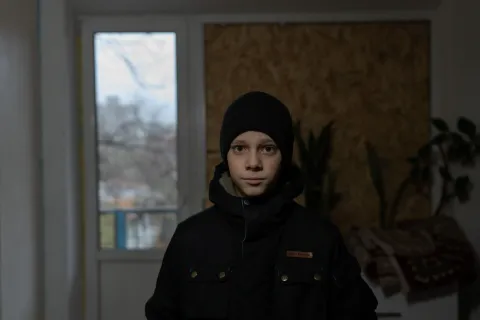
In August 2022, Hanna fled Toretsk in Donetska oblast with her two children and other relatives, settling in the Tsarychanka community in Dnipropetrovska oblast. Just two days later, her husband, a serviceman, was seriously wounded.
After lengthy treatment and rehabilitation, her husband returned to service, while Hanna and her children began rebuilding their lives in an unfamiliar place..
The transition was not easy. Having left behind their home, friends and familiar surroundings, the family had to adjust to life in a rural community where they knew no one.
“At home, I knew everyone. I knew where to turn, where to go, what to do. Here, I didn’t know anything,” Hanna explains.
Today, her 11-year-old daughter Kseniia attends the local school, while her son Daniil goes to kindergarten. Both children also take part in activities at the local resilience centre- a place that has become an important part of their lives.
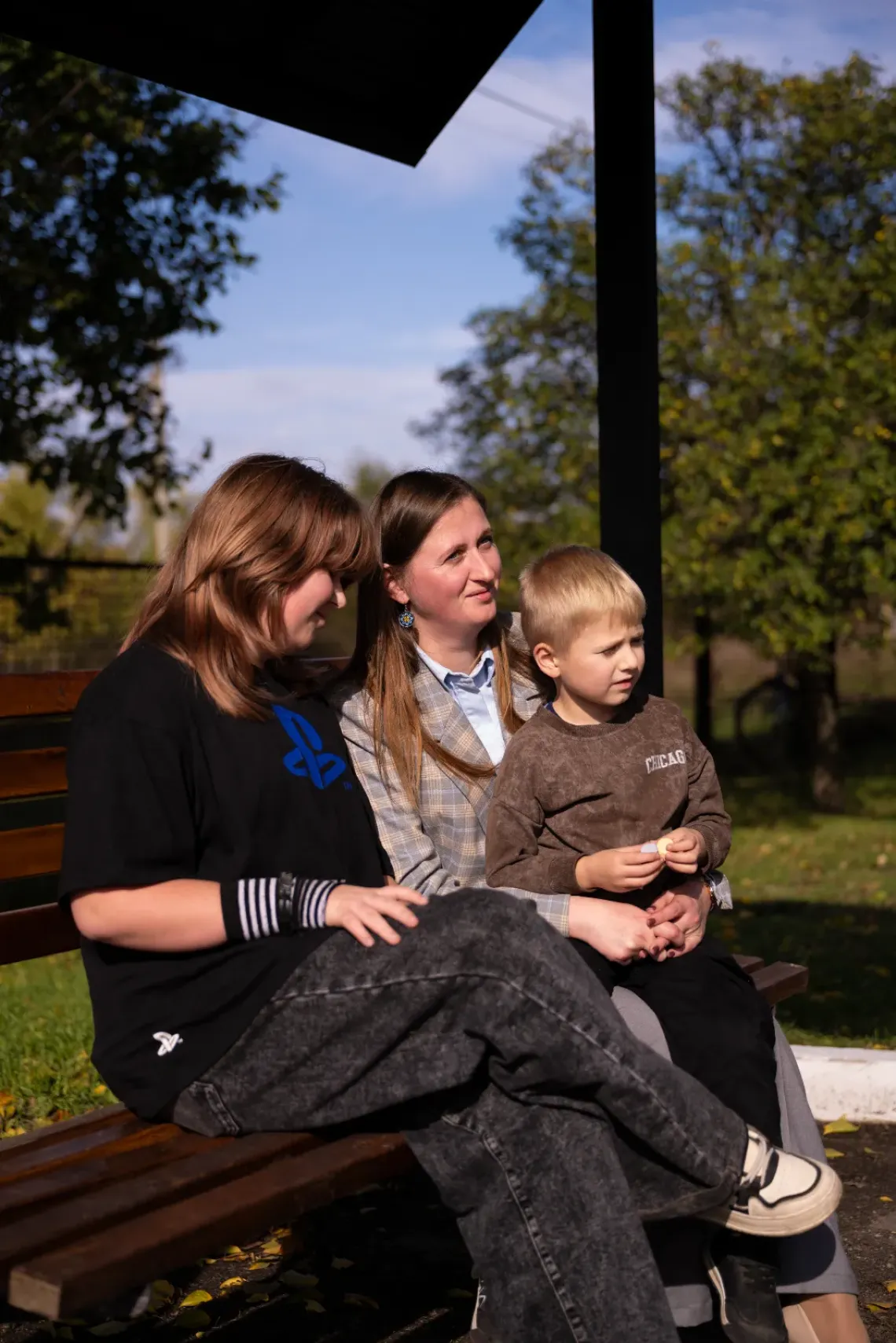
From seeking support to offering it
Hanna first came to the Resilience Centre for support, joining groups for military spouses and internally displaced people. Her children received support from a psychologist and speech therapist, initially through individual sessions and later through group activities.
Adapting was especially important for Kseniia, who lost her circle of friends after the move. Now 11, she enjoys going to school, has friends, and names the activities where she can talk with other children as her favourites at the centre.
“Going to the Resilience Centre gives me new friends and people to talk to,” says Kseniia.
Yet her biggest wish remains unchanged.
“For the war to end, so I can go home and see what actually happened there,” she says.
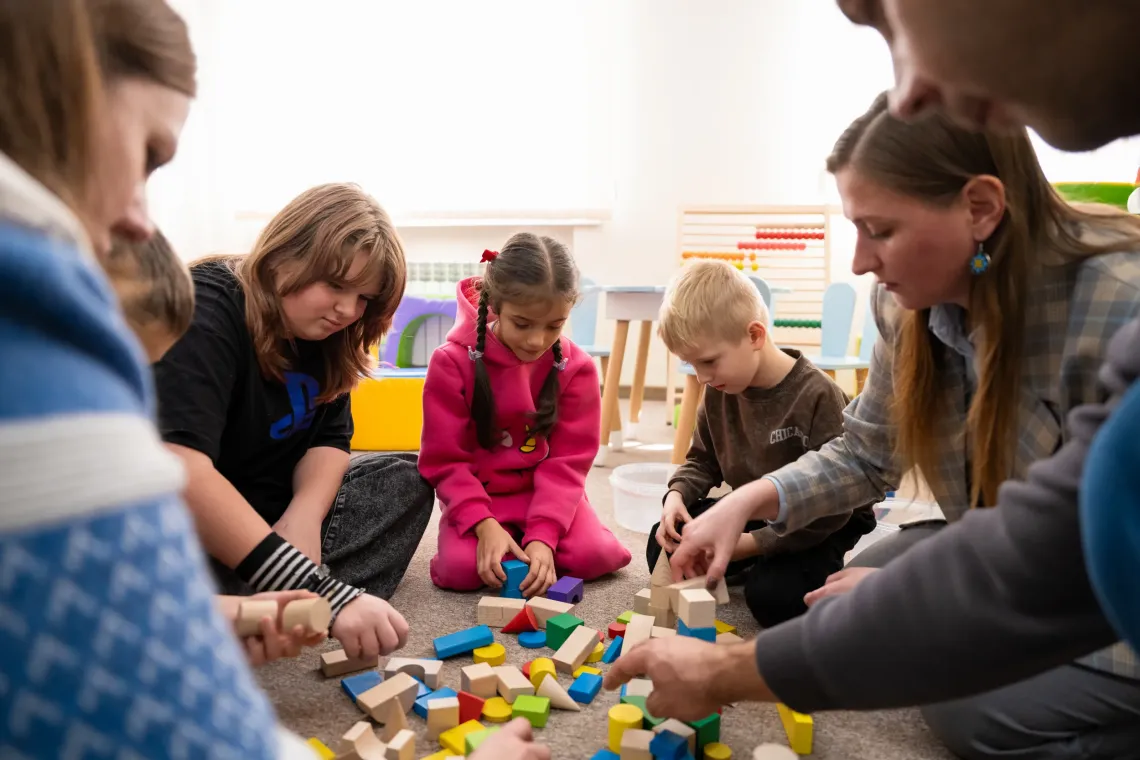
In 2024, Hanna joined the centre’s team. She started as a social work specialist. A lawyer by training, Hanna had never worked in the social sector before. But her own experience of displacement gave her a deep understanding of the challenges facing many of the families seeking support.
“I’m the kind of person who wants to be among people and share my experience – with internally displaced people, military wives, children going through different stages of life,” she explains.
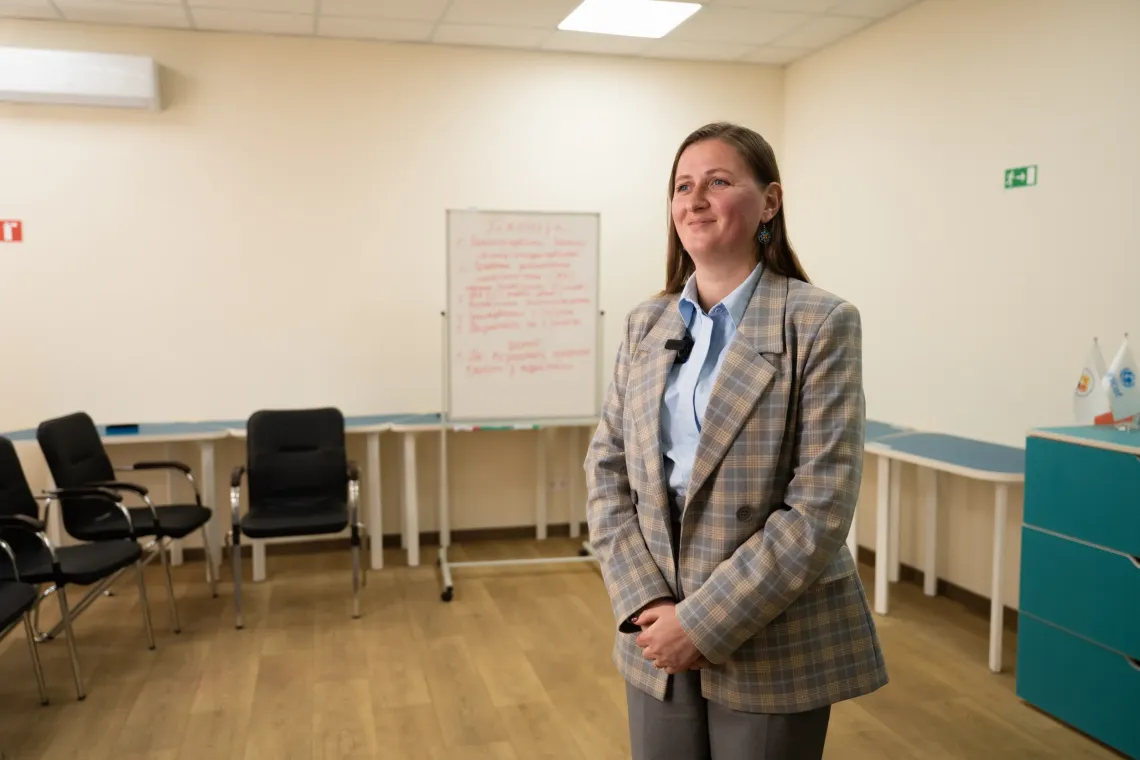
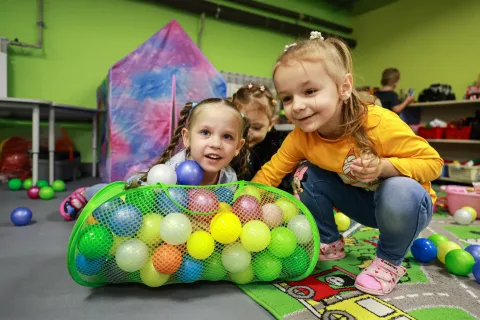
Since the Resilience Centre in Tsarychanka community opened, more than 5,000 people have used its services. Families can receive psychological and social support, early intervention and day care services for children with disabilities, physical rehabilitation and social support. Specialists can also help people apply for financial assistance at other institutions and refer them to health workers and other specialists. Parents can join a range of programmes, including Parenting Without Stress.
A family learning to be together
Among the families supported by the centre are Anna and Platon, who have been receiving assistance for more than a year.
Already parents to two children, the couple decided to adopt two more. But bringing the family together came with challenges. The adopted children were adjusting to a new home, the older children were finding their place in a growing family, and the parents were learning how to support everyone's needs.
“When we first brought the children home, not a single day passed without raised voices, tears and arguments. The children found it hard to open up and weren’t ready for the fact that they now had parents who cared about their health and their future. After the adoption, we really lacked this kind of support. Teaching children who had almost never experienced love to love and to accept love is very difficult,” Anna recalls.
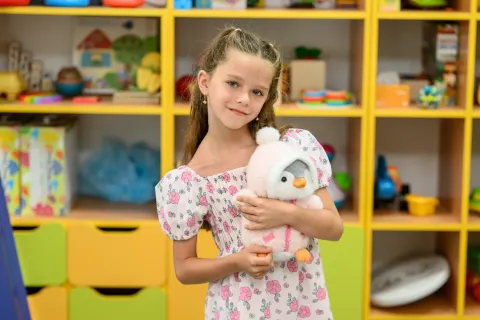
Seven-year-old Vlada needed particular support. She had undergone two complex surgeries, after which she went through rehabilitation with a specialist at the centre, doing exercises and massages and essentially learning to walk again. Vlada also sees a psychologist.


Her nine-year-old brother Artem worked with the same specialist. At first, he found it hard to trust adults, communicate with others and go to school. Today, he enjoys playing football.
For Anna, the changes are visible in everyday family life.
“Sometimes there are little waves, little wars – fighting for their place in the sun. But the atmosphere in the family has definitely improved,” she says.
A place to turn to
For many families, asking for help is not always easy. Some arrive at the Resilience Centre unsure of what support they need or how to explain their situation.
Hanna says that sometimes people simply stop by to ask about available services, only to find themselves talking with staff at reception for 40 minutes.
She understands that uncertainty. Not long ago, she too was navigating an unfamiliar community, unsure where to turn.
Today, she is helping others find their footing - offering the support and guidance that once helped her own family.
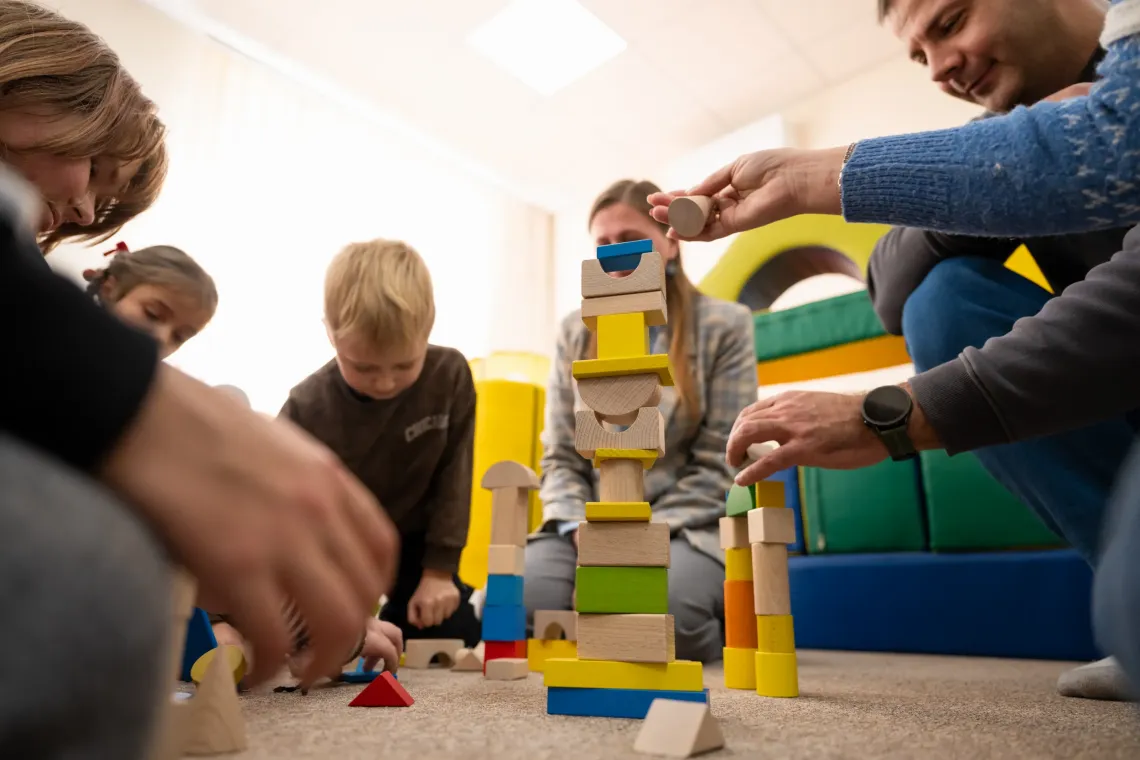
The Resilience Centre in Tsarychanka community provides services that help children and families overcome difficulties, recover, develop and become more resilient during the war. This support helps communities recover faster in the future. Since the network was launched in 2024, Resilience Centres across the country have been visited by 3.9 million people.
The centres operate in coordination with the Ministry of Social Policy, Family and Unity of Ukraine, with support from UNICEF and funding from the German Federal Ministry for Economic Cooperation and Development (BMZ) through KfW Development Bank.