Mapping cash plus programmes for education outcomes
Evidence from Uganda and global contexts
Highlights
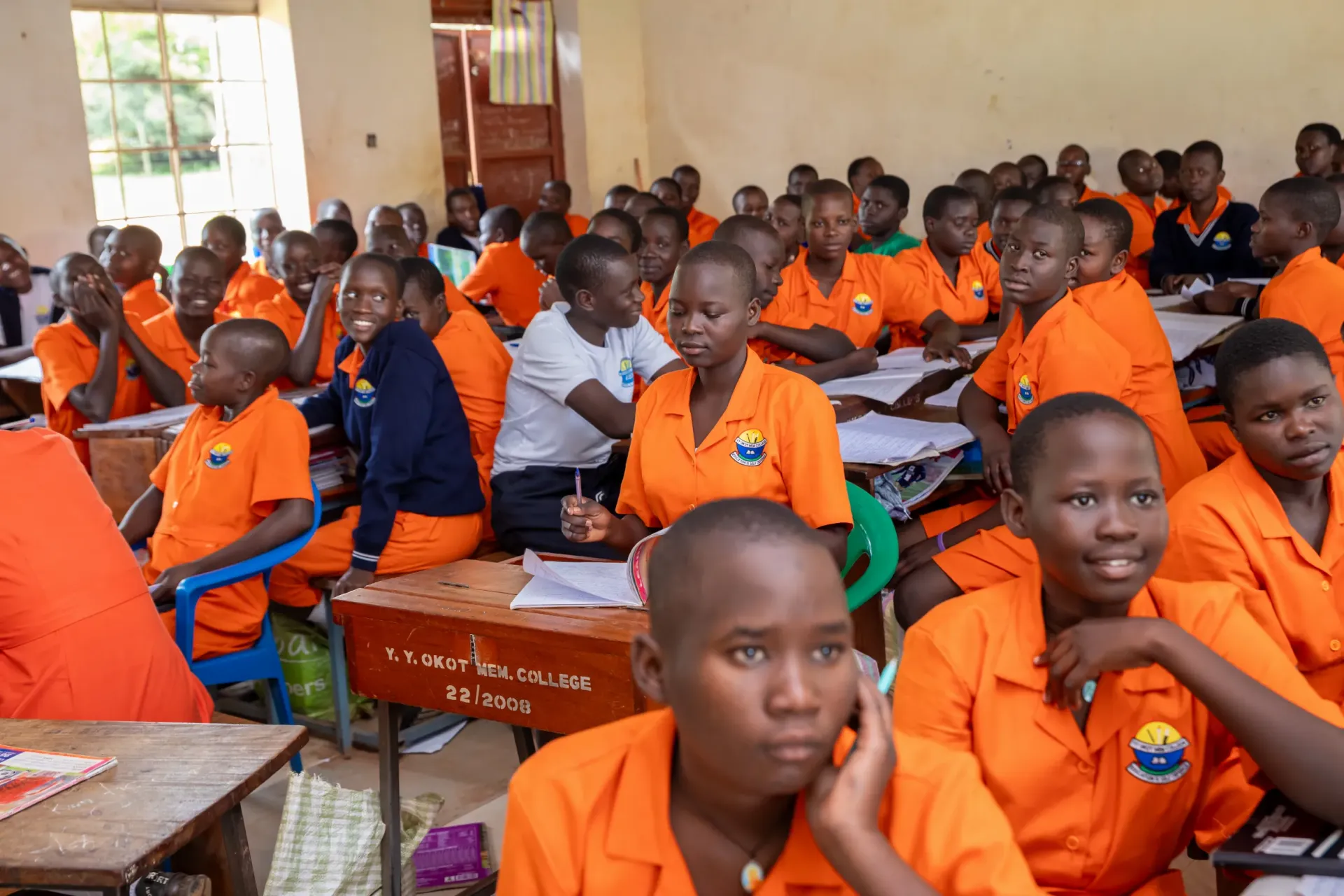
Despite progress, Uganda continues to face significant challenges in ensuring accessible and equitable basic education for children and adolescents, particularly at the secondary level.
Only slightly more than one in four children in the country attend secondary school. Access remains highly inequitable. Secondary school enrolment among children from the richest quintile stands at 43.1 per cent, more than five times higher than that of the poorest quintile at 8.2 per cent.
Gender disparities further compound the challenge. Girls have lower enrolment rates than boys. Among lower secondary school–aged girls who are enrolled in school, only 37 per cent are actually in lower secondary, with the majority still in upper primary. Overall, 69 per cent of adolescent girls have never attended secondary school.
Transition rates from primary to secondary remain low and dropout rates remain high. At the secondary level, 30 per cent of students drop out before completing their education. In total, nearly 3.1 million children aged 13 to 18 years are currently out of school.
Several barriers to education persist, but financial barriers remain the main reason cited for both non-attendance and dropping out of school. The secondary education per capita grant provided to schools is insufficient to meet operational costs. As a result, schools continue to charge significant fees to parents, with national household expenditure accounting for 62 per cent of total education funding at the secondary level.
Household expenditure on education in Uganda is among the highest globally, including in government-aided schools. It was estimated at UGX 440,000 per year in 2019/20. The final cost of schooling is often negotiated individually between headteachers and families and can increase substantially when school feeding and examination fees are included.
Beyond poverty-related constraints, girls face additional barriers to education. These include gender norms, gender-based violence, early pregnancy, and limited access to sexual and reproductive health services. These barriers are particularly evident in regions such as West Nile, as reflected in key informant interviews conducted for this study.
Against this backdrop, the Gender for Development Uganda (G4DU) Programme seeks to support adolescent girls’ education, reduce gender-based violence, and promote sexual and reproductive health. G4DU is a multi-agency programme co-financed by the European Union, Germany, and Belgium in partnership with the United Nations.
The programme brings together UNICEF, KfW, Enabel, and the Spotlight Initiative to implement integrated interventions aligned with its objectives. Under this programme, UNICEF will develop and implement cash-plus models in secondary schools to improve girls’ transition to secondary education and strengthen their retention.
The intervention will directly benefit at least 5,000 girls and will be rolled out in selected districts and schools in West Nile, alongside complementary interventions implemented by other G4DU partner agencies.