Key practice: Child abuse
For every child, protection
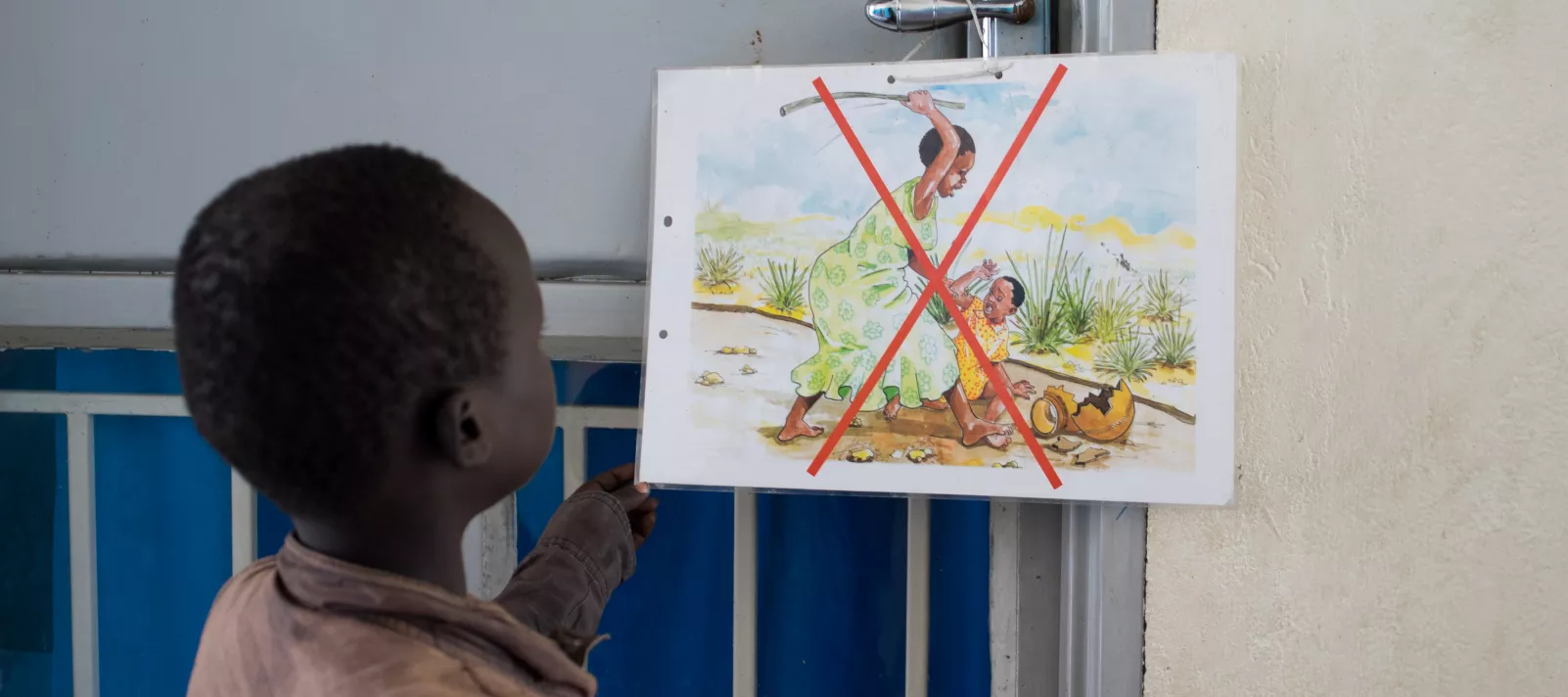
Protect and respond to neglect and abuse of children including harmful social norms such as Female Genital Mutilation/ Cutting, rape, defilement and child marriage.
A family is the first line of protection for children. Parents or other caregivers are responsible for building a protective and loving home environment.
Why should we protect children from violence and abuse?
- Traditionally, physical punishment is used to discipline children. However, physical punishment to discipline children is child abuse. Abusing or harming a child is against the law. Therefore, when child abuse is addressed by the Government, communities, local authorities and non-governmental organizations, including faith-based and community-based organizations, this ensures that children grow up in a family environment.
- Children should be protected so they can survive, grow, learn and develop to their fullest potential.
A person is abusing or violating a child or a woman if he or she: Beats a child or a woman; Burns the child’s hand or other body parts; Sexually abuses the child or when a woman is forced to engage in sex against her own free will; Leaves the child alone with no one to look after him/her; Denies the child/ woman food or drink; Locks the child/ woman out of the house; Curses or shouts a lot at the child; Teases a child too much and makes him/her feel stupid; Demeans a child by spitting on her/him; Forces a child into child marriage (before the age of 18); Has the genitals of a girl/woman mutilated/cut.
Learn more:
Uganda Violence Against Children Survey
Violence Against Children in Uganda Survey: Key Facts and Messages
Findings from the Violence Against Children Survey


Forms of violence against children


Consequences of child abuse
- Some children may be exposed to life-threatening situations, such as sexually transmitted infections, including HIV. Girls may face the added risk of early and unwanted pregnancies that endanger their lives and can subject them to stigma and discrimination.
- Millions of children are not fully protected. Many of them deal with violence, abuse, neglect, exploitation, exclusion and/or discrimination every day. Such violations limit their chances of surviving, growing, developing and pursuing their dreams.
- Children who experience or witness violence often remain silent out of fear, shame or stigma. Some accept it as part of life. While some violence is perpetrated by strangers, most is carried out by people children know and should be able to trust and look to for protection. These may include parents, step-parents or a parent’s partner, relatives, caregivers, boyfriends and girlfriends, schoolmates, teachers, religious leaders and employers.