"If we believe in ourselves, we can achieve anything"
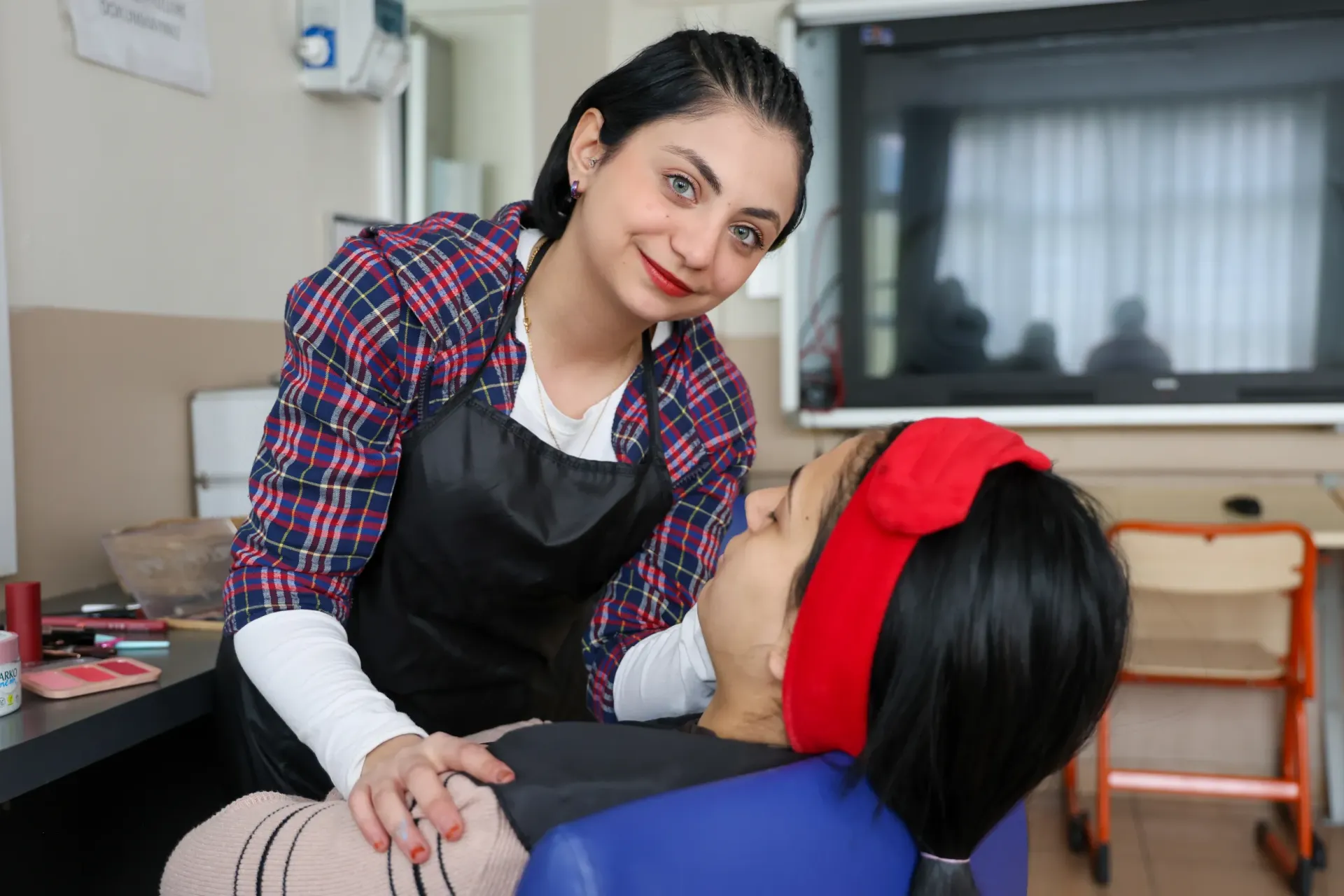
Sura (17) is acquiring beauty service skills at a vocational school for students with hearing impairments and aims to open her own business with her mother after graduation
- Türkçe
- English
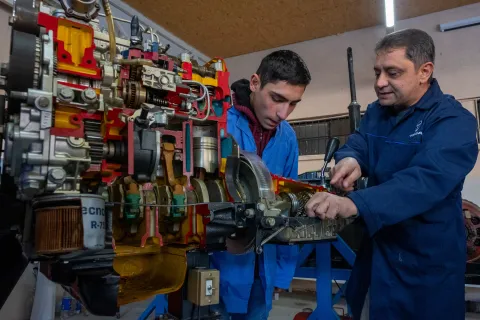
Young people demonstrate remarkable resilience in overcoming challenges, when given the opportunity. In Türkiye, adolescents with disabilities continue to face significant barriers to accessing training and employment opportunities. With Chery Automobile’s financial support, UNICEF supports the Ministry of National Education (MoNE) to implement a programme on “Strengthening Technical and Vocational Education (TVET) in Special Education”. This programme opens pathways to quality vocational education and training for adolescents with disabilities.
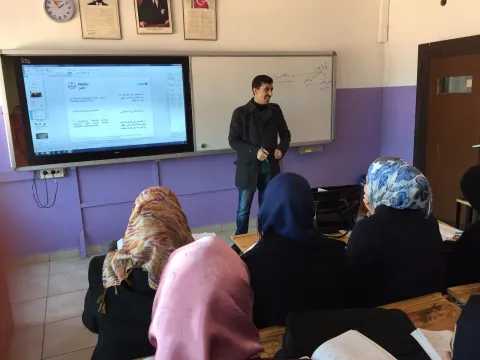
Kemal Yurtbilir Special Education Vocational High School in Ankara is a testament to this. The school equips students with hearing impairments with job-readiness skills that prepare them for meaningful independent lives. During our visit, the students greeted us with radiant smiles and cheerful waves. In the quiet corridors, their expressions of joy and the determination reflected in their eyes conveyed a story far more powerful than words could capture. Seventeen-year-old Sura is one of nearly 100 students enrolled at the school. Cheerful and full of energy, she has been studying beauty services for the past three years.
“When I was in my final year of middle school, our teachers brought us here for the first time. They introduced us to the school, the teachers, and the different vocational fields. Afterwards, I thought about it for a while and discussed it with my family. In the end, I felt this school would be a better fit for me, since I might have faced difficulties at other schools,” explains Sura, noting that her hearing impairment played a key role in her decision.

At school, Sura’s training covers both hairdressing and makeup, though she admits she enjoys makeup the most.
“Our teachers show us how to apply makeup, and then we practice on ourselves or on friends. We learn hairdressing in the same way, by trying it out on our own hair,” she explains.
Her classmates often admire her skills and ask her for help. “My friends see the makeup I do and ask me to do theirs too or to show them how. Of course, I am always happy to help,” she says with a smile.
When asked who she most enjoys doing makeup for, she laughs: “I love doing my own makeup the most.”

Sura says one of the most exciting skills she has learned in hairdressing class is blow-drying hair. “I really wanted to learn how to do it, and I was so happy when I finally mastered it,” she recalls proudly.
She also emphasizes the importance of her choice of school: “If I went to another school, I might be very unhappy or fall behind. I chose this school for its supportive environment, and I’m glad to be here,” she adds.

“I am very happy with my teachers. My grades are excellent, and in 12th grade, I will be doing on-the-job training through an internship. My friends always come to me when they have questions, and I try to help them without getting tired or bored. I can honestly say that I am the top student in my school,” she says, her tone brimming with confidence and pride in her achievement.

Sura says she has made many friends since starting her training and has participated in numerous activities with her classmates, the most recent of which was painting the school wall together. They first painted it white, then added their own drawings.
“When I came here with my family to enrol, I felt a little scared. We often heard discouraging remarks like, 'You won’t succeed.' But I tell everyone, ‘There’s no such thing as “you can’t do it.” If we believe in ourselves, we can achieve anything. If you persevere, better things await. That’s why giving up is not an option,’” she says.
Sura is also preparing for the e-KPSS (public personnel selection exam) and notes that her family has always supported her throughout the process. When asked about her plans after graduation, she smiles: “My mother also worked as a hairdresser, so I plan to open a salon with her.” The mastership certificate Sura will receive upon graduation will allow her to establish her own business.

Demet Öztürk, a teacher in the beauty services department at Kemal Yurtbilir Special Education Vocational High School, explains that their goal is to prepare students for the future and help them acquire a profession.
She adds that students in their final year participate in on-the-job training at workplaces, spending three days a week gaining practical experience alongside their theoretical classes. “Students also receive a salary during their vocational training at the workplace, which serves as a motivating factor in guiding them toward their career goals,” she adds.
Emphasizing the confidence students gain through hands-on training, she continues: “Our students can establish their own businesses and make a living after graduating from this department. I recommend this education to families so their children can learn a profession.”
Speaking about Sura specifically, she adds: “Sura is very successful in our classes and has excellent perception. I believe she will achieve great success in this profession.”
This Chery Automobile supported programme aims to facilitate both enrolment and continued education for students with special education needs by enhancing the quality of vocational training in special education vocational schools. Other objectives of the programme include updating curricula, improving atelier standards, establishing centres of excellence, developing an inclusive workplace-based vocational education model, preparing vocational qualifications, and increasing teacher capacity.