Community based support to prevent and treat malnutrition in Timor-Leste
Community based support to prevent and treat malnutrition in Timor-Leste.

Baucau, 02 July 2024 - Eighteen months old Deomancio’s eyes light up with excitement as his grandfather, Romualdo José Correia, approaches the veranda where his mother has been breastfeeding him. Romualdo does not want to disturb this priceless moment, and so chooses to sit next to Deomancio and his mother, playfully encouraging him to resume feeding.
“Deomancio needs to eat well,” says Romualdo, the head of an 18-member household residing in Vemasse village in Baucau Municipality. “Looking at him today, I am happy that breastfeeding and proper nutrition have saved my little grandson’s life,” says Romualdo, as he looks back to six months ago when baby Deomancio was diagnosed with malnutrition.

At that time, Deomancio’s mother had moved to the capital city, Dili, in search of employment, forcing her to wean baby Deomancia and leaving him in Romualdo’s care. It was a tough decision to make, driven by the desperation to bring in more income for the household, but one which meant leaving Deomancio in a household where family members spent the day on just a meagre portion of rice porridge and vegetables – a meal which is not sufficient for an infant.
“Within a few months of the mother leaving, Deomancio got diarrhea, had swollen feet, a high fever and lost a lot of weight. I then had to take him to the health centre, where the nurses said he was malnourished,” says Romualdo, as he shares details of the sleepless nights he spent at Baucau Hospital, where Deomancio was admitted for a week receiving treatment.
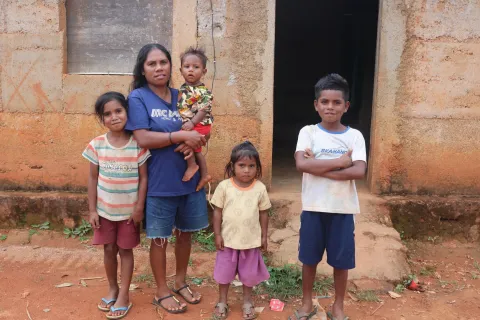
Romualdo’s encounter and experience with malnutrition is a heart wrenching reality which is faced by many families across Timor-Leste. More than 45 per cent of Timorese live in poverty. Combined with poor sanitation and poor diets which often lack protein, many children often get malnourished and many of these children might live with the lifelong effects of malnutrition, such as reduced school performance and learning abilities, short stature, frequent illness, and cognitive and psychomotor development.
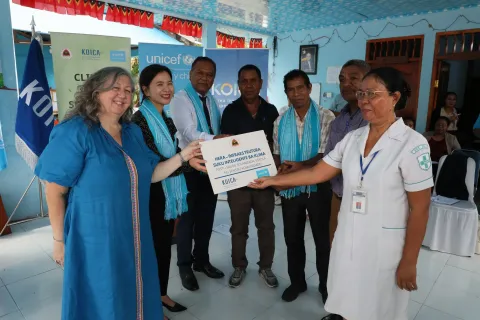
Supporting caregivers to prevent malnutrition among their children, while also helping them with strategies to prevent acute malnutrition, is one of the key support elements that UNICEF, with funding from the Foreign, Commonwealth & Development Office (FCDO) of the United Kingdom, is supporting the Ministry of Health to strengthen community nutrition through the Mother Support Groups initiative. Under this funding, more than 1 000 Mother Support Group members at communities, provide regular counseling, health promotion, screening, referral and follow-up of malnutrition cases in Baucau and Viqueque municipalities in Timor-Leste.

“Malnutrition continues to rob children of the right to survive, thrive and grow to their full potential. Through this project, community volunteers promote recommneded feeding practices of children and the caregivers are sensitised on the use of locally available nutritious foods, for sustainable diets and feeding practices. This communtiy-based structure also supports with early identification of children suffering from acute malnutrition, referring them to the nearby health facilities, and following them through the treatment path”, says Faraja Chiwile, UNICEF Nutrition Manager.”
Optimal breastfeeding in the first two years of life; nutritious, diverse, and safe foods in early childhood; and a healthy environment are some of the practices which the Mother Support Group Members are encouraging during their interactions in the village. In addition, grandparents and heads of households, such as Romualdo are also sensitised on the important role they have to support optimum feeding practices.
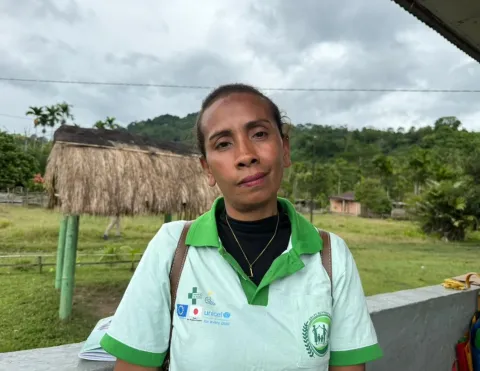
“My daughter had to resign from work and come back to the village. When Deomencio started his treatment, it was Lidia who advised her to re-lactate,” says Romualdo, as he expresses gratitude to one of the Mother Support Group Members who, together with the nurses from the health facility, are making regular follow up visits to check on Deomencio and other children ’s progress.
With each visit, Lidia and the nurses do checks on Deomencio’s arm circumference, which has increased from 11cm to 13cm in a period of six months, while his weight has gone up to 9kg from 7kg. Lidia also uses animated flip charts to provide caregivers with recommended nutrition practices which are good for a baby’s growing body. The Mother Support Group members also carry out community outreach sessions, during which they demonstrate how caregivers can prepare nutritious meals from locally available foods.

“As a farmer, I can easily get some of the food which Lidia told us to give to our children. Pumpkin leaves, pumpkins, beans, sweet potatoes and papaya are foods which are in my garden and which I now consistently harvest for my grandchildren to feed on,” says Romualdo, whose resilence and perservance during the time when Deomencio was sick, has been a great source of inspiration for the entire household.
///Ends