Children Can’t Wait
Why Timor-Leste Needs Climate-Smart Social Services Now

I often ask myself: what does climate change look like through the eyes of a child in Timor-Leste?
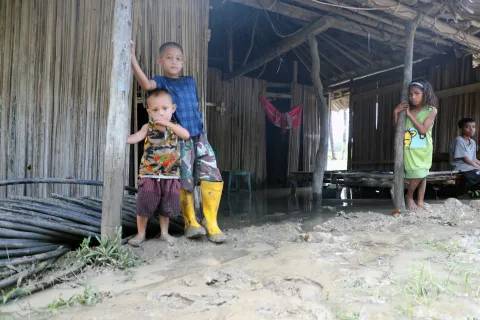
It’s not the abstract graphs or global conferences. For a child in Viqueque, climate change means their school is damaged in a flood. It’s the fear in their mother’s eyes when the crops fail again. It’s empty classrooms, silent health posts, and no toilets at school because the water tanks ran dry. It’s a childhood shaped by uncertainty.
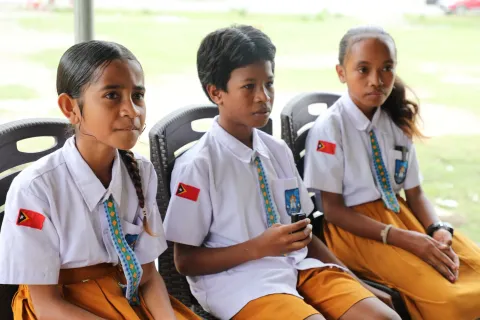
In Timor-Leste, more than half of the population is under the age of 25. These young people are not only the future, they are the present. Many of them are growing up in remote rural and mountainous areas where landslides, droughts, flash floods, and water scarcity can threaten their daily life.
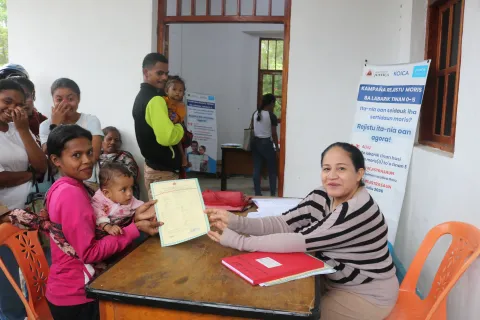
Climate change makes every existing vulnerability worse. A failed harvest doesn’t just mean economic loss, it can force a child to drop out of school. A washed-out road doesn’t just delay supplies, it cuts off access to vaccines or emergency care. For girls, young mothers and children with disabilities, these challenges are multiplied, with rising risks of gender-based violence and unsafe migration. Let’s be clear: this is a child rights emergency. And our response must be proportionate. They are routine. And they are putting children’s rights to education, health, nutrition, water and sanitation, and protection at grave risk.
The question is no longer whether climate change is real. The question is how will we respond? We need to redesign the system, not just repair it.
Our social services, schools, clinics, protection systems, are stretched thin already. Add climate shocks, and they collapse. That’s why we must urgently shift toward climate-smart social services an integrated, child-centered approach that builds resilience across every sector.
Climate-smart social services are resilient, green, and transformative. Our children continue their learning at the solar powered school and school toilet that remains accessible, clean, and safe even when drought hit. A health post that continues operating during floods. Children get climate smart preventive nutrition services. WASH system that collects and stores rainwater safely through long dry seasons. A social protection system that anticipates not just reacts to disasters. This is not a luxury. It’s the only way forward.
When these systems work together, education, health, nutrition, water and sanitation, child and social protection, they create a protective environment where one child can survive and thrive, even in the face of climate crisis. That’s what equity and resilience look like.
Climate Action is not just about carbon, it’s about equity and the core of resilience is people, especially the youngest and most vulnerable.
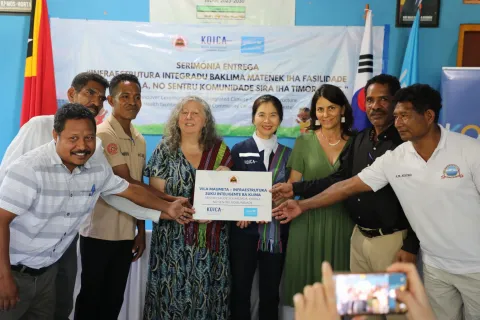
With support from KOICA, UNICEF is beginning to roll out integrated models in Dili, Lautem and Viqueque with solar-powered facilities, climate-smart education programs, sustainable water systems, emergency-ready health services, and climate integrated child and social protection system. These are not pilot projects, which will serve to prove that another path is possible. This is what equity looks like in a climate context, giving children and families the tools to protect themselves, to thrive, and to break the cycle of crisis.
Timor-Leste has made important strides, developing a National Adaptation Plan, Nationally Determined Contribution, and all sectoral plans. But policies alone will not shield children from the next storm or drought. What we need now is investment, innovation and urgent action.
Climate-smart social services are not just about weatherproofing buildings. They are about rebuilding trust in public systems. They are about making sure a girl in Lautem can finish school even when the rains come early. That a child in Viqueque can get vaccinated even when the road is washed out. That no family has to choose between staying in a home without basic services or walking for hours to get help.
As someone working on climate resilience every day, I can tell you this: the window to act is closing fast but the opportunity to build a more just, sustainable future is still within reach.
Let’s not wait until another storm forces us into action. The time to climate-proof childhood is now.
#Ends#