Better Care, Safer Births
How Formosa Community Health Centre and Community Volunteers are Strengthening Maternal and Newborn Health
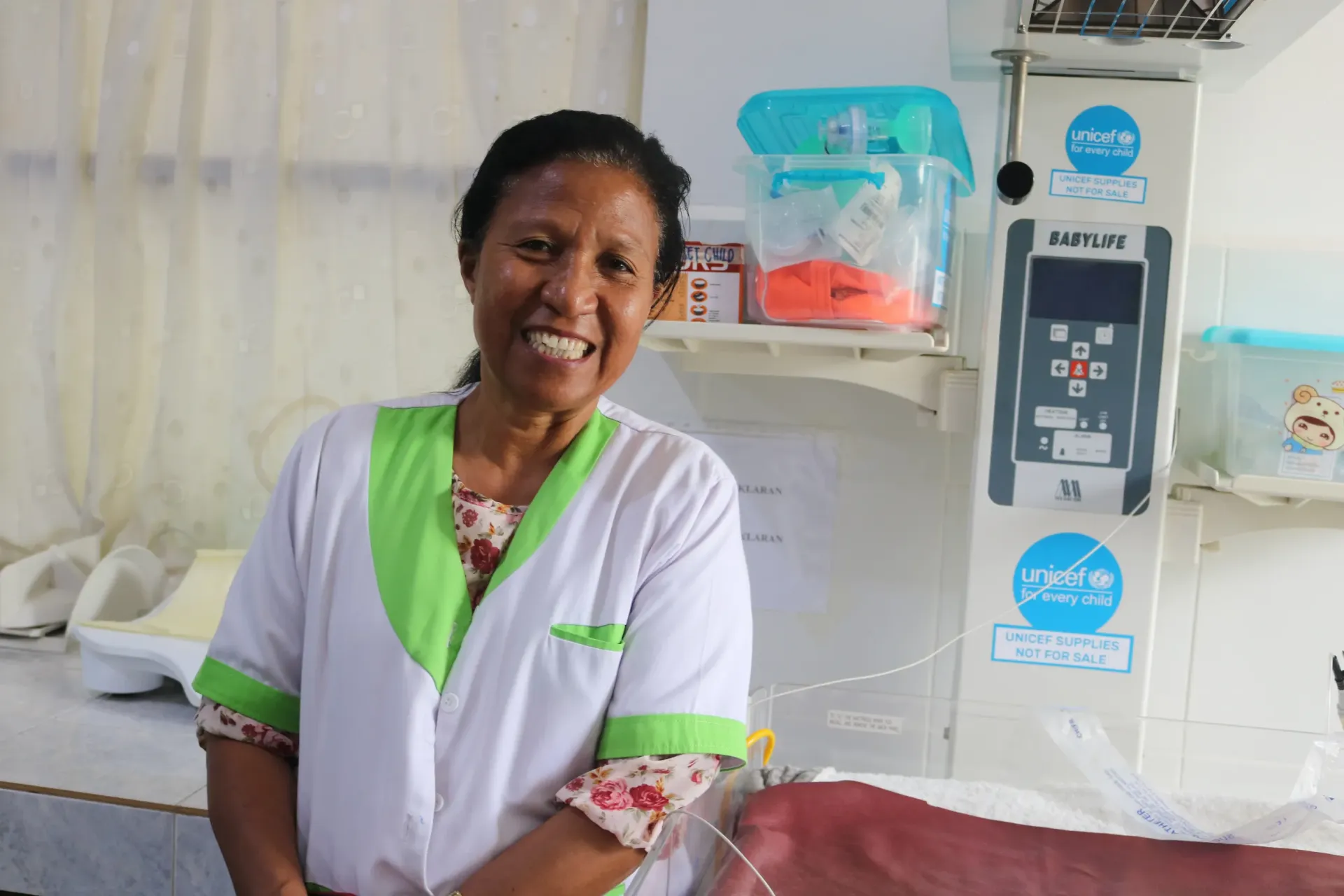
Dili, 22 January 2026 - Located in the heart of Dili town, the Formosa Community Health Centre supports pregnant women, lactating mothers, newborns and children through essential maternal and child health services.
At the centre, Geralda Maria, Head of Antenatal Care (ANC) and Midwifery, handles an intense routine every day. Among the approximately 80 pregnant and lactating mothers served, she directly consults with 15–20 women daily. Alongside consultations, she supervises services and responds to emergencies in the maternity ward.
The health centre has two maternity rooms, each staffed with three midwives, ensuring mothers in labour are supported in real time. Geralda and her team commonly manage risks such as hypertension, anemia, and complex pregnancies and deliveries, including twin births. During labour and delivery, common risks for mothers and newborns include haemorrhage and high blood pressure.
The centre follows safe delivery protocols. If bleeding is too severe, mothers are referred to the national hospital, while staff manage cases that can be safely handled at facility level. In December 2025, the health centre referred two cases to the national hospital.
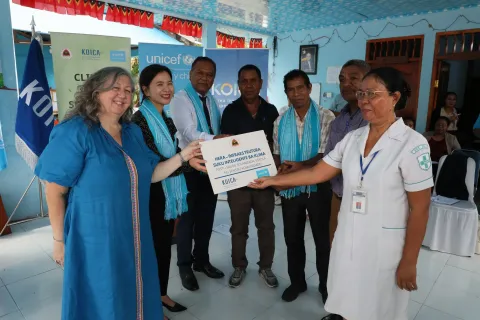
Just as seen at the Formosa Community Health Centre, these improvements in safe delivery practices reflect broader health system strengthening supported by the UNICEF Japan National Committee (NatCom) in the municipalities of Ermera, Viqueque and Baucau, where frontline health workers and facilities have strengthened their readiness to provide safe maternal and newborn care.

Training that strengthens confidence and care
Geralda explains that training delivered by the Ministry of Health in partnership with UNICEF focused on Maternal, Newborn and Child Health (MNCH). The training reinforced quality ANC and safe delivery practices, including the importance of completing at least 8 ANC visits and the use of essential equipment such as ambu bags (a handheld manual resuscitator that helps with ventilation to patients who are not breathing adequately or at all), baby warmers and pulse oximeters.
The same approach has been implemented across targeted municipalities supported through Japan NATCOM’s contribution. By June 2024, at least 116 health workers in Ermera, Viqueque and Baucau municipalities were trained and skilled in Safe and Clean Delivery (SCD), including preparation for safe pregnancy and birth and Emergency Obstetric and Newborn Care (EmONC), and at least 129 health workers were trained and skilled on Essential Newborn Care (ENBC).
Before the training, many mothers were asked to come every month without clear focus on key milestones. The updated approach supported midwives to guide mothers through the recommended 8 ANC visits, helping women access the right services at the right times during pregnancy.
The training also contributed to improved staff behaviour, including stronger attention to respecting mothers’ privacy and delivering MNCH services in a more consistent and structured manner.
Essential equipment improving services in real ways
UNICEF-supported supplies have been critical for Formosa Community Health Centre. Supplies are usually requested through the Ministry of Health based on needs raised by the health centre, and UNICEF sometimes provides direct support and training on equipment use.
At the maternity ward, equipment upgrades have changed care practices and strengthened confidence in safe deliveries.
Before the health centre received a baby warmer, keeping newborns warm relied on manual methods such as wrapping babies in blankets and frequently checking their condition. With baby warmers now available, newborn care is safer and more reliable.
Sterilization has also improved. Previously, equipment was sterilized in boiling water. With sterilization equipment now in place, the process has become faster and more efficient, strengthening infection prevention practices.
The maternity ward was established in 2009. Initially, there were only two delivery beds, with one accessible for use. Today, there are three delivery beds inside the delivery room and eight beds outside used for preparation and waiting. Since protocol requires mothers to stay on the delivery bed for an hour after birth—and labour to delivery can involve close to 8 hours of care—having more beds helps ensure mothers and newborns are not moved too quickly when multiple deliveries occur.
As a result of improved skills and upgraded equipment, the number of deliveries has increased to around 4–5 deliveries a day.
One mother summed up her experience simply: “Service here is good and quick and even at the time of emergencies.”
Similar improvements in facility readiness have been supported through the Japan NatCom’s contribution in other municipalities, including the provision of essential MNCH supplies and equipment to strengthen the delivery of maternal and newborn care services at primary health care level.
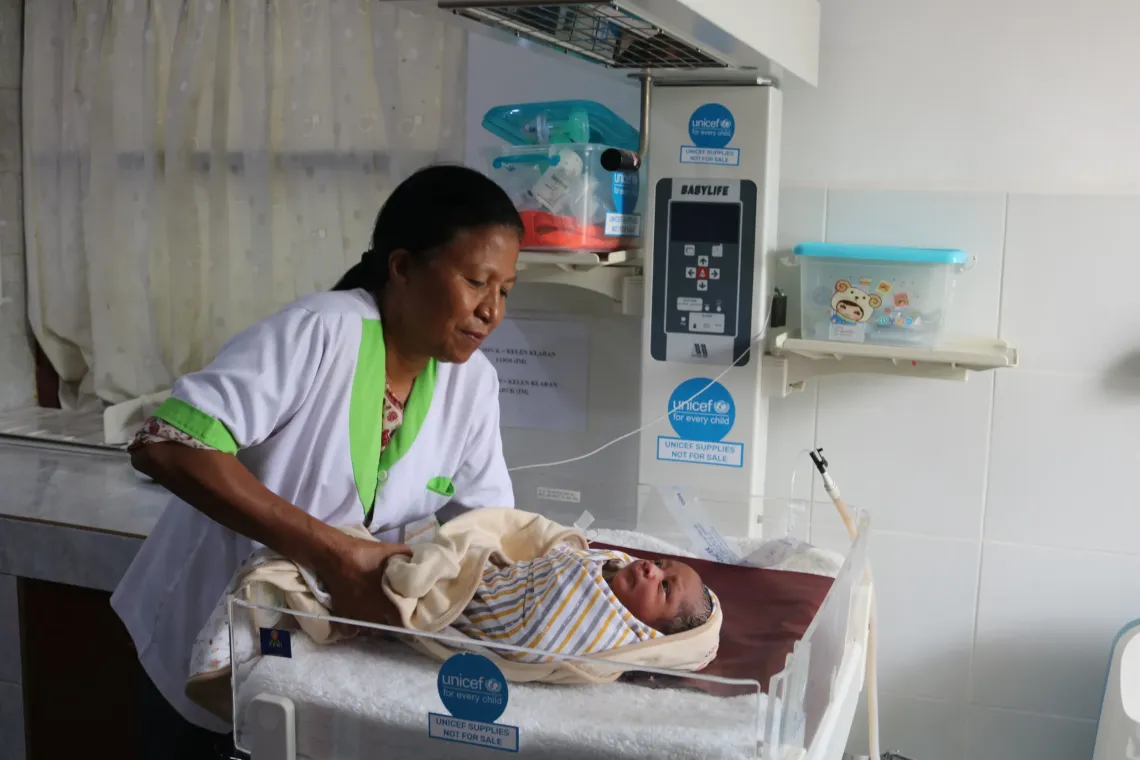
Continuity of care: following up when mothers miss visits
Continuity of services is supported through the Liga Inan programme, which enables midwives to follow up by phone when mothers miss visits. With support from Japan NatCom, this existing system has been further strengthened—helping reinforce and institutionalize follow-up practices within routine service delivery, in alignment with ongoing government priorities.
Through Liga Inan, health workers also check whether a mother has delivered and whether her due date has passed. This follow-up is important because some women receive ANC at Formosa Community Health Centre but go for delivery at the national hospital, private hospitals, or at home—often influenced by family decision-making and elders.
When a mother has delivered, health workers record key details such as whether the delivery was normal or by C-section, the vaccination status of the child, and the health of the newborn and mother. This helps ensure the mother and baby can continue receiving post-partum and newborn services at Formosa Community Health Centre.
Monitoring is supported through manual records, which midwives review weekly or monthly to guide care and follow-up.
More mothers are now attending ANC at key times during pregnancy, arriving earlier for safe delivery, and returning for post-partum visits and newborn services. With stronger follow-up systems, families are more likely to seek care promptly and reduce delays when complications arise.
A stronger health system—felt in everyday lives
At 5 am on 22 January 2026, Fernandina Fernando Periera, 28, gave birth to a baby boy at the Formosa Community Health Centre. Sitting in the outside waiting area of the maternity ward, she received post-partum care while her newborn rested nearby under a baby warmer.
Fernandina is a mother of three. Her two older children are girls—aged 10 and 6—and her journey to motherhood has not always been simple. A previous pregnancy ended in abortion due to complications. But for this most recent pregnancy, she faced no complications during pregnancy, labour, or delivery.
What stood out was not only the safe birth of her son—but where it happened. Fernandina delivered her first two children at the National Hospital. Choosing to deliver her third child at the Formosa Community Health Centre reflects the growing confidence mothers and communities are placing in quality services offered closer to home.
“I was very happy with the ANC services,” she said, recalling the counselling she received during pregnancy. One message stayed with her: from the 7th month, she needed to monitor the baby’s movements regularly. She was also reminded to take her vitamins.
In her words: “The equipment at the Formosa Community Health Centre is at par with the national hospital.”
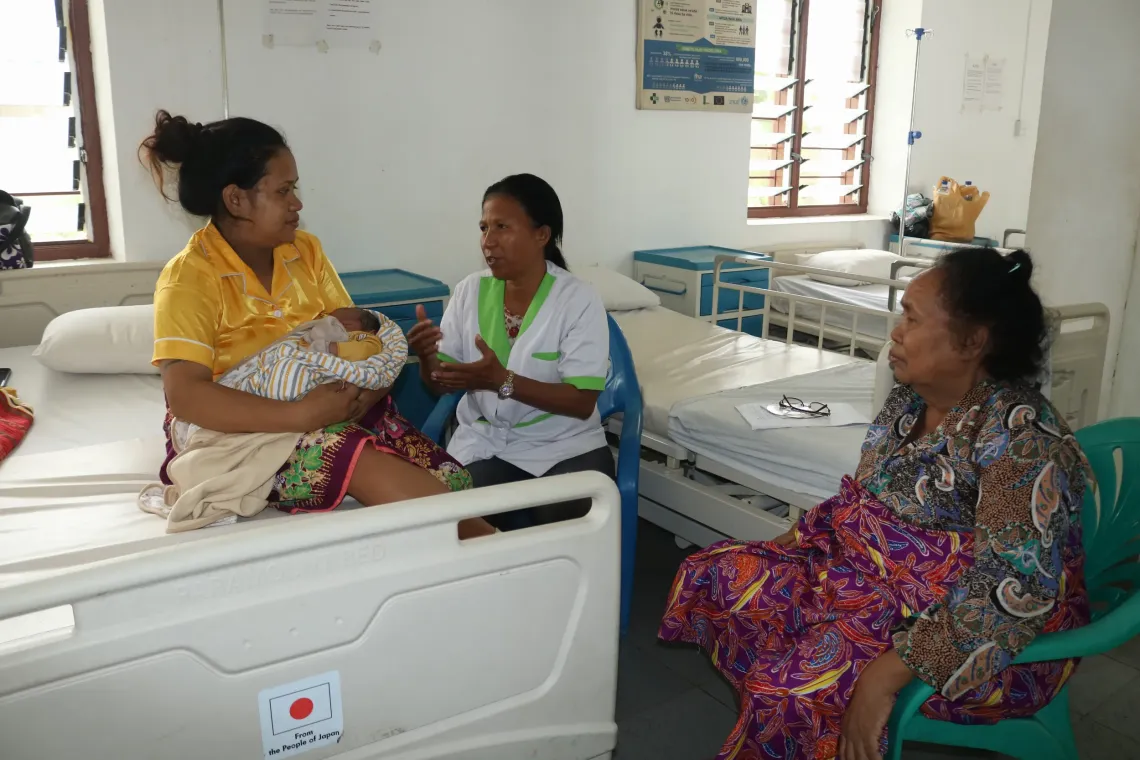
Fernandina’s decision to deliver her baby boy at the Formosa Community Health Centre reflects more than one personal choice. It reflects an improving system—where trained midwives, updated equipment, consistent follow-up, and trusted community volunteers work together to protect mothers and newborns.
From the maternity ward to outreach sessions held in the community, the experiences of Fernandina and Geralda show how quality health care and continuity of services can be strengthened—so that safer births and healthier newborns become possible, closer to home.
###Ends