

Turning skills into income
Meet the female mechanics empowered by the PROSPECTS programme in White Nile
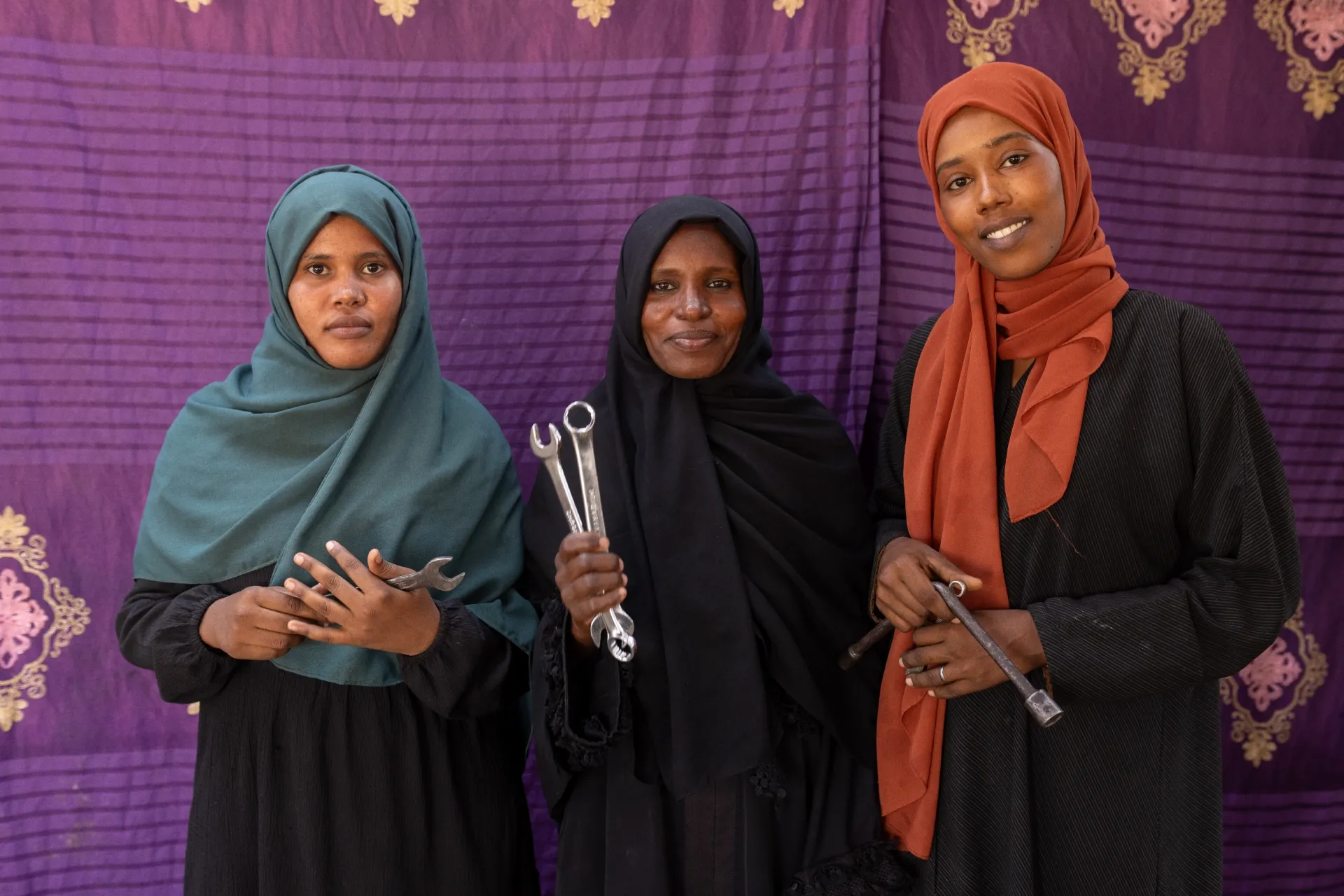
In the remote village of Alsifira in White Nile State, the sound of metallic tools signals something unusual.
A group of young women are at work.
Elsadiqque, Nazir, Amna, Kulthum, Sidiga, Hawa and Malaz – members of the new Siana group of female mechanics are defying the odds in a field previously dominated by men.
Early in the morning, the team arrives at a house after a call to restore a faulty generator.
Quickly, they get to work.
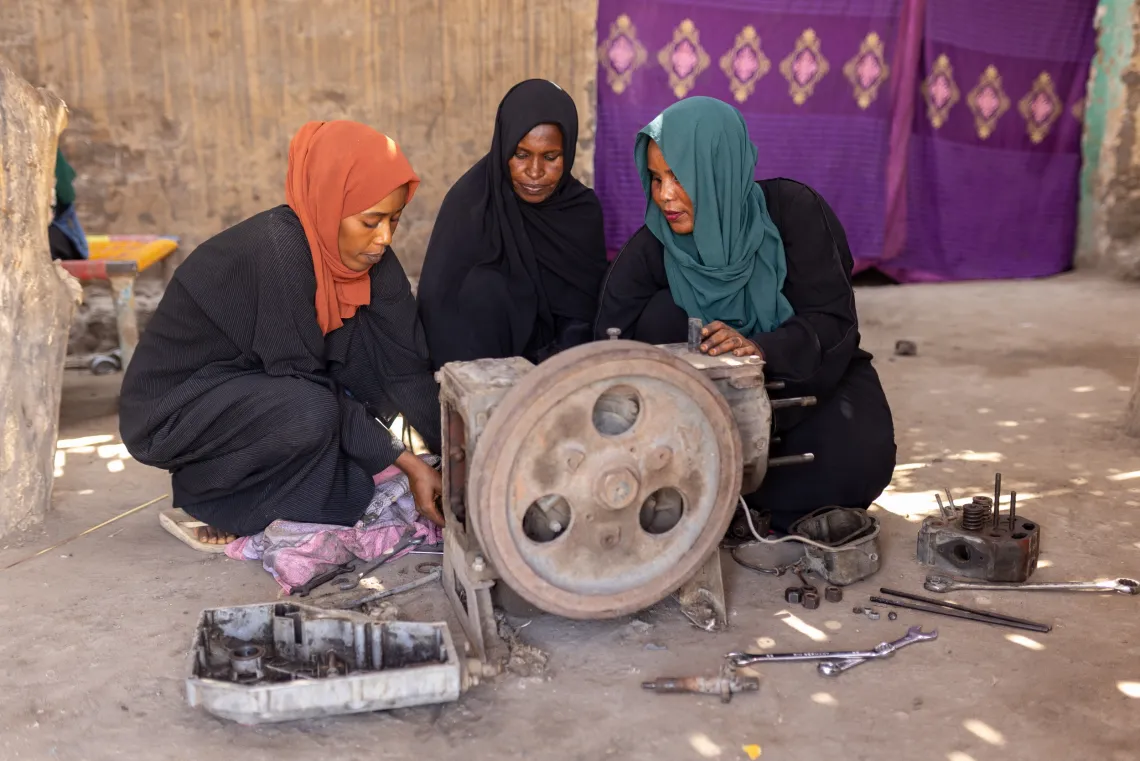
The huge machine lays in front of them. Spanners in hand, sleeves rolled up, they dismantle the generator. Getting their hands dirty is not one of their concerns.
After a few hours of work in between whispers, chuckles and exchanging ideas, the generator is repaired, reassembled and now functional.
“Initially things looked difficult,” Nazir whispers.
“But with continued practice, it has become easier.”
But this is just one of the smaller jobs they now handle. Together they have repaired cars, tuk tuks and motorcycles across the village.
With more work coming their way, the team is sharpening their craft.
“Now, we know everything about mechanics,” Amna says with pride.
“People call on us to repair vehicles – anything.”
The group’s growing reputation is not only improving their income but also reshaping perceptions in their community.
UNICEF/UNI956360/Mohamed Dawod
“Initially things looked difficult,” Nazir.
“But with continued practice, it has become easier.”
How it started
Their journey begun in 2025, when UNICEF and partners through the PROSPECTS programme introduced vocational training opportunities for out-of-school youth including internally displaced families, refugees and those from host communities in White Nile.
The programme provided options – mechanics, baking, wielding, plumbing, electrical work, hair dressing, tailoring, pastry production, make up and more.
The young women chose mechanics. An unusual field for girls and women in Sudan.
People around them, including their peers, doubted their choice, but they persisted.
“They said, it was not suitable for women,” said Kulthum.
Reflecting on the programme that has skilled hundreds of youth, Musab, the coordinator from Green Dream Organization, UNICEF’s implementing partner, recalls the group’s registration.
“In our community it is rare to find girls choosing a career in mechanics,” he said.
“It was their choice from the beginning. Our role was to support them,” he added.
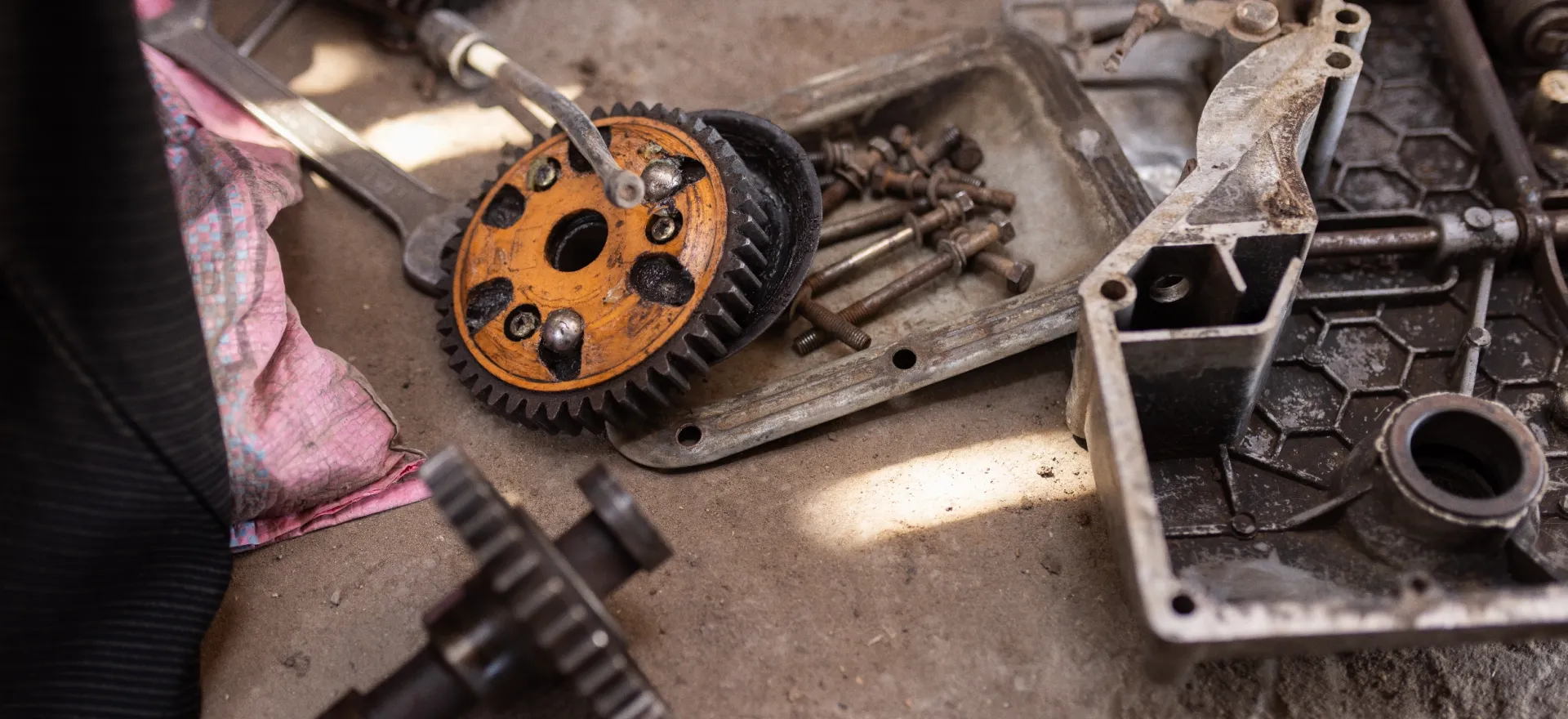
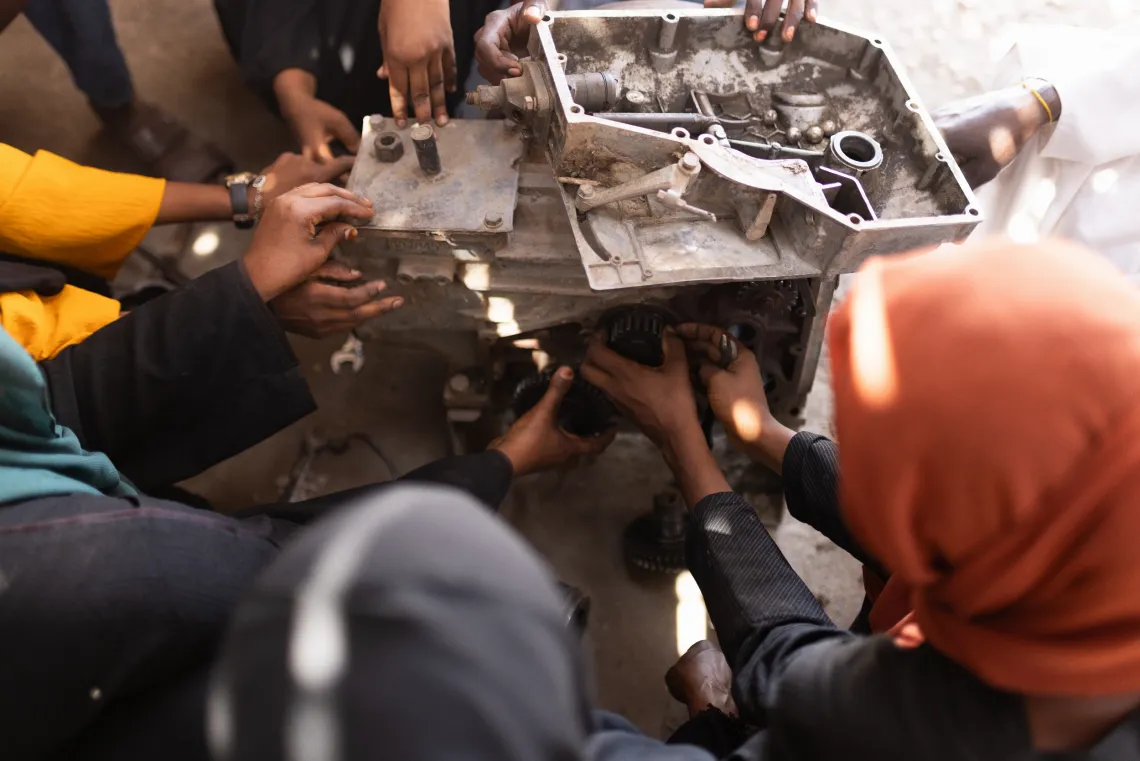
After 40 days of intense hands-on training, they learnt how to identify problems, dismantle machines, and then reassemble them back. Upon completion of the programme, they received starter kits containing all the tools they needed to start work right away.
They have never looked back.
“We learnt about the different parts of machines, how to disassemble and reassemble them,” Amna explained.
Breaking barriers
In White Nile, the Siana group of female mechanics is creating a new narrative.
But these pioneers are not only earning an income, they are also challenging norms and opening doors for other girls to follow.
“We now believe that girls can do whatever they want,” says Hawa. “There is nothing difficult.”
Building back with the right skills
The three years of war have disproportionately affected children and young people, leading to prolonged disruptions in education - with millions still out of school - and limited access to skills development, contributing to unemployment.
Girls are particularly affected with many facing barriers to accessing work opportunities.
The PROSPECTS Partnership funded by the Netherlands and implemented by ILO, UNHCR and UNICEF, is changing this. The partnership is expanding access to technical and vocational training, apprenticeships and youth engagement programmes and equipping young people with market-relevant skills to shape their futures.
Beyond vocational training, the programme also strengthens access to rights, supporting inclusive national systems, and helping young people move into education and employment pathways while fostering social cohesion.
Today, Alsifira village is home to hundreds of skilled young people - electricians, tailors, technicians and mechanics, who are now earning an income and contributing to their communities.

