


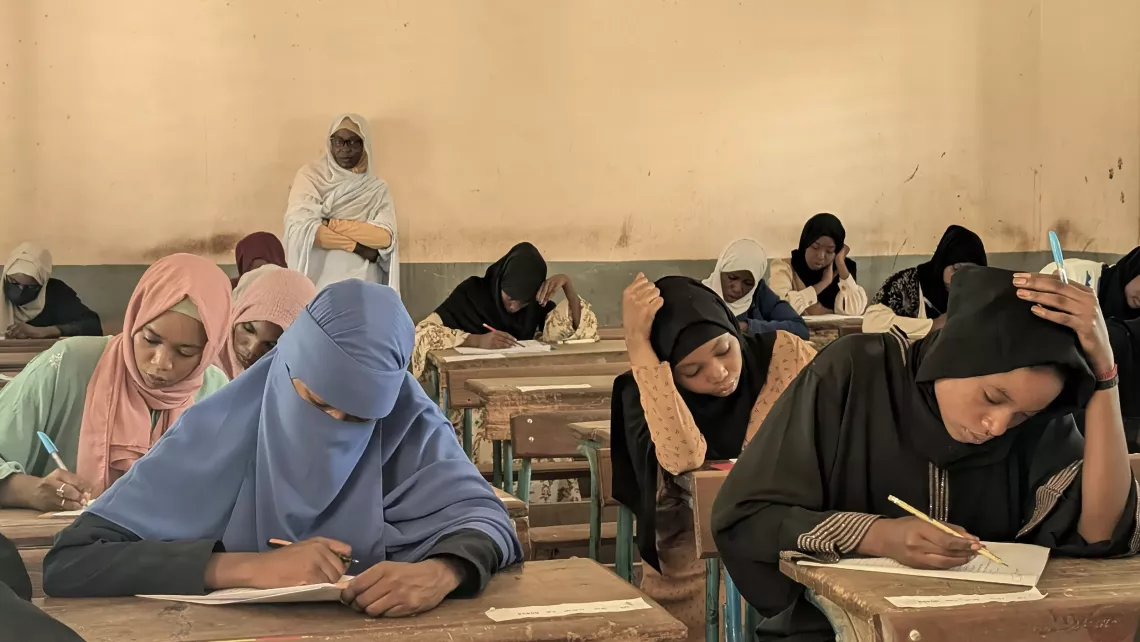
Last week, I stood in a muddy schoolyard in Adrea village, Eastern Chad, watching a group of Sudanese refugee students walk into their exam hall. Their steps were steady, their faces focused. For many, this was the culmination of months of uncertainty, displacement, and determination. For all of us working in education, it was a moment of quiet triumph. We had crossed three international borders with 1100 kilograms of exam papers to reach them.
Between 25 August and 2 September 2025, nearly 5,000 Sudanese refugee students successfully completed their national grade 12 exams in seven education centres across Eastern Chad. This marks a strong coordinated effort to enable girls and boys displaced by conflict to complete their secondary education in Chad. It is, quite simply, unprecedented.
The Sudanese refugees in Chad had been waiting to sit for these national exams for the past two and half years. Before the conflict in Sudan erupted in April 2023, over 513,000 students had registered to sit for the national exams. Despite the disruption, the first round of the Grade 12 Secondary Certificate Examinations - conducted between 28 December 2024 and 9 January 2025 - successfully reached over 340,000 students. An additional 208, 200 students took the exams during the second round of examinations held from 29 June to 10 July 2025. The exams in Chad further extended access to students who had been displaced across borders and were unable to participate in the first round.
This initiative, led by the Governments of Chad and Sudan, with support from UNICEF, UNHCR and partners provided a safe and structured environment for students to sit for the final exams. It reflects an unwavering commitment to education, and it shows that learning can and must be protected, even in the most challenging circumstances.
Since the conflict in Sudan began, Chad has welcomed over 876,000 refugees, more than half of them children. These young people have faced unimaginable loss, yet they continue to show extraordinary resilience.
Displacement, destruction or closure of schools, and the lack of teachers have forced countless school-aged Sudanese children – in and outside the country – out of the classroom. The conflict is stealing their futures in other ways too when parents are killed, when families are separated, when children are forced into work to survive, and when girls are pushed into early marriages. These are not just statistics. They are stories of interrupted childhoods and dreams deferred.
In this context, education becomes a lifeline. It offers structure in chaos, hope in despair, and a pathway to healing and opportunity. It is one of the few things that can restore a sense of normalcy and dignity to children whose lives have been upended. Sitting for an exam may seem routine in times of peace. In times of war, it can become an act of determination and a positive passage of life.
As I watched the students settle in their seats, I felt a mix of awe and humility. These children had crossed borders, endured trauma, and still showed up with sharpened pencils and hopeful hearts. I found myself holding back tears, not out of sadness, but out of deep respect.
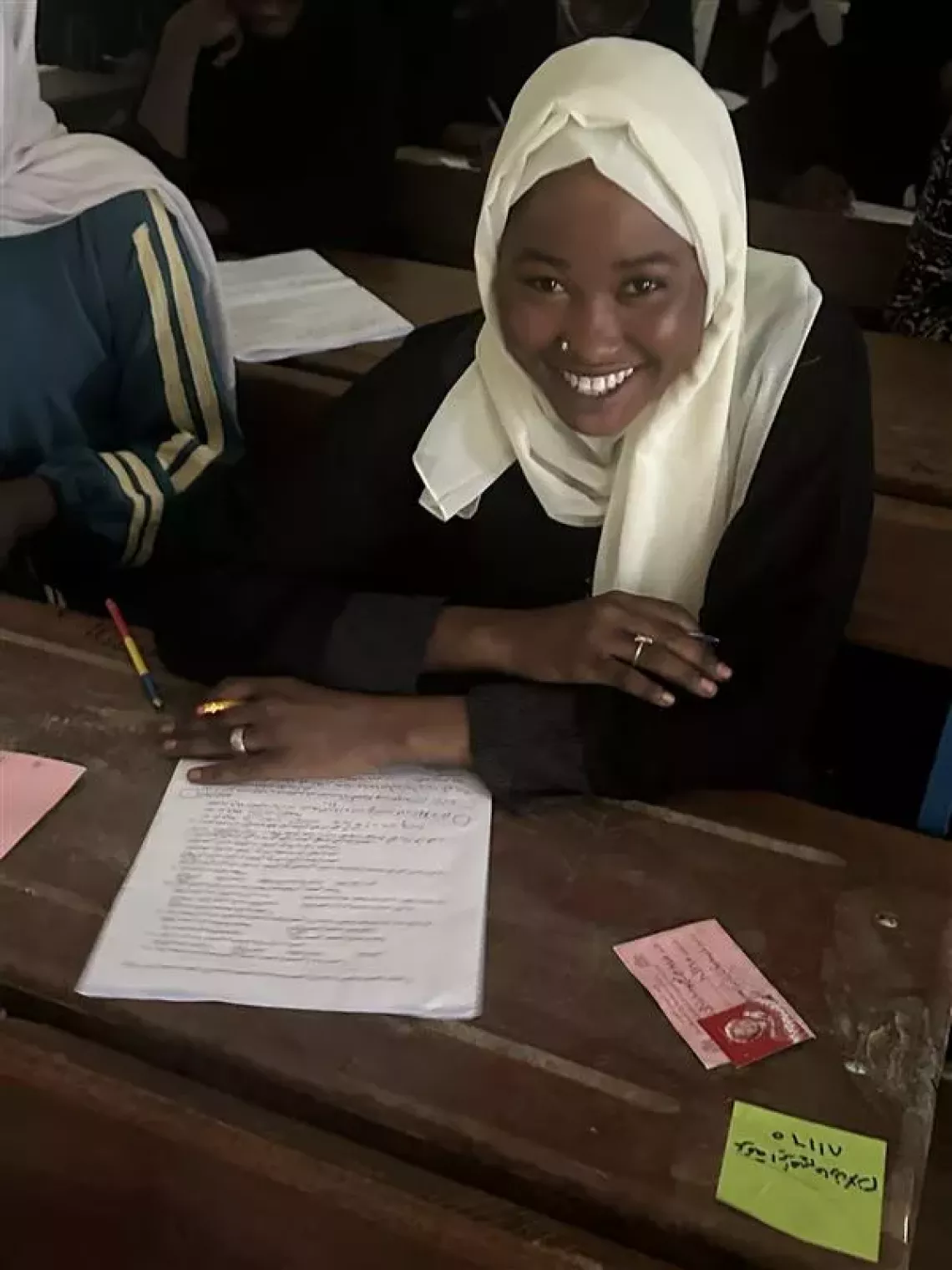
I met 17-year-old Muzdalifa Yacob from West Darfur. She dreams of becoming a judge. “I have been waiting to sit for this exam since 2023. I feel happy and optimistic about the future,” she told me.
And I spoke with Mr Musa Mohamed, both a teacher and a parent of a grade 12 student. He had been working with refugee students in Adrea and expressed both his sadness and sorrow of the current situation in Sudan and hope for the future. “I hope next year we will do this exam in Sudan, in our schools and our own classrooms,” he said.
These exams are more than an academic milestone. They are a glimmer of hope. They are a signal to every child affected by conflict that their future still matters. These students are part of a larger cohort of Sudanese children who, despite the odds, are determined to shape a better future. Their courage sends a powerful message: that learning must never be a casualty of conflict.
This achievement would not have been possible without the generous contributions of donors and the tireless efforts of our partners on the ground. To each teacher, volunteer, partner and education official who made this happen: thank you.
As we look ahead, we remain committed to expanding access to education for every displaced child. Because every exam passed, every lesson learned, is a step toward healing and rebuilding.
