UNICEF acts swiftly during ceasefire to address the huge needs of Gaza’s children
After 15 months of war, and dramatically reduced access to food and medicine, Gaza’s 2.1 million people have endured unimaginable suffering.
- English
- العربية
As a long-overdue ceasefire went into effect in the Gaza Strip, UNICEF staff worked relentlessly to move water, hygiene items like soap and detergent, nutrition and medical supplies, as well as tarpaulins and warm clothes for babies and children into the area.
After 15 months of war, and dramatically reduced access to food and medicine, Gaza’s 2.1 million people have endured unimaginable suffering. Children have borne the brunt of it—with at least 14,500 reported killed, thousands more injured, an estimated 17,000 unaccompanied or separated from their parents, and nearly one million displaced from their homes.

“For a year and three months, I haven’t seen my mother,” says nine-year-old Sama. “Finally, I will head to Gaza City to see her and throw myself into her arms.”
From the moment the ceasefire went into effect on 19 January, UNICEF immediately began moving dozens of trucks of humanitarian aid into Gaza. As of 7 February, UNICEF has brought in well over 500 truckloads with life-saving supplies since the start of the ceasefire. More than half of the aid supplies arrives to the north of Gaza, where aid has been restricted for months.
UNICEF also called on the parties to conflict to ensure they meet their ceasefire obligations and ensure safe, unimpeded access for humanitarian aid to enter at scale and reach every child.

A total of 1,300 UNICEF truckloads had been lined up before 19 January, ready to deliver life-saving nutrition, water and sanitation, health, and essential education and psychosocial supplies for children and families as soon as the ceasefire would take effect, with an additional 700 truckloads to follow.
DEVASTATED INFRASTRUCTURE
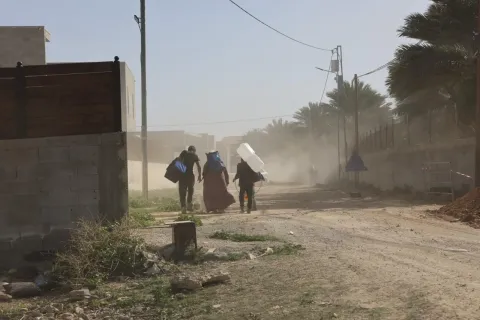
Palestinians returning to their homes will find a landscape of destruction: it is estimated that 69 per cent of structures have been damaged or destroyed in Gaza, and only 17 out of Gaza’s 36 hospitals are partially functional according to WHO, increasing the risk of infectious disease outbreaks and putting children at risk.
Water production is at less than 25 per cent capacity, with pipes and pumps destroyed or rendered inoperable by restrictions on electricity and fuel.

Nearly all of Gaza’s people face high levels of acute food insecurity, and cases of malnutrition among children require swift, clinical follow up and prolonged treatment.
In this ongoing crisis, UNICEF is prioritizing urgent interventions that make a difference in the lives of children and their families, focusing on maintaining and expanding existing basic services, while establishing new services to respond as people move to different areas of the Gaza Strip.

“I will play with my friends and relatives, go back to school, and continue my studies,” says Jad, 11.
A first priority is conducting immunization catch up campaigns to prevent disease outbreaks. In parallel, UNICEF is expanding and scaling up malnutrition screening and treatment for children and pregnant and breastfeeding mothers. UNICEF is scaling up the provision of preventive nutrition for infants and young children 0-24 months.
Another focus will be supporting hospital capacity, specifically and neonatal care, especially in the north.
UNICEF also continues to support water production in the south, while increasing production in the north to serve and strengthen its distribution and storage to families. Among other things, this will require the transport, spare parts and installation of pumps and generators.

Another critical issue is the thousands of tons of explosives debris that remain strewn throughout the Gaza Strip. UNICEF will work to raise the awareness of children and caregivers, warning them about the dangers of unexploded ordinance and family separation, while scaling up mental health and psychosocial activities to help families cope with the trauma that they have experienced.
As people relocate to their homes, the risks increase that more children will be separated from their parents. UNICEF continues to work with its partners to reunify children with their families through a programme established since the beginning of the war.
As the conditions of Gaza markets have steadily improved since the ceasefire, UNICEF accelerated its humanitarian cash programme and already reached nearly 110,000 people with multipurpose cash assistance channeled digitally through e-wallets. This support enables families with children to meet their very basic needs including food, hygiene items, medicine, clothing, etc. UNICEF has been the largest provider of humanitarian cash transfers since October, reaching 1million unique beneficiaries, half assisted multiple times.
A lasting ceasefire is vital for saving children’s lives. The cost of this war is already unfathomable, it cannot be allowed to continue to mount. But a ceasefire only will not end the suffering of children in the Gaza Strip. With the collapse of all essential services, the scale of destruction of housing, health and education facilities, the level of humanitarian needs is almost unimaginable. UNICEF and partners are scaling up their response, but it is absolutely critical that the international community supports these efforts and everything is done to allow aid and commercial supplies to enter all parts of the Gaza Strip, at scale in the long run.