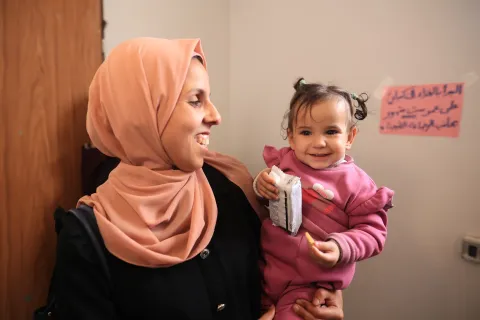
Toys and art supplies provide respite for children in the northern Gaza Strip
that have lost too much to a brutal war
- English
- العربية
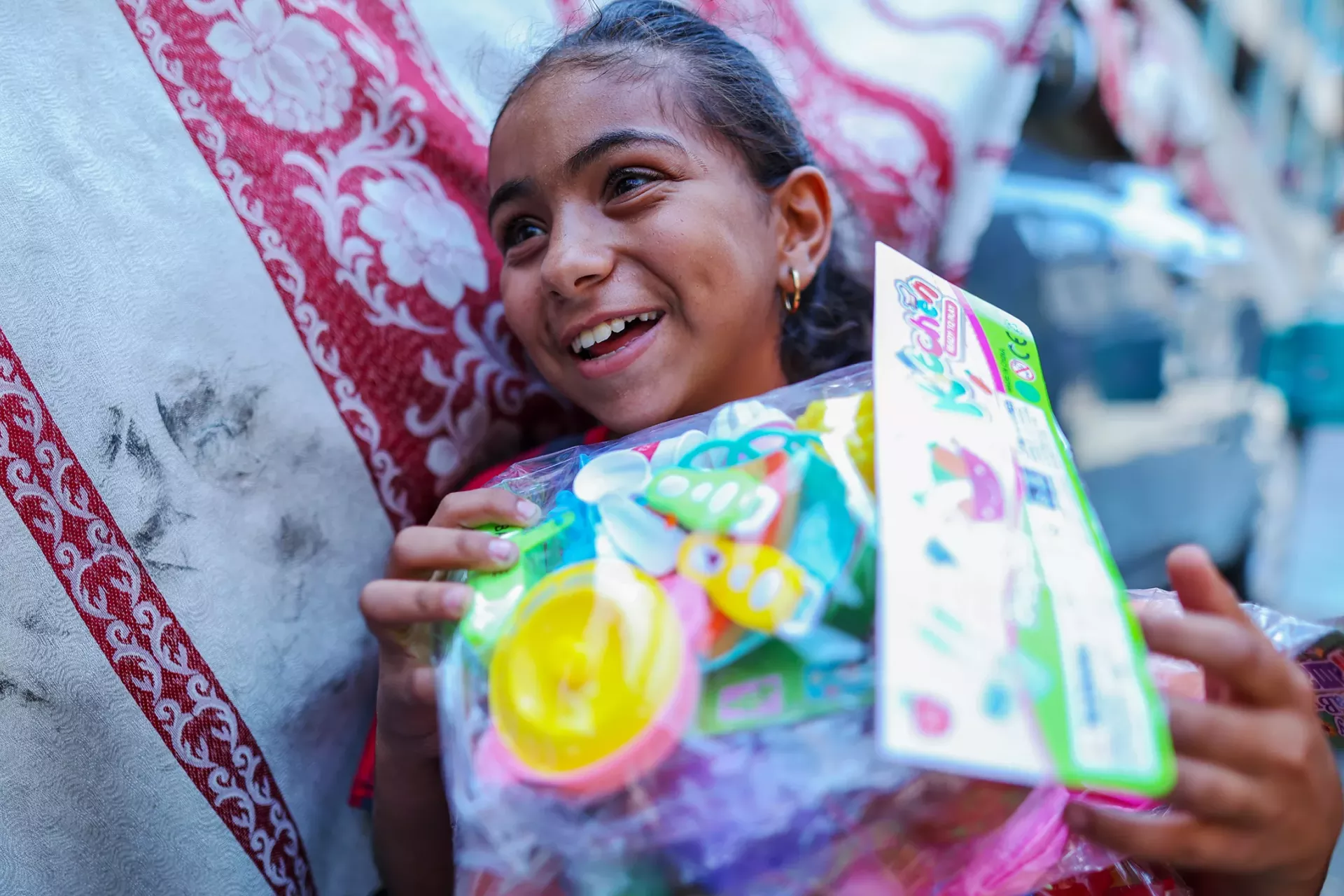
“I forgot how to play with toys,” says Ritaj. The 12-year-old lives in a crowded school with dozens of other families — her own home and playthings a distant memory after ten months of war.
UNICEF staff members are delivering duffel bags filled with toys and art supplies to children in hard-to-reach northern Gaza as bombardment and attacks continue to threaten them and their families.
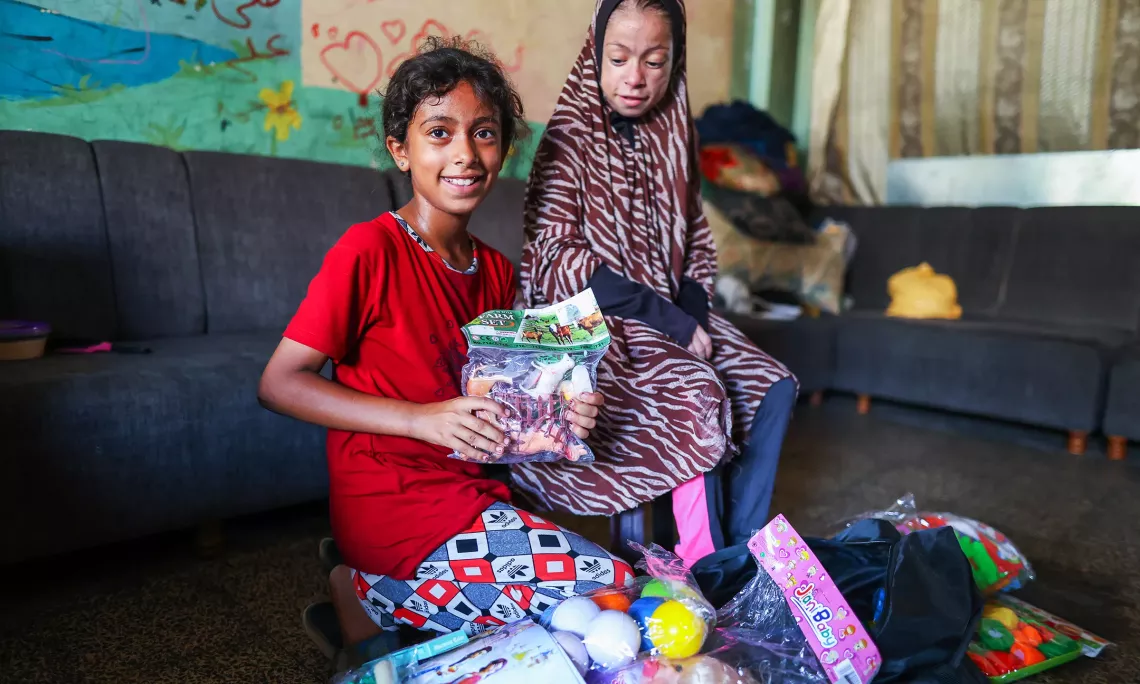
"I cried a lot when I lost my toys when my house was destroyed," says another child, nine-year-old Batool. “I miss my home and friends and I want to see them and play together again."
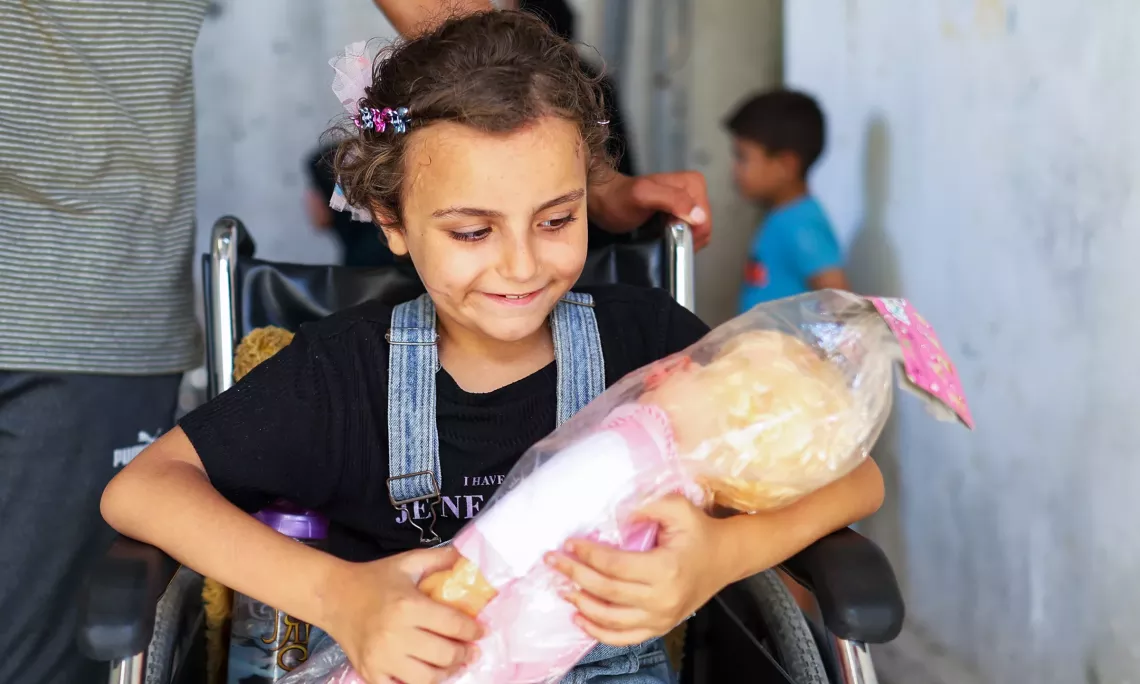
Rozy, an eight-year-old, clings to her father. “[He] tries to protect me and ease my fear of the explosions,” she says. She was paralyzed by an attack and is now confined to a wheelchair.
“The war makes me very scared,” she says. “I hope it ends so that we can go back home safely.”
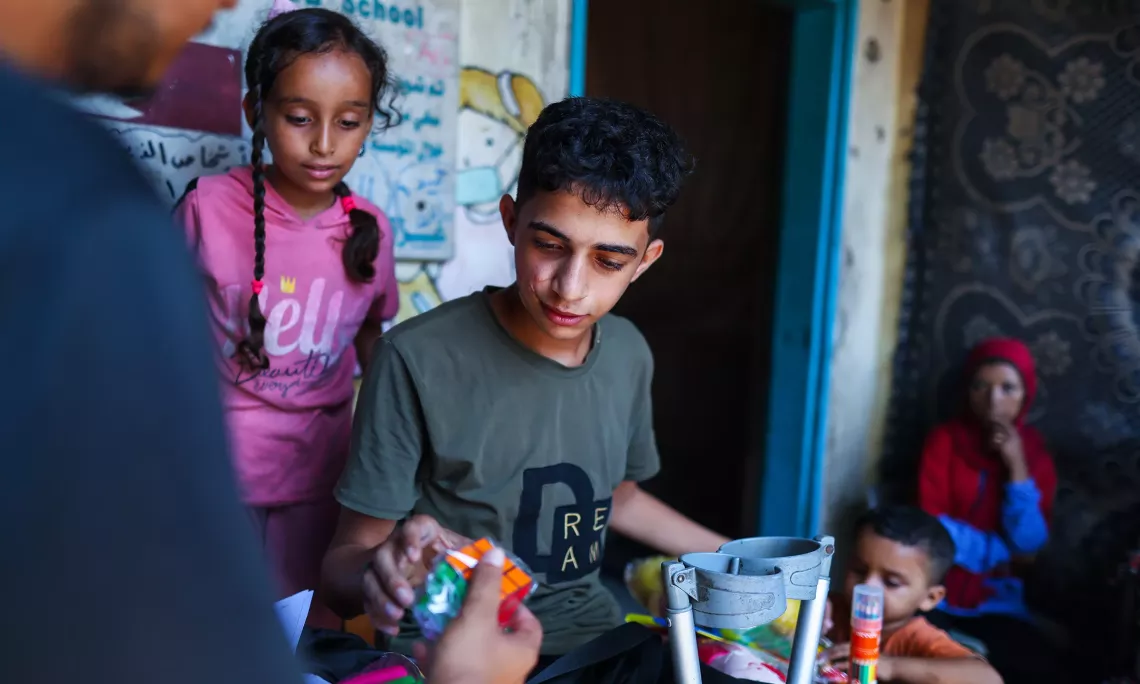
Jihad, nearly a young man at 17, examines with curiosity a cube puzzle that came in his kit. The war has already robbed him of his last years of education and his ability to run and play freely.
"I can't accept having my leg amputated and that I am struggling to move," Jihad says bitterly. He, too, cannot wait for this war to end so that he can go back home and try to recover the days of childhood that were stolen from him.
Unending Horror
For ten months, children of the Gaza Strip have faced horror after horror. Most have been repeatedly displaced, fleeing bombardment while searching with their families for very scarce commodities like water and food.
Thousands have lost close family members or suffered terrible injuries themselves.
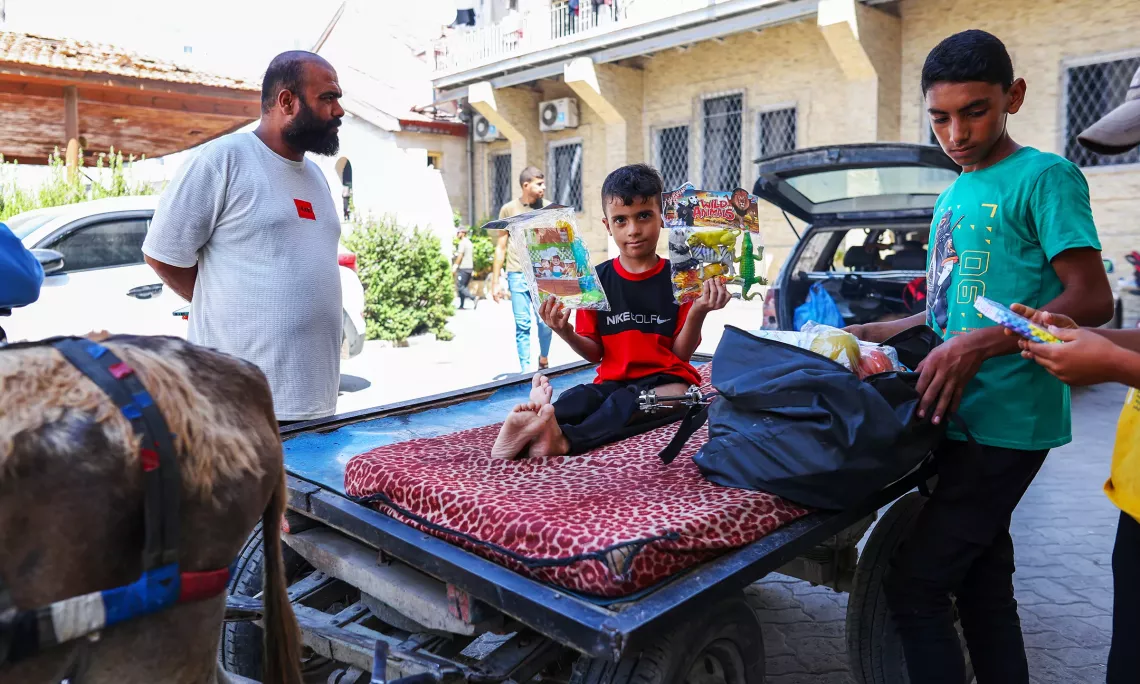
Ten-year-old Mohammed has a brace screwed into his leg and is unable to walk from injuries sustained in the war. His family uses a cart pulled by a donkey to get around.
Holding up brightly colored animal figures, he says, "These toys brought joy to my heart.”
“I hope the war ends so I can be treated and walk easily again." None of Gaza’s hospitals is fully functioning, their vital role crippled by attacks, dwindling and traumatized staff, and a lack of power and medical supplies.
Daily routines that usually provide children reassurance are constantly ruptured, and there is little hope that schools will open in the fall. Humanitarian actors estimate that 85 per cent of schools need either full reconstruction or major rehabilitation to be utilized.
Supporting Resilience
Until a ceasefire returns normalcy to these children’s lives, UNICEF and its partners work to strengthen their resilience. Play with family members can be an important way of coping with trauma and strengthening family bonds.
With support provided by the governments of Sweden and Cyprus, UNICEF is distributing 3,000 psychosocial kits to children in the northern Gaza Strip. The kits include toys and art supplies that are suitable for children of different ages, especially toys and games that allow for parental interaction.
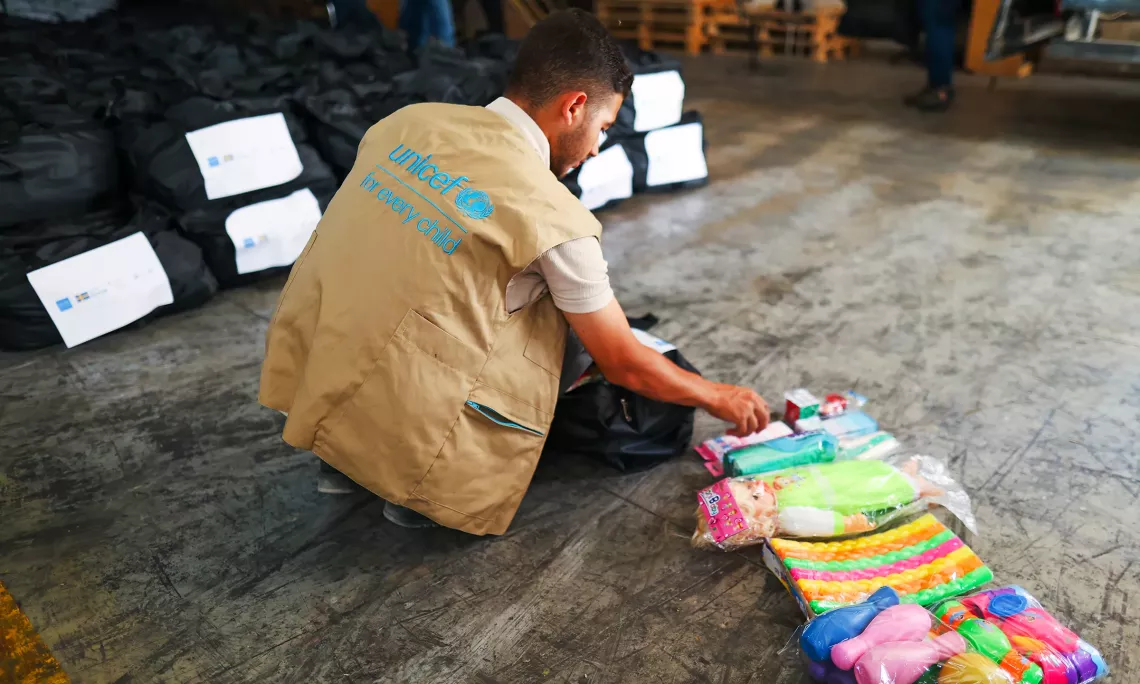
Getting these supplies into the Gaza Strip and distributing them is difficult and dangerous. UNICEF’s ability to deliver humanitarian aid has been seriously hampered by population movements, lack of access and challenging security conditions. The delivery of aid regularly puts workers in danger. At least 278 aid workers have been killed since October 2023.
“We need an immediate improved security environment, including security for aid delivery trucks, to allow aid workers to safely reach the communities they intend to serve,” said UNICEF Executive Director Catherine Russell on July 24.