Over half a million highly vulnerable people in the Gaza Strip receive humanitarian cash assistance
Digital innovations enable efficient and safe delivery of humanitarian cash transfers: critical support for the most vulnerable families and children to meet their needs with choice and dignity.
- English
- العربية
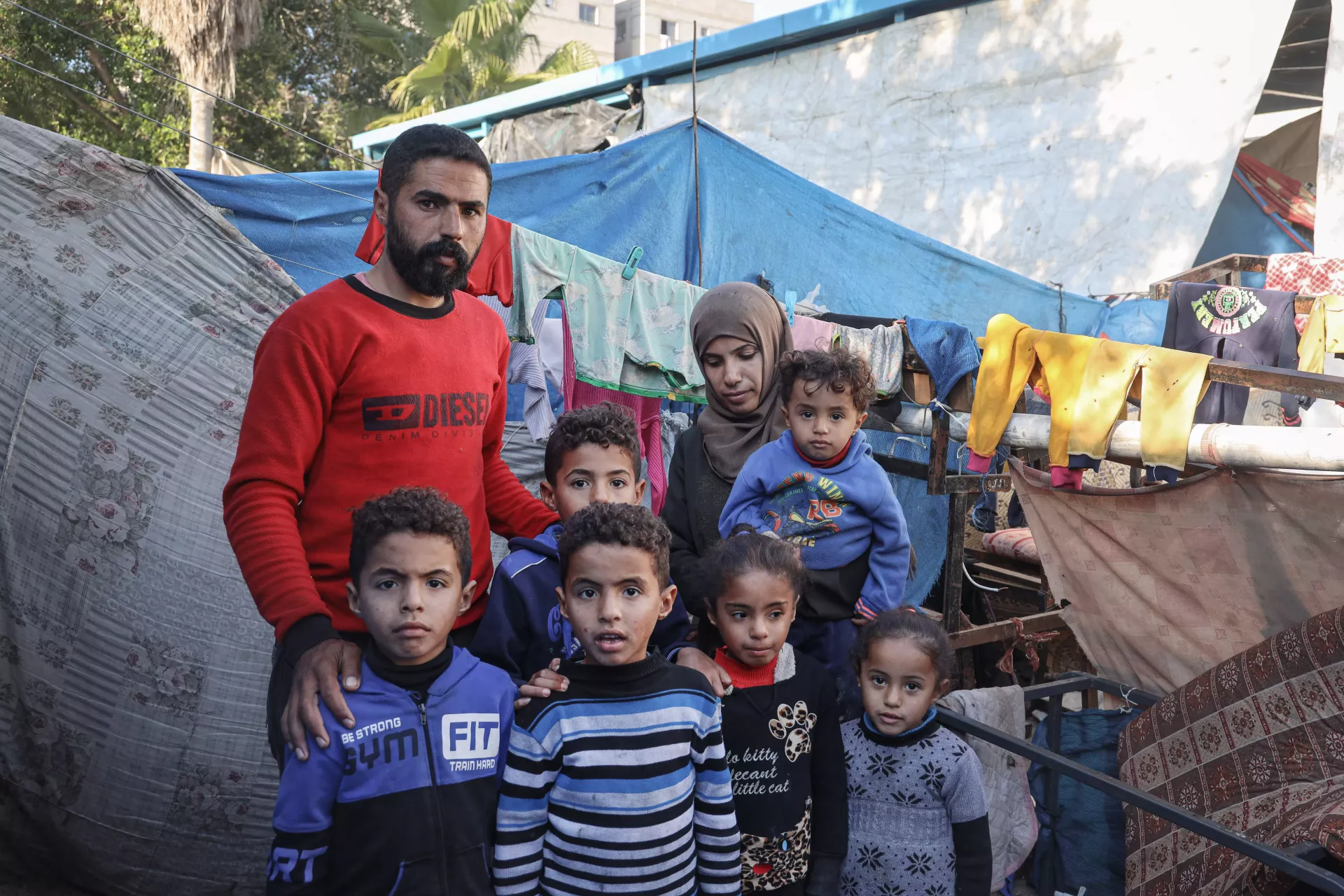
“Life here is uncertain and it was not as hopeful as before,” says Ziad. He is one of the many displaced people in the Gaza Strip following the dramatic escalation of hostilities since October 2023. The ongoing conflict has brought massive suffering to already vulnerable families and children. Ziad and the estimated 1.7 million internally displaced people in the Gaza Strip now have extremely limited economic opportunities and depend on humanitarian aid for survival.
UNICEF in the State of Palestine has been able to leverage its existing humanitarian cash transfer and social protection programme to start providing essential cash assistance 6 days after the onset of the emergency. Since then, cash assistance has been growing exponentially and has reached every fourth person in Gaza. This includes 546,000 people, 81,000 families, 285,000 children. UNICEF is currently delivering more than half of all cash-based assistance in the Gaza Strip. This provides families with the ability to purchase essential items from mostly informal local markets.
Maha and her family have also received cash assistance. “The cash we received from UNICEF allowed us to buy the medicines needed for one family member with a heart condition. Since we moved from the north of Gaza without most of our belongings, we also need winter clothes for the children," she says.
Both Ziad and Maha share a desire to see the conflict end and they can’t wait to be able to go back to their home in northern Gaza. They highlighted the importance of cash in buying other basic and urgent needs such as medicine. “Some of the most urgent needs at the household level are not met by the food or in-kind humanitarian assistance that we receive. I am looking for clothes for my children, especially since I evacuated my house without taking anything,” explains Maha.
The programme provides each family with about USD 200 per month. To ensure access to nutrition and specialized needs, families with pregnant and breastfeeding women receive an additional USD 100, and families of children with disabilities receive an additional USD 66 per child. This support has been vital for families to purchase needed goods that are still available on the market. Hamada, a family member, said they spent the cash on medicine and food for themselves and the children. Another family member, Osama, told us they spent the money on food.
A timely cash assistance wouldn’t have been possible without adequate preparation. Prior to this recent escalation, UNICEF had invested in three key preparedness actions:
- Ensuring access to most affected families: UNICEF maintained and strengthened the partnership with the Ministry of Social Development (MoSD), which helped ensure access to the social registry and resulted in targeting the most vulnerable families with children across the Gaza Strip right from the get-go.
- Prepare financial channels to deliver cash assistance: Given the volatile context, UNICEF needed digital solutions to provide safe and targeted humanitarian cash assistance to the most vulnerable. As part of its preparedness effort in early 2023, UNICEF contracted a private sector service provider offering mobile money solutions. Embracing digital solutions to enable quick and flexible delivery. To make the payment mechanism functional and protect the data of affected families, UNICEF’s digital ecosystem for the registration and verification of beneficiary data (HOPE – Humanitarian cash Operations and Programme Ecosystem) was set up prior to the escalation in the summer of 2023. UNICEF’s HOPE system also allows the digital verification of who receives the payments, ensuring payments can safely reach families. This information is also checked against the payment lists of the mobile money service provider, seamlessly within the digital ecosystem.
How digital innovations support cash delivery during an active conflict
The deployment of HOPE allowed swift and effective disbursement of cash assistance to crisis-affected families. It has been pivotal for the fast processing of the beneficiary list from the MoSD with adequate quality assurance, reporting, accountability, and ensuring the protection of beneficiaries’ data. HOPE is also integrated with a Short Message Service (SMS) messaging system that allows UNICEF to communicate rapidly with recipients: RapidPro. Considering the high level of insecurity, it was paramount to leverage SMS sent from HOPE to advise beneficiaries on the available cash out points in real-time.
Thanks to the deployment of RapidPro[1], UNICEF could conduct post-distribution monitoring by collecting feedback directly from beneficiaries via SMS with random samples generated directly from HOPE. This allowed a better understanding of challenges experienced by families, market functionality, and cash delivery. Almost 8,000 beneficiary surveys have been completed to date, allowing UNICEF to adjust programme accordingly. The evidence gathered on the usefulness of cash, the presence of an informal market, the location of recipients, and the nutrition situation in Gaza has been instrumental in better understanding the context on the ground, which in turn has led to clear and timely communication with donors and stronger advocacy.
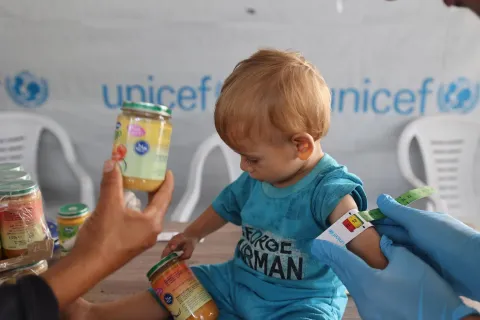
UNICEF also used RapidPro to collect key nutritional data for children and pregnant and breastfeeding women to inform nutrition interventions. The evidence gathered has been critical to the work carried out by other humanitarian organizations as well. Key findings show that while the nutrition situation of women and children in Gaza is worsening everywhere, the most severe effects are suffered in Northern Gaza and Rafah. In Northern Gaza, 1 in 6 children is acutely malnourished, with an estimated three per cent facing the most severe form of wasting and requiring immediate treatment.
This humanitarian cash transfer programme in the Gaza Strip has been made possible with generous support from the European Commission’s Civil Protection and Humanitarian Aid Operations department (DG ECHO) and the UK Foreign, Commonwealth & Development Office (FCDO) as well as people and Governments of Canada, Croatia, Norway and Switzerland. The deployment and use of UNICEF’s HOPE platform was enabled thanks to the financial support of USAID’s Bureau for Humanitarian Assistance.
[1] RapidPro is an open-source programming tool developed by UNICEF that allows to manage communications with large numbers of recipients and run SMS-based surveys. Such surveying modality has big advantages in contexts where face-to-face data collection could become unfeasible due to security concerns. The fact that recipients can respond at any time (free of charge) is also a big advantage over phone surveys.