Hand-cranked washing machines give mothers in Gaza more time with their children
Displaced multiple times during the war, Areej spent hours scrubbing her children's clothes by hand. A machine that needs no electricity has cut that to minutes.

- English
- العربية
For Areej, her day usually starts with a pile of laundry. With three young children, the washing never ends. “I have little ones. They get their clothes very dirty and every day this is my routine,” she says. On top of cooking, baking bread and helping her children with their homework, the laundry is one more heavy task in her day.
“My friends and I, every day, or every other day, we wash by hand,” she says. “It’s very hard, really. When you go to wash, your hands just start to hurt.”
Areej explains that a single load of washing used to take her an hour and a half. In winter, it gets even more difficult as temperatures drop and the water freezes. “There were days when I put my hand in the water and couldn’t bear it at all,” she says. Wringing out the heavy, wet clothes was harder still. “I use any day without rain to wash, so that the laundry can dry. If it rains, it takes three days.”
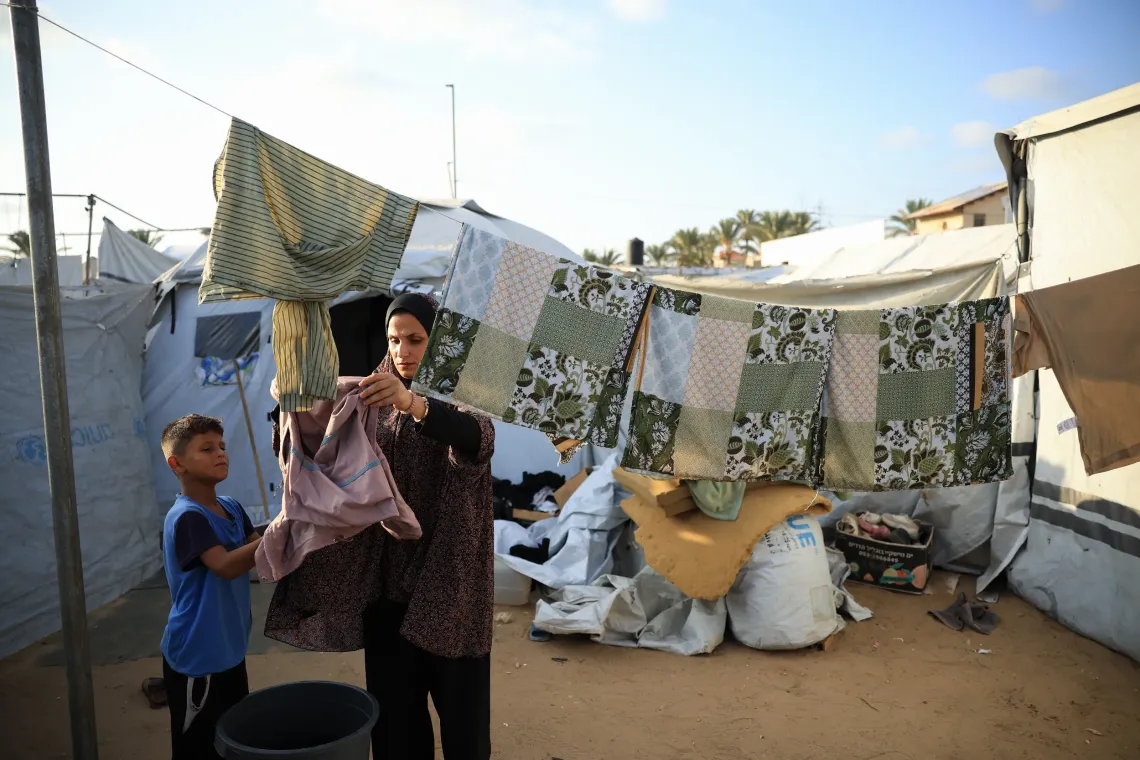
Areej and her family are originally from Rafah. Since the war began, they have been displaced multiple times, from Rafah to Khan Younis and Deir al-Balah, back to Rafah during a short truce and then back to Khan Younis once more. Her youngest daughter Seela was born while the family was displaced.
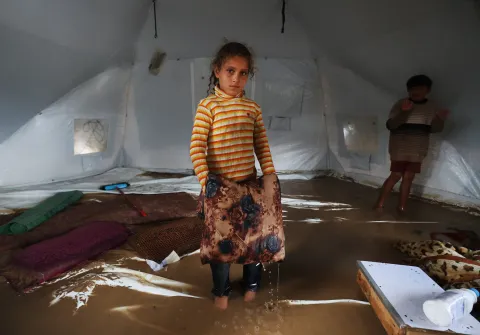
For the past year, they have lived in a tent in Al-Zaytoun Land Camp in the middle area of Gaza, home to 59 displaced families.
Water is scarce. The camp’s well water is also salty, so Areej was previously trying to save some of the fresh drinking water, trucked to the camp, to wash their clothes. “In salty water, even if you put the whole packet of detergent, it won’t lather,” she says.
Before the war, laundry was simple. “I’d put the laundry in the washing machine and go finish my work,” Areej says, explaining that while it ran, she often helped her eldest daughter with her schoolwork. Now, however, everything has changed.
To ease the burden of washing by hand, UNICEF has recently piloted hand-cranked washing machines, in partnership with The Washing Machine Project, a UK-based social enterprise, and securing the approvals needed to bring them into the Gaza Strip.
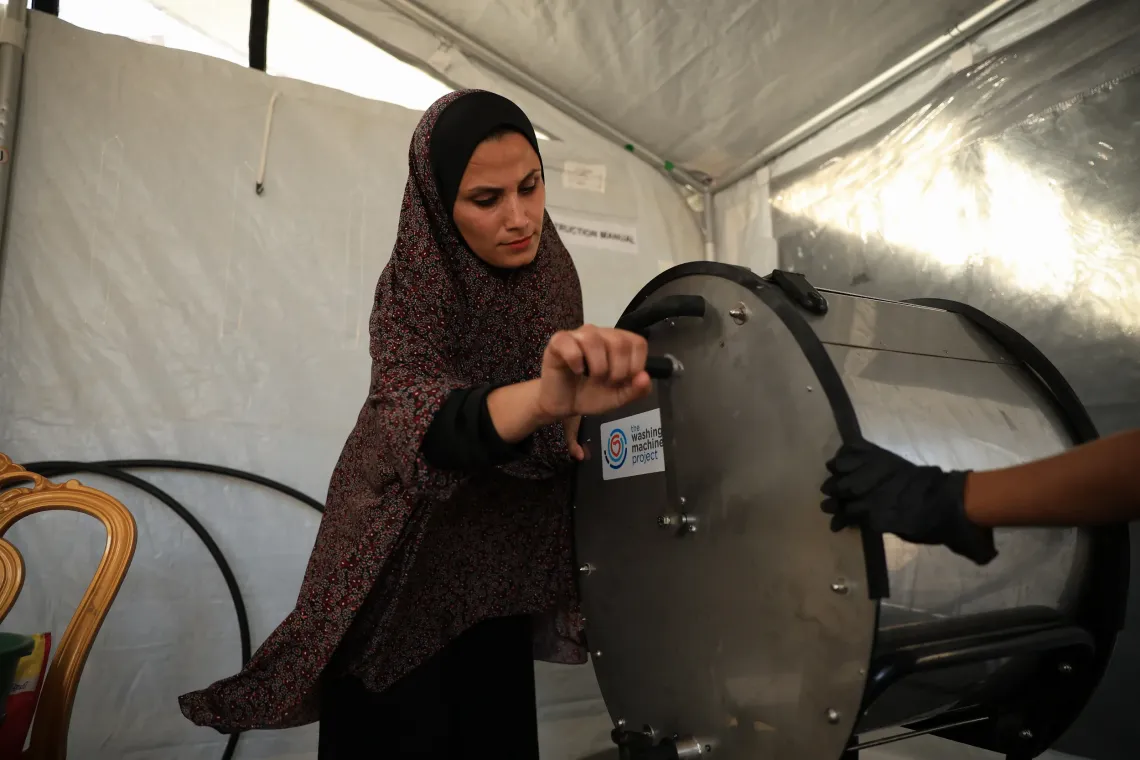
They have now been installed in several camps across Gaza, including Al-Zaytoun where Areej lives. Residents have been trained to run them and to set up women’s committees who manage the schedule, assigning each family in the camp a half hour slot a couple of times a week to do their washing. As well as using the machines herself, Areej is also a part of the organizing committee.

“They came and trained us and told us: you’ll be the ones running the washing machines,” she says. “We are all one hand here in the camp.”
The first time Areej used the machine, she says a small load of washing took about 15 minutes, rising to 30 minutes when she has more clothes. “This washing machine is very good,” she says. “It’s so much easier than washing by hand. A great relief.”
The time she saves goes to her children. “Now I have time to help my children with their studies, cook or attend to other tasks,” she says. “It really makes life so much easier.”
All the women on the committee agree that that the machines have made a significant difference to their daily lives. They can simply come at their assigned time or move it to a time that suits them through the camp’s WhatsApp group.
Areej still hopes for life as it should be. “I wish I could live in a house, give my children the best life and an education, have income to live on and live my life like before,” she says.
For now, the machines have brought relief to families in the camps where they have been installed. But with winter approaching and so many families still washing by hand, the need is far greater than the 20 machines in Gaza today.