Families Reclaim a Devastated Gaza City School
UNICEF continues to support children and families in the Gaza Strip providing the much-needed hygiene and sanitation items.
- English
- العربية
When the daylight arrived on August 10, al-Tabaeen school in Gaza City sat damaged and in disarray. Blood and debris marred the floors of this space where hundreds of displaced Palestinian families had made a temporary home.
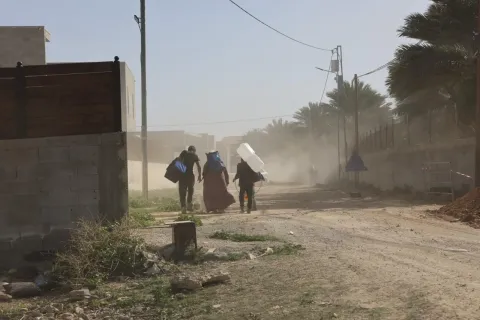
Only hours before, some 93 people had been reportedly killed here and dozens more injured. The school was bombed at the exact time that its temporary residents were gathering, forming rows to say prayers before dawn. Their families and friends were in shock. Most of them have been displaced over and over as they search for safety in a brutal war that has continued with only one brief pause since October 2023.

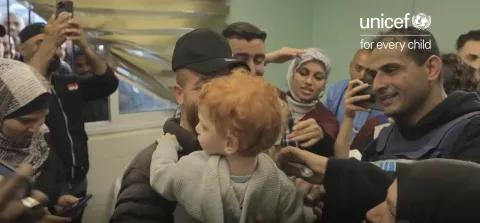
Recognizing the immediate need—these families have nowhere else to go —UNICEF and its partners began to distribute basic supplies to the families, who started the daunting task of cleaning up the school.
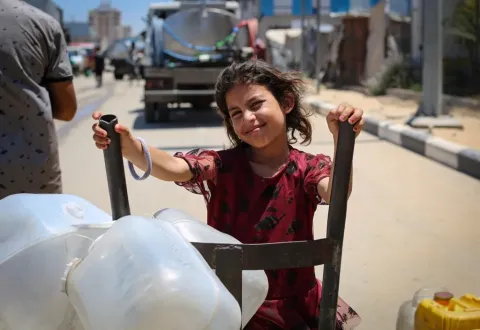
UNICEF distributed hygiene kits containing floor mops, cleaning solution, gloves, trash bags, bleach and sterilizing solution, wiping cloths, and sponges. They also distributed 10 m3 of tanked drinking water and 210 plastic buckets.

This assistance was provided in consultation with other organizations, filling a known gap in the support these families need. UNICEF leads the humanitarian cluster dedicated to water, sanitation, and hygiene, working with 33 other partners in the Gaza Strip to assess and respond to the emergency needs of 2.1 million Palestinians.
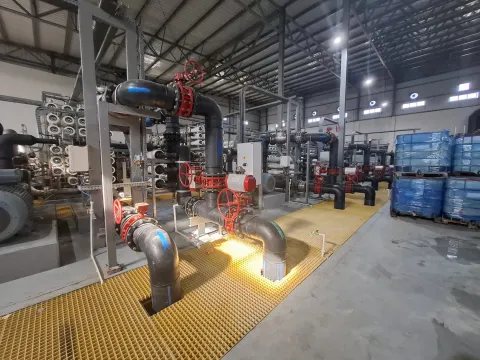
Besides basic cleaning supplies, the cluster managed to deliver 755,459 litres of fuel in July—fuel is cut off from the Gaza Strip but is vital to ensuring the operation of wells and pumps that support regular access to water. Through different interventions, UNICEF has successfully produced water for approximately 2 million Palestinians in the Gaza Strip, including over 1 million children. Difficulties, including security challenges, limited access to water points, and a lack of water storage capacity, have meant that the number of people able to access water in a consistent and safe manner has been more limited than we hoped.
Overall, 666,015 people have benefitted from improved hygiene and sanitation because of UNICEF assistance.

85% of all Gaza’s schools have been struck, damaged or destroyed since the beginning of the war, even as they were serving as a shelter for the displaced. As Palestinians cling to anything that is familiar in this ever-changing landscape of rubble and ruin, cleaning up their temporary home is an important act of resilience.