

175,000 additional parents and children are getting access to safe drinking water in the Gaza Strip
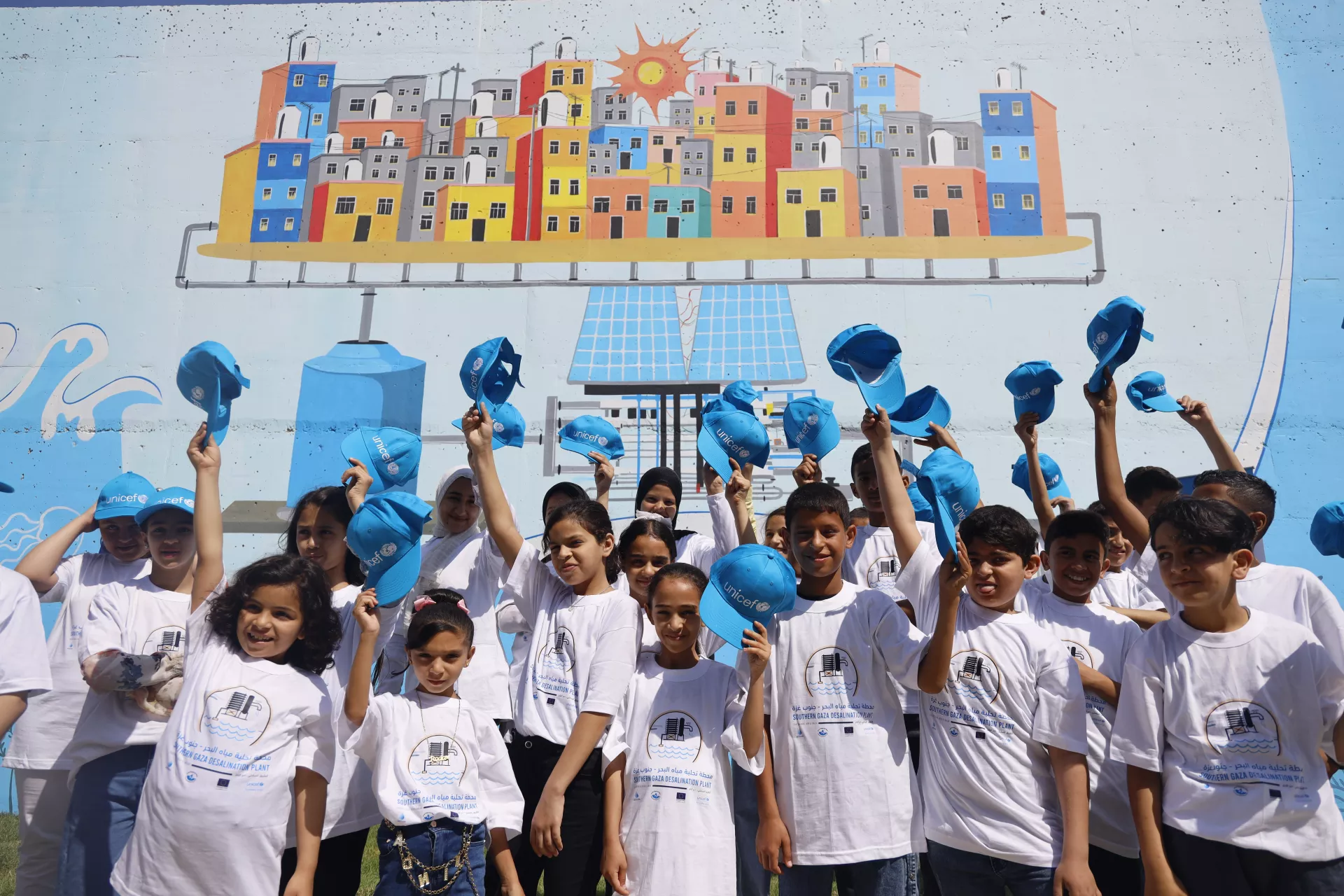
UNICEF, in partnership with the European Union, the Palestinian Water Authority, and the Costal Municipalities Water Utility are working together to ensure that 250,000 people access to safe drinking water in the Gaza Strip.
- English
- العربية
Access to safe drinking water is a basic human right. However, over the last decades, there has been a critical shortage of potable water in the Gaza Strip. Ninety-six percent[1] of the water taken from the coastal aquifer is deemed unfit for human use and cannot be used for drinking. Most families have to buy drinking water from the street vendors, at a high cost imposing a strain on most households and putting women and children in particular at risk.
‘Water in general in the Gaza Strip is very unsuitable for drinking or domestic use, and the conditions were very difficult, as many people were suffering from diseases caused by water pollution,’ says Ahmed Rabie, director of the water desalination plant in the Gaza Strip.
To tackle this issue, UNICEF and the European Union cooperated to establish a seawater desalination plant that would provide up to 20,000 cubic meters of safe drinking water per day to the governorates of Khan Younis and Rafah, in the southern Gaza Strip. ‘Desalination of seawater is the best and only solution for the Gaza Strip to supply clean and safe drinking water for all households,’ says Ahmed Rabie, director of the water desalination plant in the Gaza Strip.
The desalination plant was constructed in two phases. The first phase was completed in 2017, with a desalination capacity of 6,000 cubic meters of water per day that benefit 75,000 people, including children, women, and men. UNICEF in partnership with European Union (EU), the Palestinian Water Authority (PWA), and the Costal Municipalities Water Utility (CMWU) are now in the last straight line from finalizing the second phase, which – when fully operational – will generate additional 14,000 cubic meters of water, benefiting additional 175,000 people. Both phases provide water to meet the requirements of around 250,000 people.
[1] PWA - Water Resources Summary Report 2021, Gaza Strip
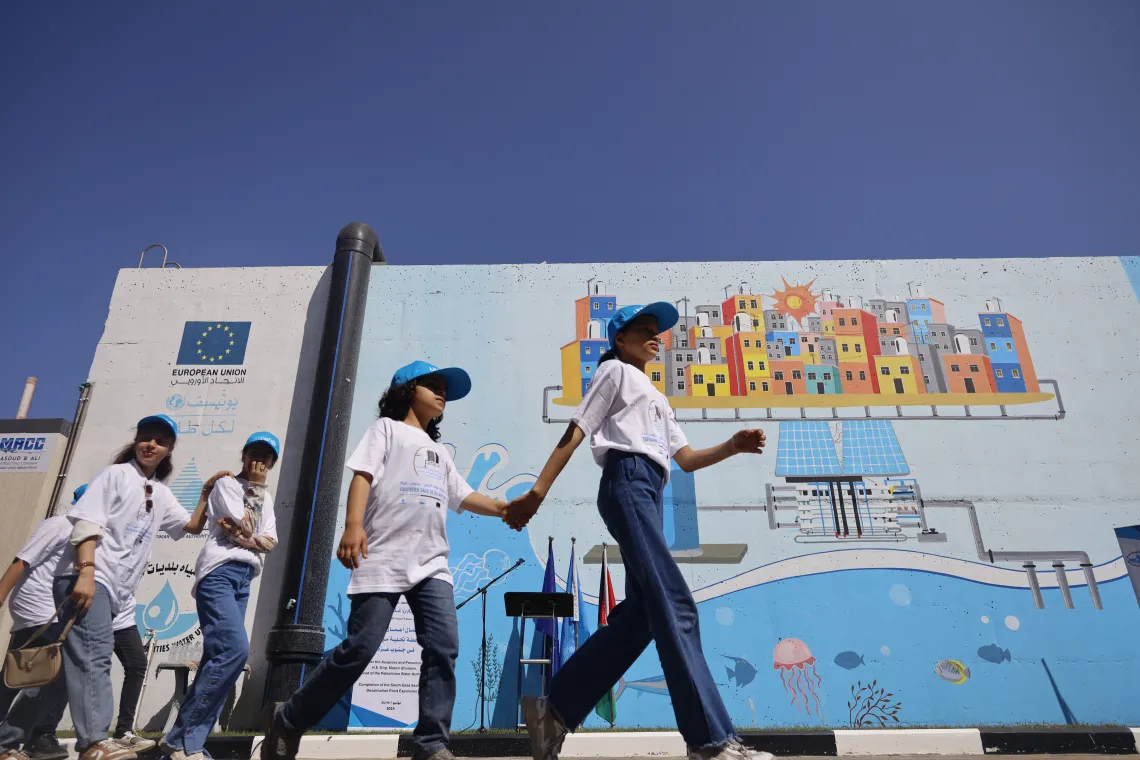
Desalination of seawater taken from the Mediterranean is critical to preventing the over-extraction of water from the aquifer, avoiding substantial environmental consequences, and supporting the aquifer rehabilitation. If seawater from the Mediterranean is not desalinated as an alternative source of safe drinking water, over-extraction of water from the aquifer will result in lasting harm.
The development of a desalination plant is helping to expand the water supply market while reducing groundwater exploitation. Such expansion allows more access to safe drinking water, lowering the prevalence of waterborne diseases such as diarrhea, bacteria, and germs. It will also reduce the economic burden on families, bringing the price of a water cubic meter from 30 ILS (around $8.2), when bought from a street vendor to 2.5 ILS ($0.68) per cubic meter, about a tenth of what street vendors are paid. Thus, the finalization of the expansion of the desalination plant is meeting the urgent needs of vulnerable children and families and improving the community's overall health.
‘It is worth mentioning that the desalination plant has a major role in changing the water situation in the Gaza Strip and solving many problems in the area of Tal al-Sultan and Khan Yunis,’ says Ahmed.
This will be a continuation of the first phase where safe drinking water is transported through a water pipe and consumed from taps directly at home, reducing the process of water pollution since it has been confirmed by the Palestinian Water Authority that water sold from street vendors is often contaminated.
The launch of the second phase of the desalination plant will also be an opportunity to raise awareness about water scarcity, on how to maintain water tanks clean and encourage families to drink from the tap instead of purchasing it from unregulated sources.
'Through the awareness campaign that UNICEF, EU, PWA, and CMWU will implement, people will gain confidence in the water provided, and they will use it and stop using water sold by unregulated sources, as this water is not safe for drinking, whereas the water provided by the plant is safe and controlled as per public health standards by water utility authorities, ’ says Ahmed.
Another indirect impact of the desalination plant will also be positively affecting children. Currently, most families send their children to fetch water. The children carry heavy weights for their young age and spend a lot of time and effort transporting gallons of water to the house. With water provided through pipes, children will have more time to study and play.
However, seawater desalination is energy intensive. In the past few years, the Gaza Strip has been going through a serious energy crisis. The Strip's power network can only be used for a few hours each day. This means that diesel generators are often used to power the desalination plant when network electricity is not available. To address this issue, the desalination plant recently added solar panels to the diesel generators it already had. With support from the European Union, UNICEF built one of the biggest solar panel fields in the Gaza Strip. This was done to reinforce the sustainability of the desalination plant.
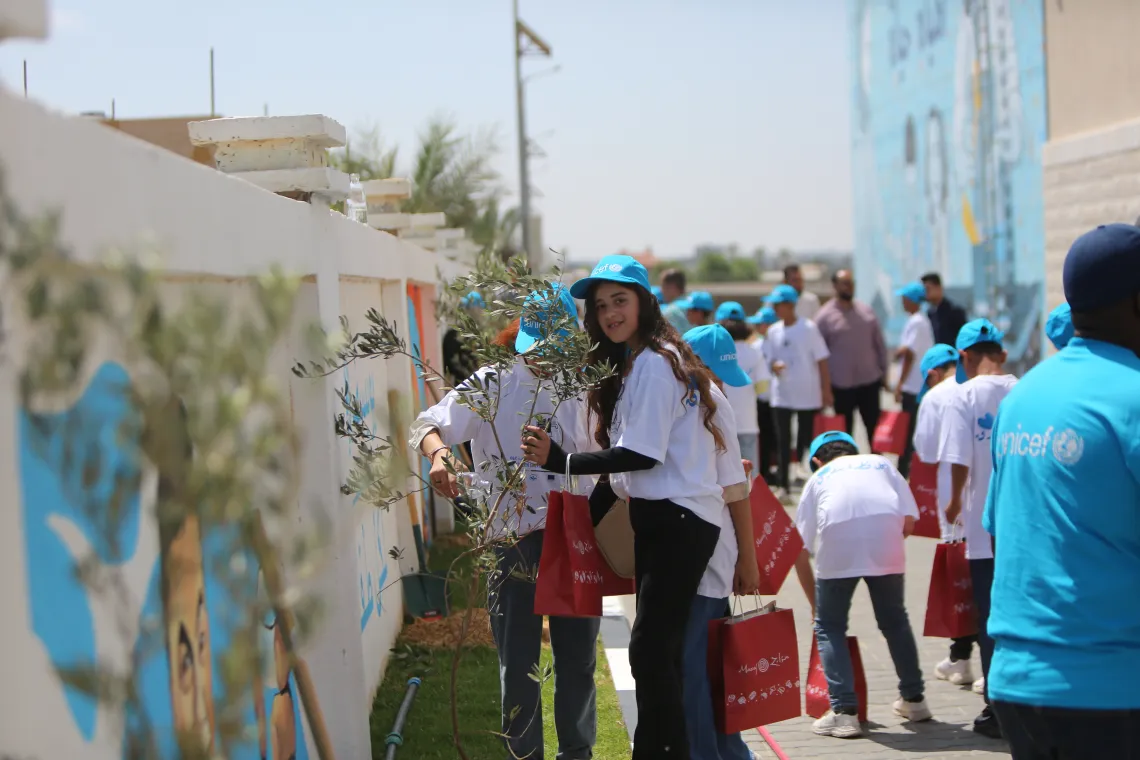
The seawater desalination plant is part of the European Union, PWA, CMWU, and UNICEF's joint efforts to expand access to clean and safe drinking water for all families and social care institutions, especially those in vulnerable areas.
Children in the Gaza Strip suffer from the lack of safe drinking water due to the very challenging situation they experience daily, including the frequent escalations of hostilities and the 16-year-old closure, affecting every aspect of their lives. Such intervention, undertaken in the spirit of partnership and drive for the realization of children's rights will have a significant impact on improving the lives of children. This will contribute to providing children with safe drinking water while opening up time and space for boys and girls to play and study. It is every child’s right to clean water. Much more must be done and can be done to ensure that all children in the Gaza Strip can thrive and develop to their full potential.