At every doorstep, a chance to find malnutrition early
In Jowhar, Nafiso Ibrahim Ali walks from home to home, helping families identify malnutrition early and connect children with the care they need.

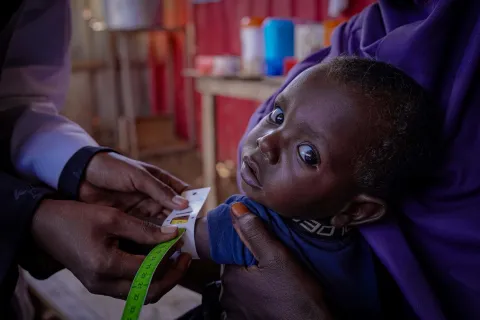
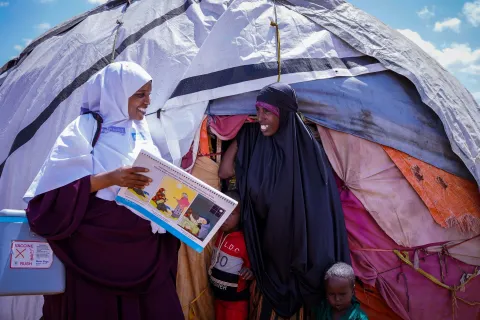
By 8 o’clock each morning, Nafiso Ibrahim Ali is already on the move. She walks through the neighbourhoods of Jowhar, carrying the materials she needs for another day of visiting families. House by house, she screens children for signs of malnutrition, speaks with caregivers, shares information and helps connect children who need treatment with nutrition services.
This is community health work at its most immediate: taking care closer to the people who need it. For Nafiso, 26, the work is personal. She was born and raised in Jowhar’s Horseed neighbourhood and has spent seven years working in the community to raise awareness and support children affected by malnutrition.
She is also a mother of three. Her working day usually runs from 8 a.m. to 4 p.m., moving from one household to the next, meeting families and checking on children. The work provides for her own family while allowing her to serve the community where she grew up.

A family displaced by drought
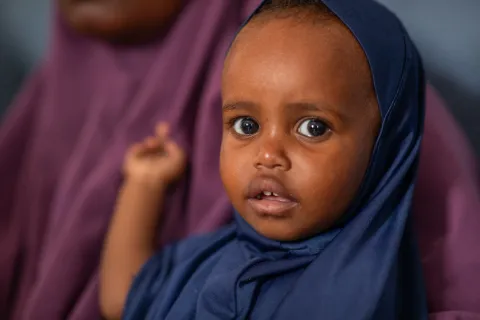
One of the families reached through this work is that of 23-year-old Maryan Calaso Geedi, a mother of three who was displaced from Ceel Cad by drought. Life after displacement has brought new challenges. Maryan’s husband earns a living as a casual labourer in the market, transporting goods for people with a handcart. Maryan contributes to the household income by collecting grass to sell.
For a family already working hard to meet its daily needs, caring for a child affected by malnutrition can add another burden. When Maryan’s youngest child was identified as suffering from malnutrition, the family received a referral from the area where they now live. Maryan brought the child for nutrition care, where the child was attended to and provided with therapeutic food.
The journey from identifying a child at risk to receiving treatment can be critical. For families like Maryan’s, reaching services early can help prevent malnutrition from becoming more severe.

Bringing care within reach
This is why community health workers such as Nafiso matter. Because they work directly in neighbourhoods and homes, they can reach families who may face barriers to accessing health and nutrition services. Through screening, counselling, referrals and follow-up, they help identify children who need support and connect them to the appropriate care.
Their work also brings something else: information and reassurance at the household level. For displaced and vulnerable families, the first step towards treatment may begin at the doorstep.
For Nafiso, that means returning to the community every morning and continuing from one household to the next. After seven years in the role, she remains proud and satisfied with the difference she is able to make in the community she calls home.
Her work may begin with a screening, a referral or a conversation with a caregiver. But behind each household visit is a child who may need help, and a family looking for a way forward.
From one home to another, she is helping bring nutrition services closer to children and families in Jowhar – one household at a time.
This work is supported by the European Union through its Civil Protection and Humanitarian Aid Operations (ECHO).