Tackling malnutrition through community care

How early screening and community-based care are helping children in Bombali recover from malnutrition
Kadijatu Barrie and Chernor Barry
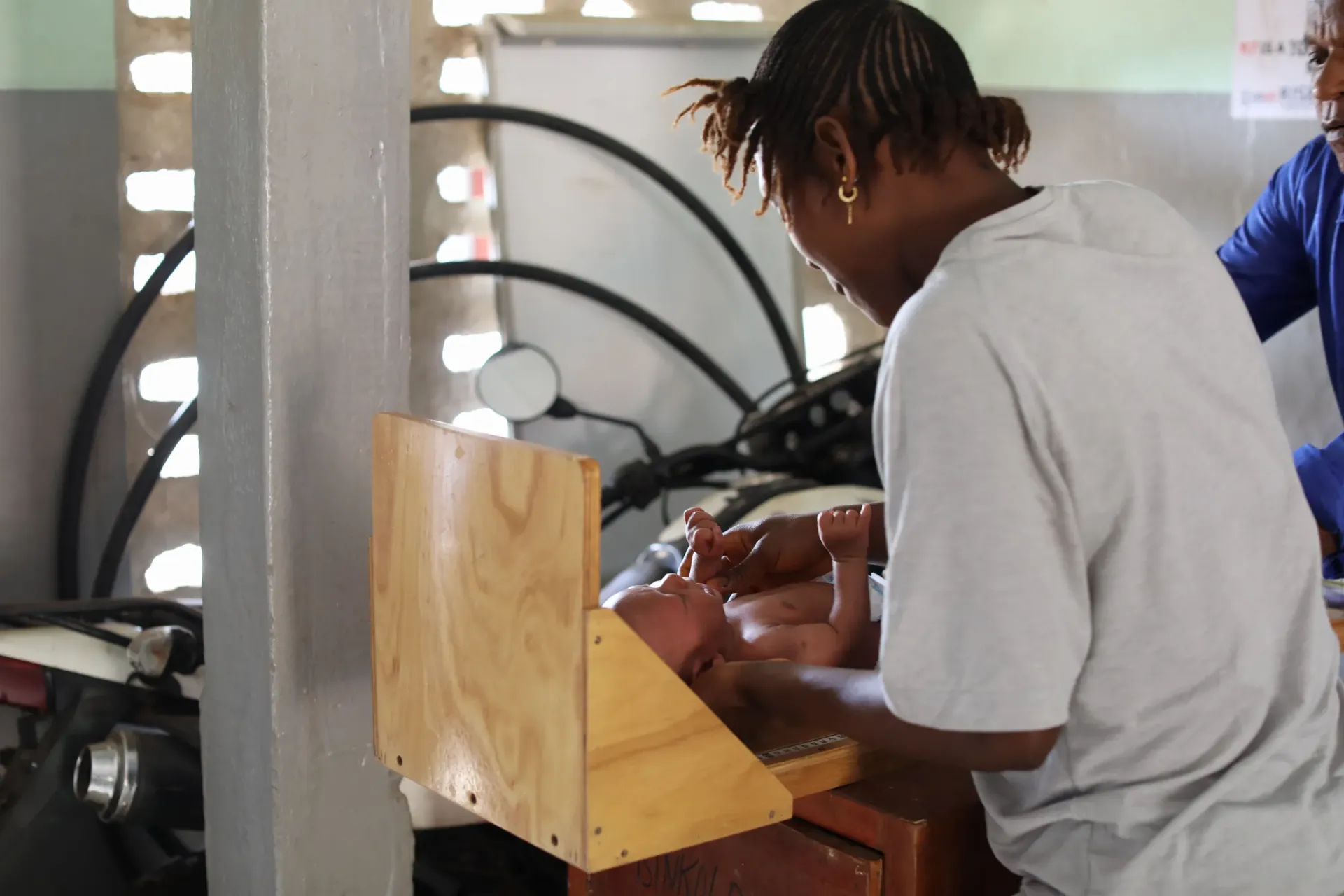
Seven-months old baby Isatu’s height is being measured as part of the processes to determine her nutritional status at the Binkolo Health Centre, Bombali District, northern Sierra Leone.
©UNICEF Sierra Leone/2025/Barry
04 February 2026

In a district where many infants are at risk of poor growth due to limited access to nutritious food, this simple act of monitoring becomes a lifeline ensuring that children like Isatu receive timely care and support to stay healthy.

10-month-old Ramatu’s nutritional status is being determined by measuring her upper arm using a colour coded tape known as MUAC (Mid Upper Arm Circumference) at the Binkoloh Community Health Centre, Bombali District. The red area of the tape denotes a severely malnourished child; the yellow, moderately malnourished, and the green means the child is not malnourished.  month old Ramatu Kolokoh’s arm with a MUAC tape to assess nutritional status, while a caregiver provides support. The image captures early det
©UNICEF Sierra Leone/2025/Barry 10-month-old Ramatu’s nutritional status is being determined by measuring her upper arm using a colour coded tape known as MUAC (Mid Upper Arm Circumference) at the Binkoloh Community Health Centre, Bombali District. The red area of the tape denotes a severely malnourished child; the yellow, moderately malnourished, and the green means the child is not malnourished. month old Ramatu Kolokoh’s arm with a MUAC tape to assess nutritional status, while a caregiver provides support. The image captures early detection in action, where a simple measurement guides timely nutrition care and helps protect a child’s health.

Malnutrition continues to pose a profound and long‑term threat to the health, development, and future productivity of children in Sierra Leone with 26 per cent of children under-five stunted and 5 per cent too thin and small in relation to their ages. This situation highlights the urgent need for sustained, coordinated efforts to improve nutrition, strengthen health systems so that every child can survive and thrive.

Nurse Mary hands over packs of plumpy nuts to baby Isatu’s mother, which she uses to feed her as part of the therapeutic feeding practice so that she can regain her health and be healed against malnutrition.
©UNICEF Sierra Leone/2025/Barry Nurse Mary hands over packs of plumpy nuts to baby Isatu’s mother, which she uses to feed her as part of the therapeutic feeding practice so that she can regain her health and be healed against malnutrition.

Among other things, UNICEF Sierra Leone partners with the Government of Sierra Leone to establish in-patient facility for treatment of severely malnourished children and out-patient therapeutic feeding services for moderately malnourished to tackle the problem. 

Kadiatu smiles as her seven-month-old baby, Isatu munches a pack of plumpy nuts  as she recovers from malnutrition.
©UNICEF Sierra Leone/2025/Barry Kadiatu smiles as her seven-month-old baby, Isatu munches a pack of plumpy nuts as she recovers from malnutrition.

Through timely intervention and nutrition support, baby Isatu and thousands of under-five children across Sierra Leone have regained their health, became stronger and are thriving with the priceless efforts of dedicated health workers, families and community care.