

Over 1,500 families in Goderich, a Fishing Community, have access to new toilets for the first time
Improving Water, Sanitation and Hygiene (WASH) services
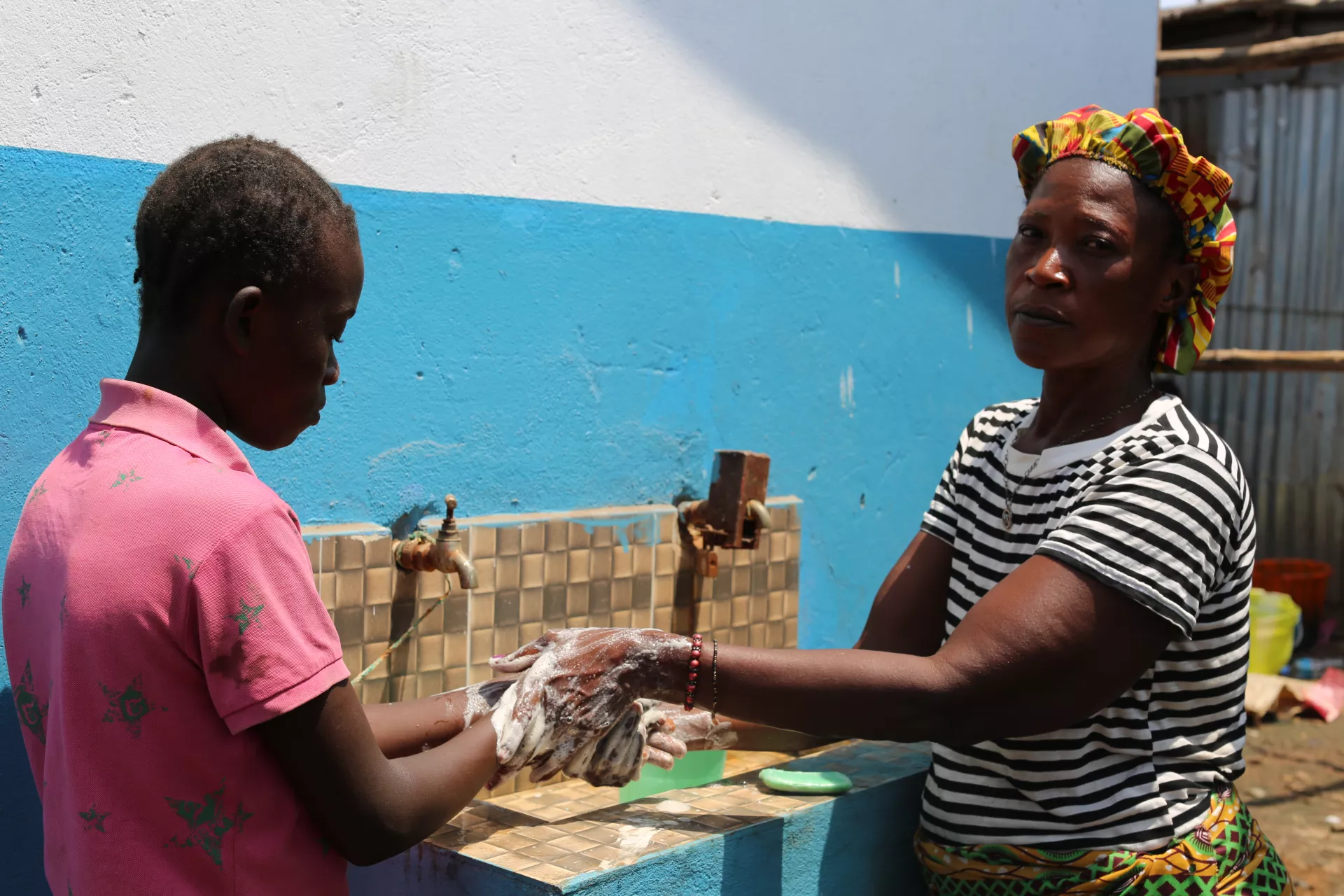
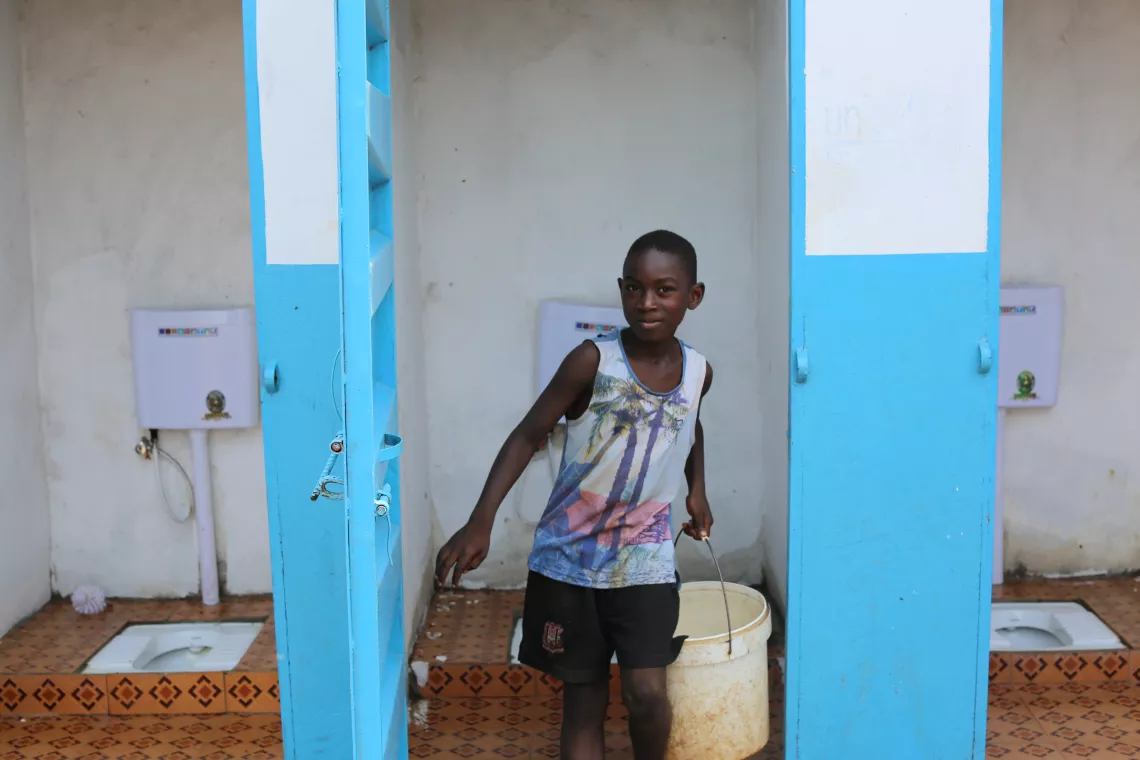
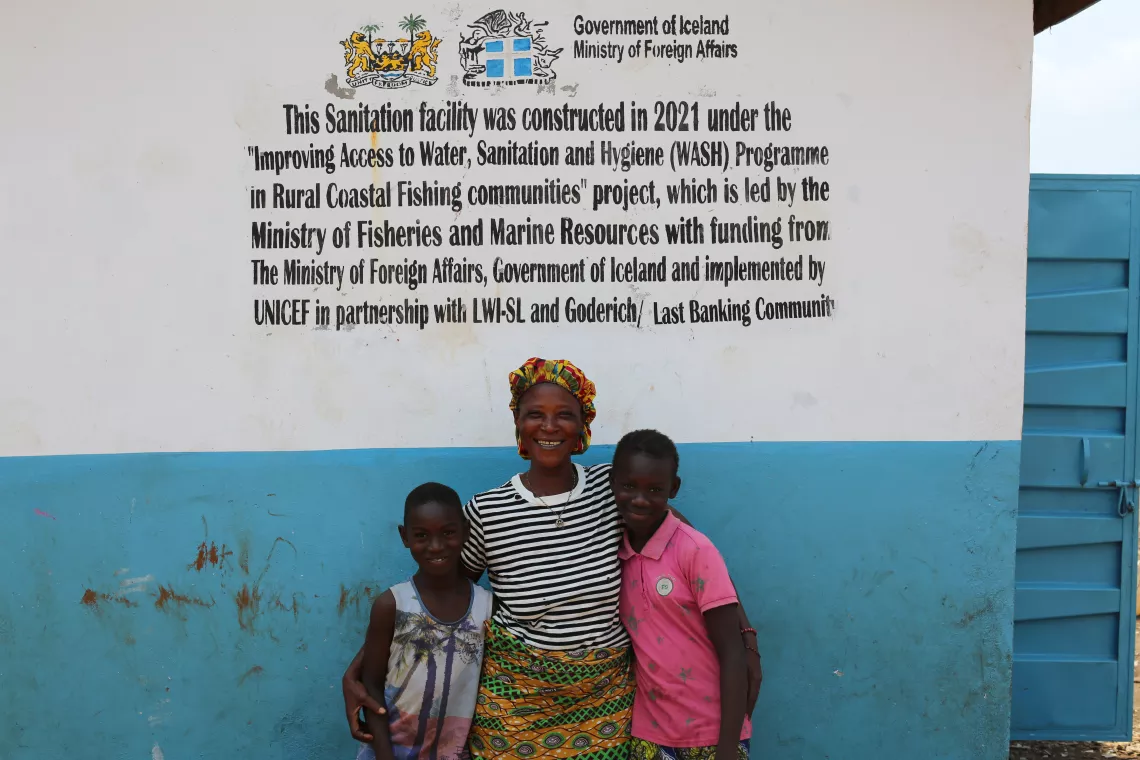
Freetown – Mbalu Bangura, grandmother of Ama, 13 and Kofi, 10, pointed to a bar of soap that lay on a raised platform by the entrance of a big blue and white structure at Last Banking Community, a slum fishing community in Goderich, western Freetown. This is the new public toilet block with eight toilet compartments for the community, generously funded by the Government of Iceland. Her grandchildren were returning to their house, a zinc structure, after using the new toilet which is a few metres away.
“Please wash your hands with soap before coming to the house”, she said as her face beamed with smiles.
Neither Mbalu nor her grandchildren had ever used a proper toilet before since they moved to this community over seven years ago. Moreover, no member of this community had ever used a proper toilet until two years ago when these facilities were constructed and handed over to them.
Last Banking Fishing Community, as the name implies, lies by the mouth (bank) of a stream with a mangrove swamp that empties into the Atlantic Ocean. Scores of peasant fishing families have created informal settlements there over the years by continuously and precariously creating banks by the edges of the swamp and reclaiming land. There was no running water, and no sanitation and hygiene facilities and services. Families, including children and mothers, used to defecate in the open and in the stream, or at best, in plastic containers and dump them into the sea.
According to the Multiple Indicator Cluster Survey of 2017, only 16 per cent of the people in Sierra Leone have access to at least basic sanitation services. Sanitation coverage in rural communities is at 28 per cent. In the Western Area Rural district, where Goderich is situated, 76 per cent of the population does not have basic sanitation facilities, and illnesses linked to poor sanitation, including diarrhea, malaria and malnutrition are prevalent. Access to improved Water, Sanitation and Hygiene (WASH) services is disproportionately lower in the rural areas and low-income urban and peri-urban areas or slums, such as the Last Banking Fishing Community.
To improve this situation, the Ministry of Foreign Affairs of the Government of Iceland supported Sierra Leone’s Ministry of Fisheries and Marine Resources in partnership with UNICEF with a three-year project, “Improving Access to Water, Sanitation and Hygiene (WASH) in Rural Coastal Fishing Communities” to provide WASH infrastructure and services to about 18,500 people living in two communities, Goderich and Konacrydee. A nearby community, Tombo benefited from a similar project funded by the Government of Iceland in 2021. So far, a total of 157 toilets and 22 shower rooms, all gender-segregated and some accessible for people with disabilities , have been constructed, in addition to three extensive water supply schemes with over 316 tap stands in the fishing communities of Goderich, Tombo and Konakrydee. These have changed the sanitation profiles of over 60,300 people, including women, children and their families.
“We are very grateful for these toilets. We used to dump all sorts of things into the sea, which was not hygienic at all,” says a relieved Mbalu, as she guided her children to do the day’s domestic chores. “There were lots of flies and cockroaches all over this community and people, mostly children, were prone to diarrhoea.”
“An assured future for any child starts with their protection from preventable diseases such as cholera, diarrhoea and malaria,” said Bishnu Timilsina, UNICEF Chief of WASH programme in Sierra Leone, “Access to water, hygiene and sanitation services is part of that assured future.”
Apart from tackling access issues around sanitation and hygiene in the community, the project has also restored the dignity of families and is changing the image and narrative, particularly for children, of life in rural fishing communities, where open defecation was perceived as part of the life of a fisherman. Mbalu added, “In the past, I felt nauseated whenever I saw families defecating in the open. I am glad this will stop, now that we are making proper use of these latrines.”
Yusif Kargbo, the WASH Committee Chairman informed that the Community has instituted by-laws to ensure that the toilets are always kept clean and free from pests and diseases. He noted that they signed a Memorandum of Understanding with household leaders to grant unhindered access to every member of the community who may want to use the toilets, even if the toilets are constructed on private lands. This will ensure non-discrimination and equity of use for all.
As Mbalu prepared the afternoon meal for the family with Ama and Kofi, their sense of appreciation for these life changing facilities in their community was palpable. Mbalu added, “We were also trained on proper handwashing with soap after using these beautiful toilets”. “We want to say a big thank you to the donors and all other stakeholders that were involved in bringing us these nice toilets,” Ama and Kofi concluded, as they dressed up to go to school.


