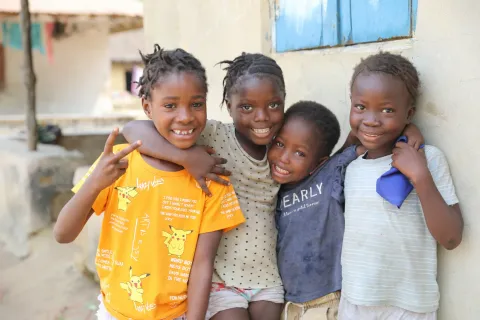
Making birth registration more accessible for every child in Sierra Leone
Promoting every child's right to an identity
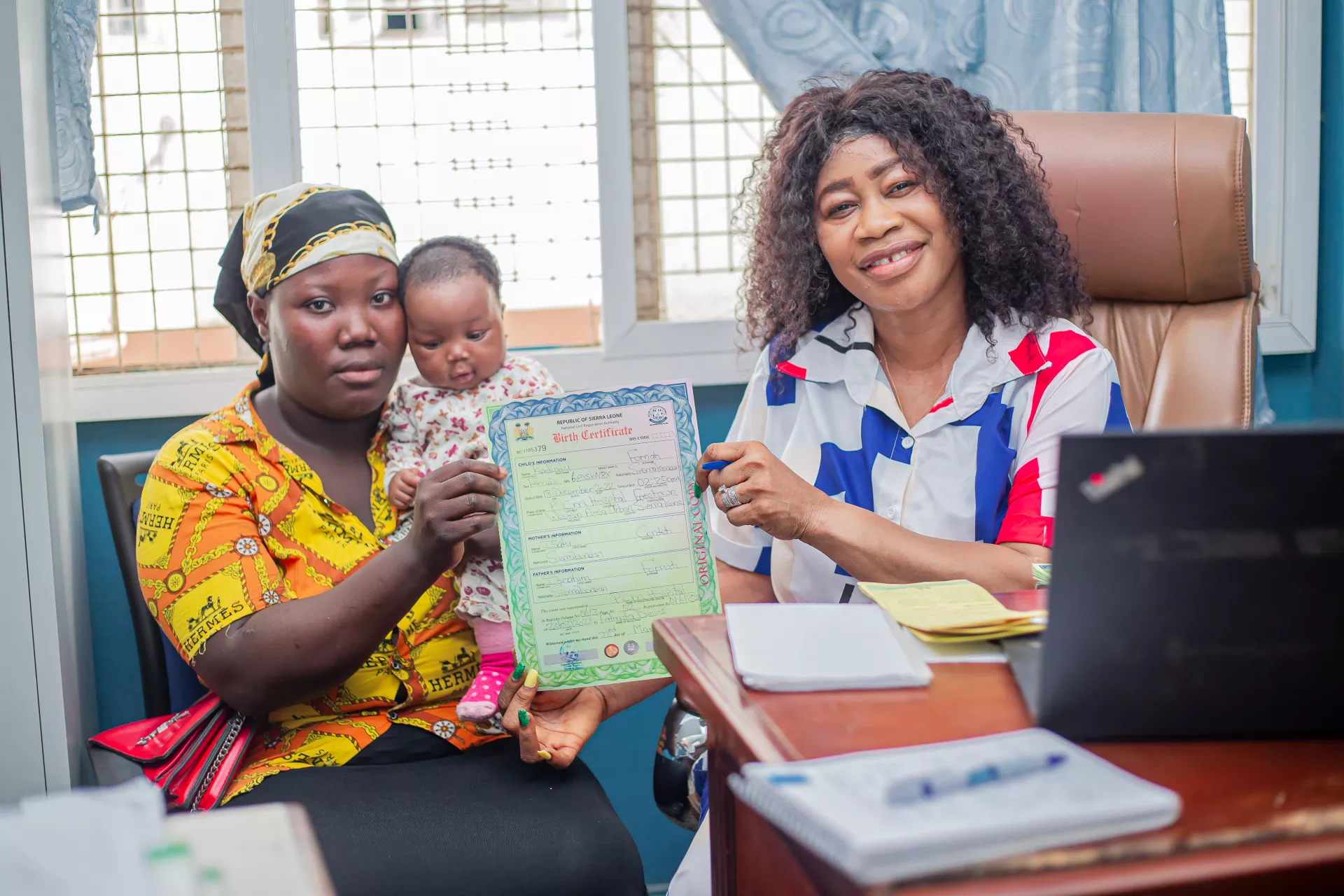
Freetown - First time mother, Sally Conteh, is determined to give her baby Usman Talu Bangura all the opportunities that she never got to enjoy as a child. Her first step in achieving this, is to get baby Usman registered and issued with a birth certificate.
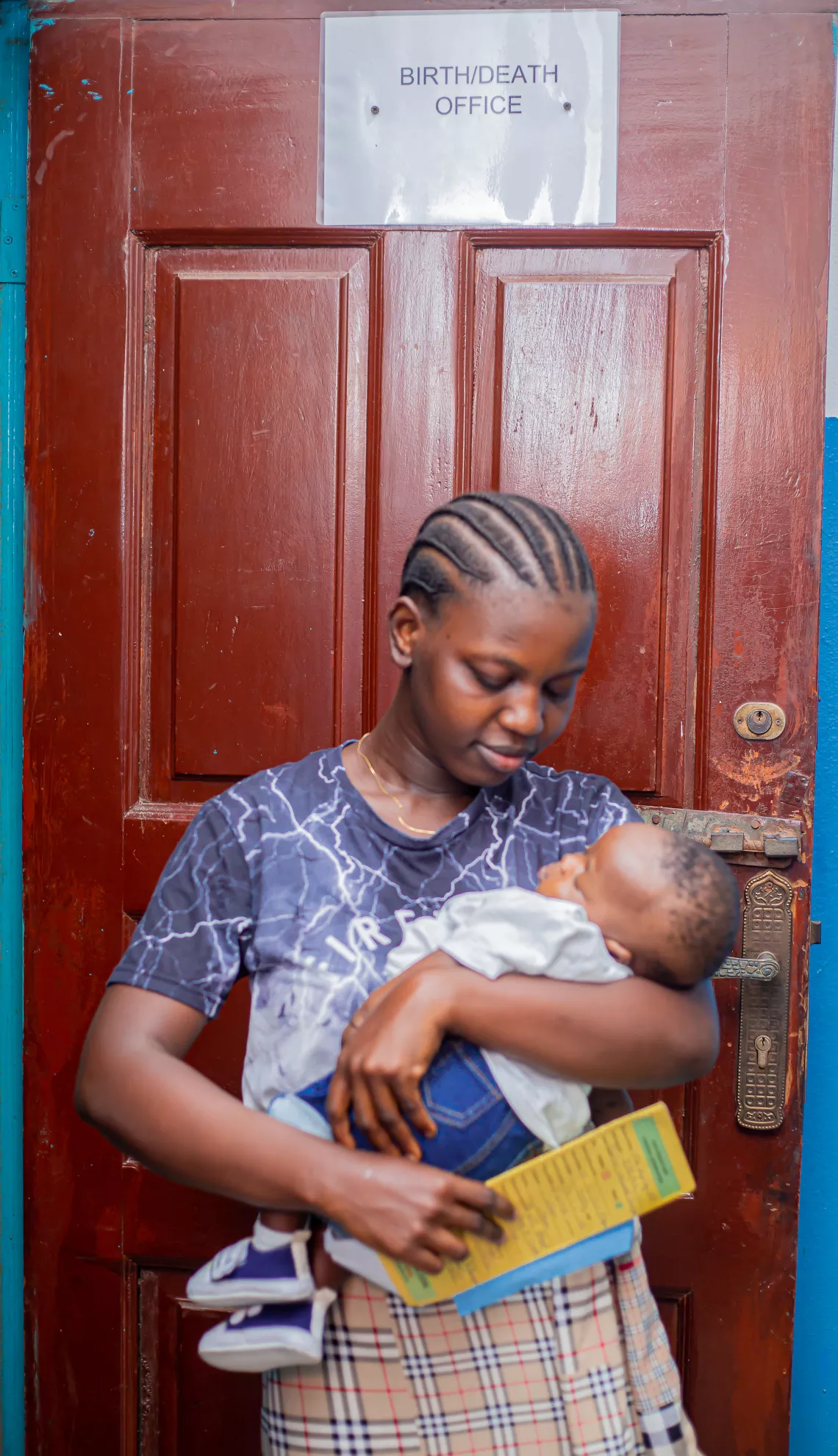
“I have always wanted to travel to other countries and to go further with school, but I cannot do these things because I do not have a birth certificate. I want my baby to experience all these things which I have not experienced,” says Sally, as she steps into the Births and Deaths Office of the National Civil Registration Authority, which is located at the Ola During Hospital.
Although it is a basic human right for every child to be registered and given a birth certificate, thousands of children are neither registered nor given a birth certificate in their name. According to MICS 2017, more than 19 per cent of children in Sierra Leone are not registered, and 28 per cent of children do not have a birth certificate. With no document to prove existence, these children find it difficult to access basic services such as health and education, and protection from abuses such as early marriages, child labour and trafficking, because there is no legal document to substantiate their age.
“I learnt from the nurses at the hospital that without a birth certificate, my child will miss out on a lot of opportunities, that is why I have decided to have him registered,” says Sally, as she goes through the easy process of registration at the convenient location within the hospital, where she gave birth.
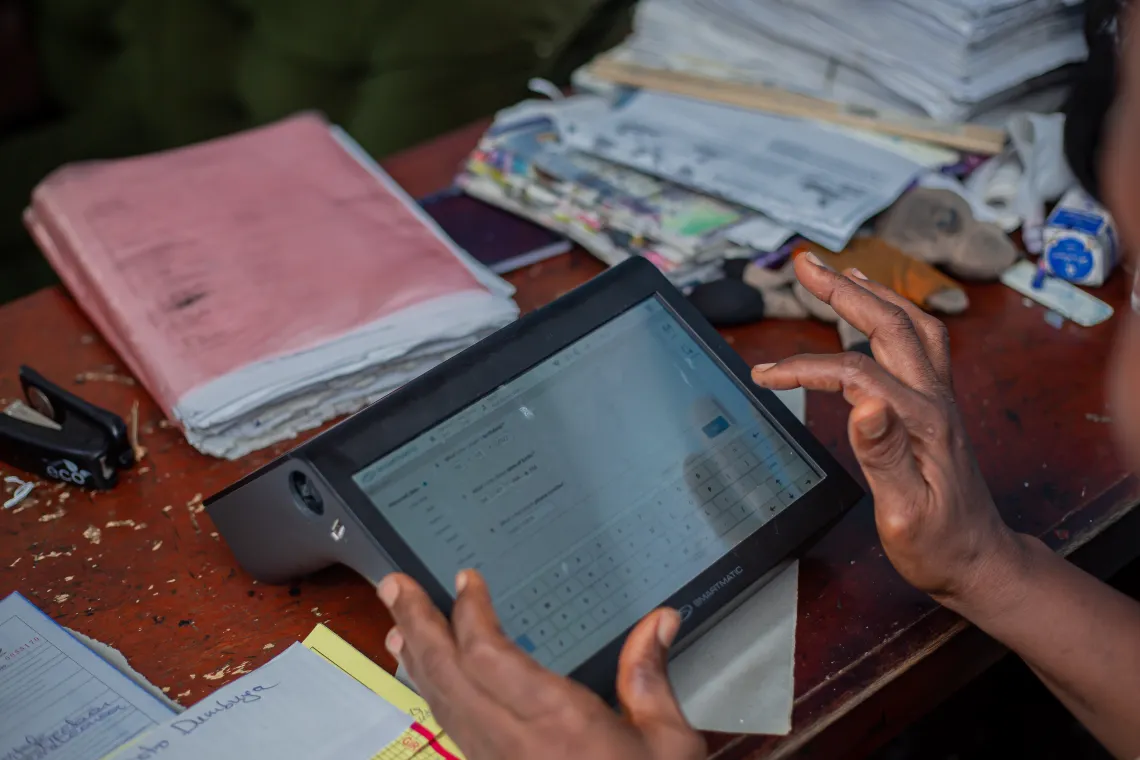
The barriers to birth registration include the time investment and cumbersome process it took in the past to register the babies. A small fee was also required for the issuance of the birth certificate and sometimes the certificates were not available. To increase birth registration, UNICEF supported the National Civil Registration Authority to establish a digital Birth and Death registration mobile application which is used at registration centres to help fast track the birth registration process. The registration centres are conveniently located in the hospitals where the babies are born, such as at Ola During Hospital, and in 2022 over 98 per cent of births notified by Ministry of Health and Sanitation were registered.
With the help of the digital application, Sally presents Baby Usman’s birth record which includes statistical details such as his name, date of birth and parent’s name, which are then entered into the birth records file. This information is then transferred to the Central Registry System and passes through the central server for his identification number to be generated. Within 24 hours, Baby Usman’s birth certificate will be ready for collection.
With support from UNDP under the United Nations Legal Identity Agenda (UNLIA), the National Civil Registration Authority has strengthened the coordination and supervision mechanisms for birth registration and increased public awareness on the importance of registering vital events such as births and deaths. This effort has included working closely with health staff to ensure that sufficient information is shared with parents and caregivers about the importance of birth registration and directing them to the registration centres. In addition, 16 radio stations across the country aired programmes on the importance of birth registration, how and where the child can be registered, and also alerting them that this service is only free for ninety days.
These awareness raising and coordination activities have boosted birth registration rates and the issuance of birth certificates. Each month, at Ola During Hospital, more than 200 babies are registered and issued with birth certificates.
“Having a well-functioning and accessible civil registration and Identity management system is one of the ways to increase registration. We are pleased that Sierra Leone has made in-roads towards addressing and eliminating some of the barriers to accessing a birth certificate,” says Stefano Schwarz, UNICEF Child Protection Specialist.
Isatu Conteh’s baby, Kadiatu Fonah, has just been issued a birth certificate. Isatu is happy that she was encouraged by the nurses at Ola During to visit the National Civil Registration Authority registry point to have her baby registered and issued with a birth certificate. Due to the lack of information in the past, Isatu’s two older children are not registered.
“I have two older children, who do not have birth certificates. This is because at the time they were born, it was not so easy to get a birth certificate,” says Isatu, who has also received information that whilst registration is free within the first 90 days of birth, a small fee can be paid for late registration and birth certificates for the two older children.
Sally Conteh has also learned that it is not too late for her to pursue her dream. She can register and obtain a birth certificate by providing a Voter ID card, NASSIT (Insurance) Card, Driver’s license and a late registration fee of 50 Leones (about $2).