Government of Sierra Leone and UNICEF distribute handwashing facilities to 4,000 households and 25 schools
To mark Global Handwashing Day and promote Hand Hygiene for All

Freetown, Sierra Leone, 15 October 2020 - To commemorate the Global Handwashing Day, which falls on 15th October, the Ministry of Health and Sanitation and UNICEF have this week distributed 4,500 handwashing buckets and 75,000 bars of soap to 4,000 households and 25 schools in Sierra Leone.
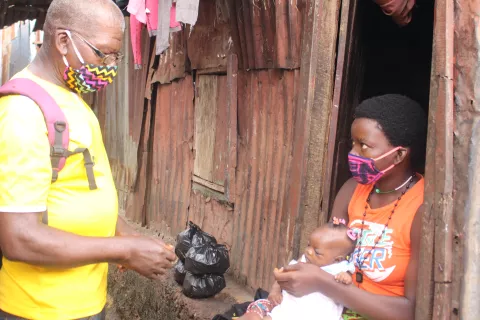
The buckets have been distributed through local Civil Society organisations who are working in 5 districts of Western Rural, Port Loko, Koinadugu, Falaba and Bonthe. The beneficiary communities and schools are being regularly sensitised on the important role of regular and proper handwashing, especially as a key defence mechanism against diseases such as diarrhoea, cholera and COVID-19.
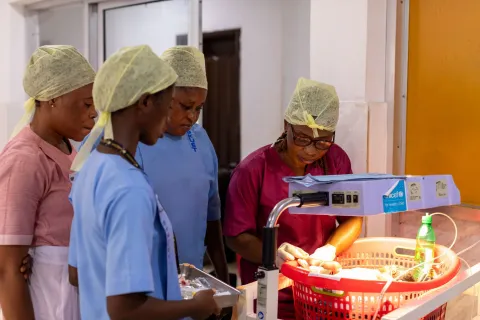
“The availability of hand washing facilities in our health care centers encourages health care workers to develop the good habit of hand hygiene to prevent COVID- 19 and other nosocomial infections in health care settings”, said Hon. Dr. Phillip Jambai, Deputy Minister (2) in the Ministry of Health and Sanitation.
According to recent global estimates, three billion people – 40 per cent of the world’s population – do not have a place in their homes to wash their hands with water and soap. In the least developed countries, 7 out of 10 schools have no place for children to wash their hands with water and soap.
In Sierra Leone, 81 per cent of the population does not have access to handwashing facility with soap and water at home. This puts them at immediate risk of COVID-19 simply because they lack basic handwashing facilities. The majority of those who lack access to water and soap are among the most vulnerable: children and families living in rural communities and those in the informal settlements.
The current COVID-19 pandemic has highlighted the critical role that hand hygiene plays in mitigation of disease transmission. A recent study[i] found that regular handwashing with soap can reduce the likelihood of COVID-19 infection by 36 per cent.
Since the COVID-19 outbreak, UNICEF has continued to support the efforts of Government towards making proper hand hygiene more possible across the country. Four thousand, five hundred and forty-eight (4,548) handwashing buckets have earlier been distributed, while in preparation for the safe reopening of schools across Sierra Leone, 2,307 handwashing stations were distributed to Government and Government-assisted Primary schools in eight districts.
“Access to clean and safe water and sanitation is a basic human right and an essential way to prevent diseases, including COVID-19,” said UNICEF Representative, Dr. Suleiman Braimoh. “The COVID-19 pandemic has proved to all of us that regular and proper hand hygiene practices are important for our overall health and that is why we continue to invest in handwashing facilities for communities across Sierra Leone.”
Since 2008, the Global Handwashing Day has been commemorated in different countries across the world as a day to intensify awareness and better understanding about the importance of regular and diligent handwashing with soap under running water as an effective and affordable way to minismise diseases risks, especially among children.
The theme for 2020 is Hand Hygiene for All and reminds every one of the benefits of taking immediate action on hand hygiene across all public and private settings to respond and control the COVID-19 pandemic. The theme also reminds people of the need to build on the current handwashing momentum to make hand hygiene a mainstay in public health interventions beyond the pandemic and create a culture of regular handwashing with soap at critical times such as after using the toilet, after changing a baby’s nappy, after caring for a sick person, before handling food, or before feeding a baby.
Key facts:
- Handwashing is key in the fight against COVID-19: One study found that regular handwashing with soap can reduce the likelihood of COVID-19 infection by 36%.1
- When children wash their hands with soap after going to the toilet or before eating, they reduce their risk of getting diarrhoea by more than 40 per cent.2
- Handwashing can reduce acute respiratory infections by 20%.3
- Handwashing plays an important role in reducing the transmission of outbreak-related pathogens such as cholera, Ebola, shigellosis, SARS and hepatitis E.
Media contacts
About UNICEF
UNICEF promotes the rights and wellbeing of every child, in everything we do. Together with our partners, we work in 190 countries and territories to translate that commitment into practical action, focusing special effort on reaching the most vulnerable and excluded children, to the benefit of all children, everywhere.
For more information about UNICEF and its work for children, visit www.unicef.org.