Timely Vaccination: A Story of Trust
How trust between parents and paediatricians in Novi Pazar helps children get vaccinated on time
- Srpski
- English
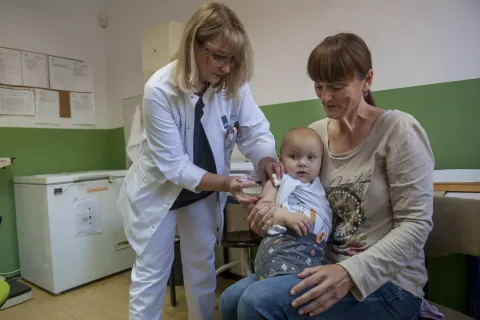
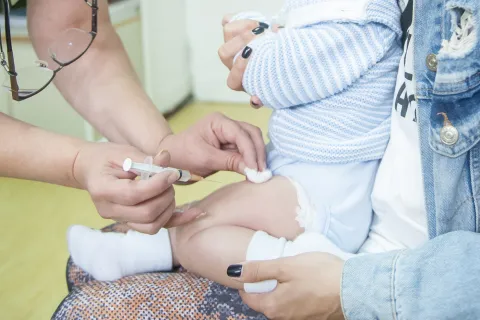
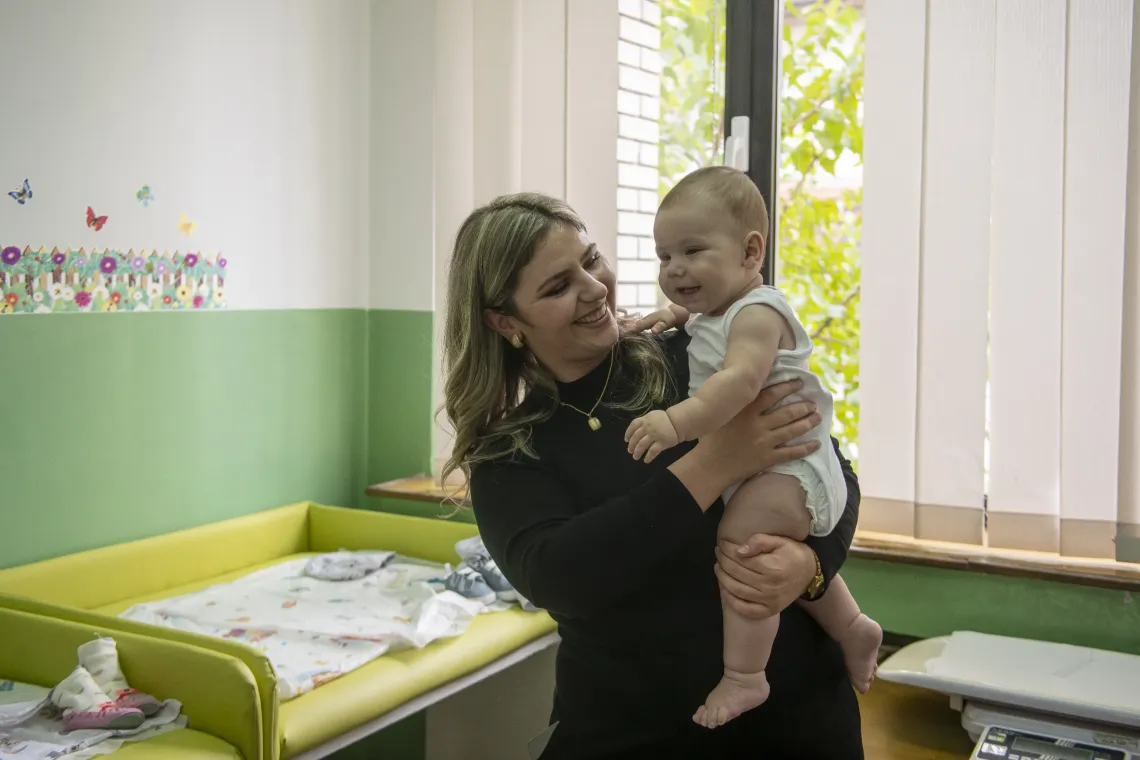
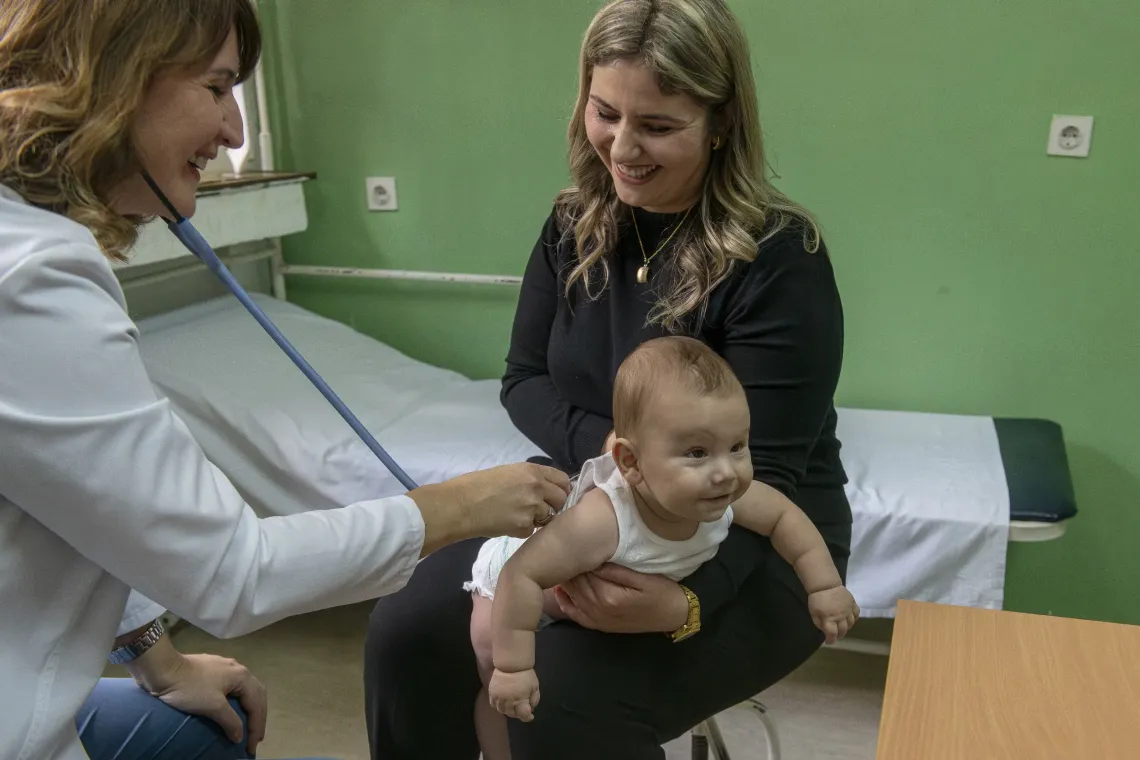
Novi Pazar, October 2025 – The hallway of the Novi Pazar Health Centre is filled with quiet conversations and the rustle of paper files. Amina Mentović holds her eight-month-old son Amin in her arms. In her bag is his health booklet; in her thoughts, questions for the paediatrician.
“I believe that talking to the paediatrician is very important in these situations. I trust our paediatrician. Because why would anyone encourage you to vaccinate a child if it wasn’t good for the child? It’s mostly because of that trust that I decided my child will always receive vaccines on time,”Amina says, as her baby curiously looks around the room.
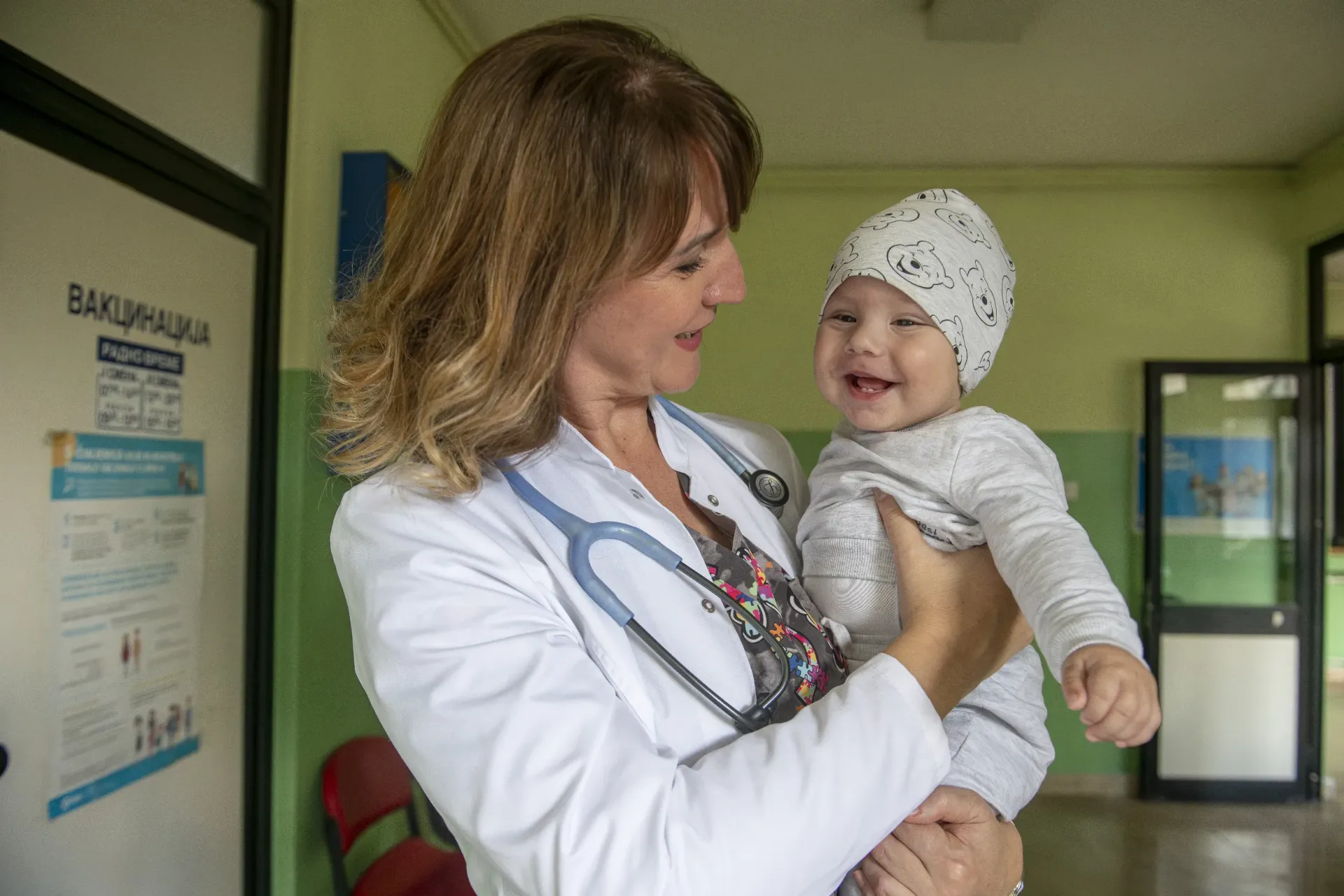
Novi Pazar knows what it looks like when forgotten diseases return, and it understands how important dialogue and trust are. Over the past decade, the city has faced two measles outbreaks. Children became ill, and there were serious complications. That is why every visit to the counselling service is an opportunity to address concerns and make calm, informed decisions. In the clinic of Dr Dženeta Bogućanin, Amina receives patient and clear answers.
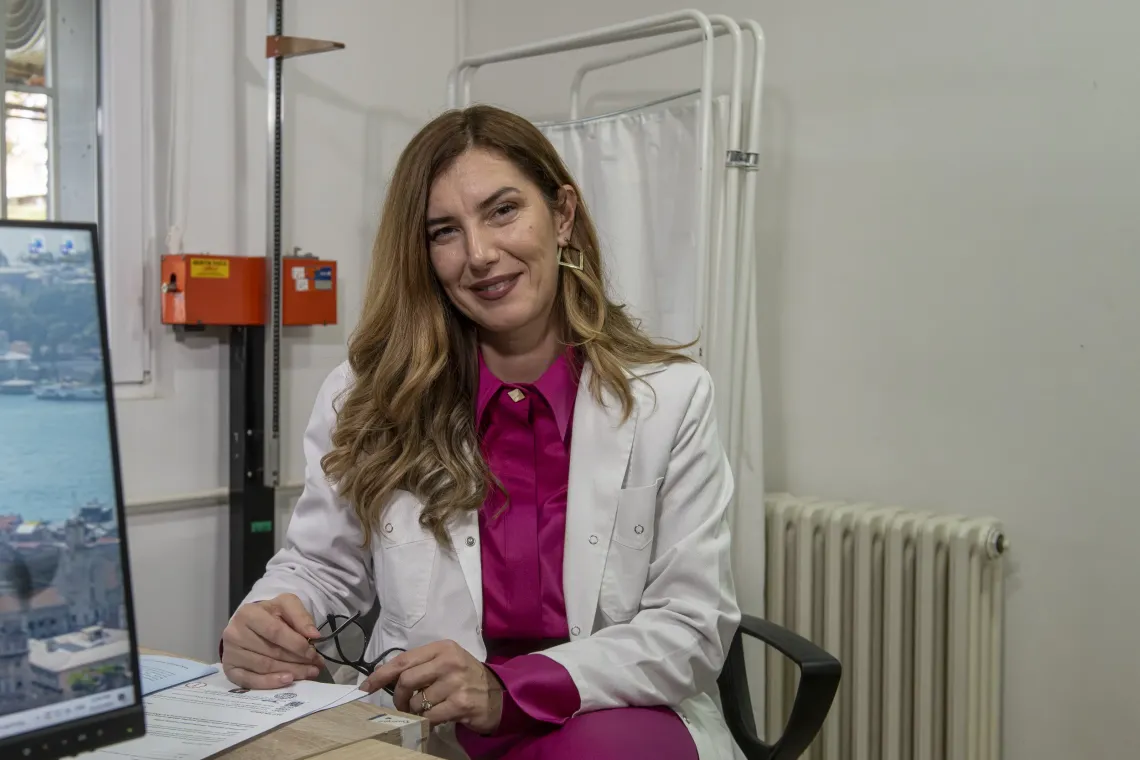
“In paediatrics, trust is the foundation of everything,” says Dr Bogućanin. “Parents should feel free to ask questions and resolve their doubts. Every examination is important, especially those related to immunisation. Our message must be clear. Vaccines are safe, and there is no need to worry. We are here to remove any doubt or fear.”
Alongside warmth and reassurance, there is also a precise, evidence-based message. Vaccines do not cause developmental difficulties. Vaccines save five lives every minute. The MMR vaccine protects against measles, mumps and rubella. Dr Bogućanin recalls that during previous outbreaks, complications such as pneumonia, ear infections and even encephalitis were recorded. “That’s why I always emphasise that timely MMR vaccination is essential. Parents should not wait until a child starts attending childcare, when exposure to viruses is higher. Vaccination needs to happen on time.”
In a world saturated with information, clarity is critical. “In the flood of information available to everyone, online, on television and especially on social media, incorrect messages often circulate,” says Dr Bogućanin. “People read, listen and pass things on, and we have encountered claims that vaccines are harmful to children. That is why we had to focus on educating the community. We even organised a programme on local television and invited a representative of the Islamic community to join me as a guest. Together, we addressed all concerns about immunisation. After that programme, vaccination coverage increased. Parents who had been hesitant contacted us, came in and said they now understood the situation and wanted to vaccinate their child.”
Such steps, patient dialogue, mutual respect and cooperation with trusted community leaders help build bridges of trust.
Behind these individual encounters is a broader story of a community that chose to stand with its youngest members. In 2024, at the initiative of the Ministry of Health and the Institute of Public Health of Serbia “Dr Milan Jovanović Batut”, a programme to strengthen the implementation of routine childhood immunisation was launched in Novi Pazar, with support from UNICEF. The programme is led locally by the Novi Pazar Institute of Public Health, in close cooperation with health centres in Novi Pazar and Tutin, the General Hospital, the “Mladost” preschool institution, local government, religious communities, civil society organisations and the media.”
The results are visible. “Over a 12-month period, MMR1 coverage in the second year of life increased by more than 25 per cent. We are very proud of that,” says Dr Selma Bihorac, Head of the Hygiene Centre at the Novi Pazar Institute of Public Health and Programme Coordinator. “This was achieved through partnerships and very concrete internal changes, including eight organisational improvements in health centres, the introduction of digital tools to easily generate lists of unvaccinated children, regular monthly reviews of vaccination records, and reminder letters sent to families.”
A key component of the programme is strengthening health workers’ skills for conversations with parents who may be hesitant. “Sixty-four health workers completed training in interpersonal communication,” Dr Bihorac adds. “Three months after the training, paediatricians reported successful counselling with 68 per cent of mothers and 52.5 per cent of fathers. These are family conversations that lead to positive change.” In addition, clear and practical procedures are being introduced to track missed vaccinations and ensure that every visit to a paediatrician becomes an opportunity for vaccination, without additional barriers.
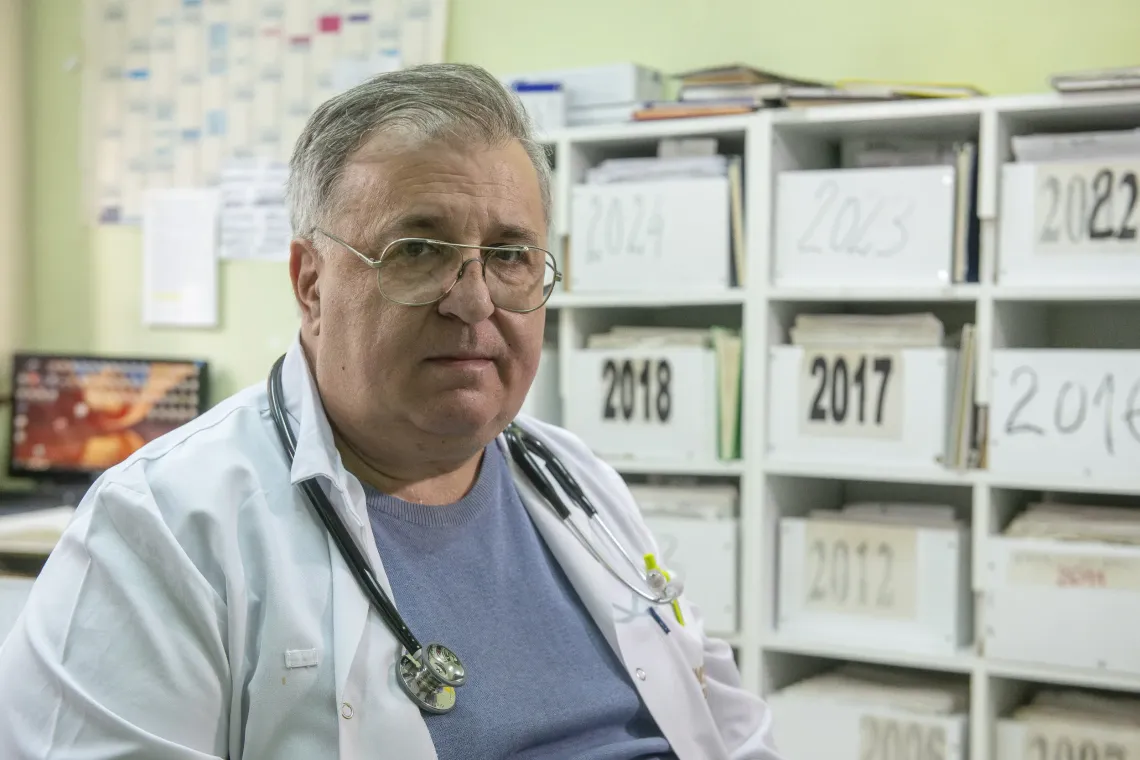
“The internet can plant doubt,” says Dr Rajko Popović, a paediatrician with decades of experience. “That’s why we sit down and talk. Parents share their concerns, and we respond calmly and professionally. The MMR vaccine has been used for decades and is well studied. I always explain that even if a child becomes ill, vaccination means milder symptoms and a much lower risk of complications. When trust exists, decisions follow naturally.”
The programme places special focus on the most vulnerable families, those who live far from health services, in large multigenerational households or who find it harder to attend regular check-ups. Additional community-based activities are planned through preschools, schools, religious communities and local media, to ensure that every child is reached by routine immunisation. The long-term goal is clear and achievable: 95 per cent MMR coverage, the level required to ensure herd immunity and stop the transmission of dangerous diseases.
As the consultation comes to an end, Amina receives final guidance and confirmation of the next appointment. “What matters most to me is that I can ask everything and get a clear answer,” she says.
When Amina and little Amin leave the health centre, daily life continues, but with a greater sense of security. Behind them stands a team committed to building the future together, systematically, patiently and through partnership. In Novi Pazar, that means calmer days for parents and better protection for children.