Girls’ health and education: Indivisible rights, smart co-investments
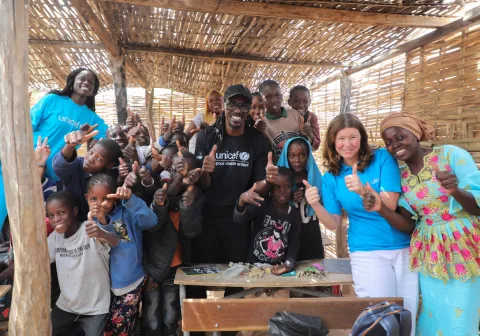
Young Activist Adama Diallo speaks about her lived experience with menstrual health and hygiene, her fight against FGM and child marriage in Senegal

- Français
- English
NEW YORK/DAKAR, 17 September 2022 - Girls face multiple gender-specific obstacles to the attainment of their basic rights and entitlements to education, physical and mental health, safety, nutrition, social connection and citizenship. COVID-19 and its attendant impacts have exacerbated the barriers faced by girls, by consuming their time for care work, plunging families into poverty, and depriving girls of educational opportunities particularly at the upper primary and secondary levels. At the societal level, many countries are reeling from the impacts of multiple crises and struggling to meet the basic needs of their populations, losing potential for equitable growth in the future due to under investments in young people.
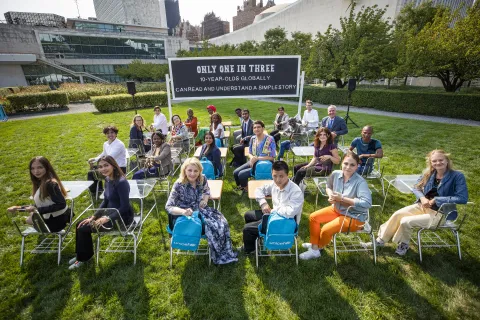
At the Transforming Education Summit Solutions Day, Adama Diallo, young activist from Senegal, participated to the session jointly organized by UNFPA and UNICEF entitled “Girls’ health and education: Indivisible rights, smart co-investments”. The meeting has seen the participation of Yoka Brandt, the Permanent Representative of the Kingdom of the Netherlands to the United Nations, Representatives from the Governments of Niger and Bangladesh and participants from UNFPA and UNICEF.

“Girls matter and their choices matter. For girls all over the world, becoming pregnant not only causes serious health risk, it can also means an end to their education and their professional career, limiting their future opportunities and their ability to contribute to society. The time is now and I don’t think we can afford to wait. Your choices are yours and yours alone. All of this can be done successfully if we give young people the opportunity in a meaningful way in our decision making. That’s why it is so great that we also have Adama here,” said Yoka Brandt, the Permanent Representative of the Kingdom of the Netherlands to the United Nations.
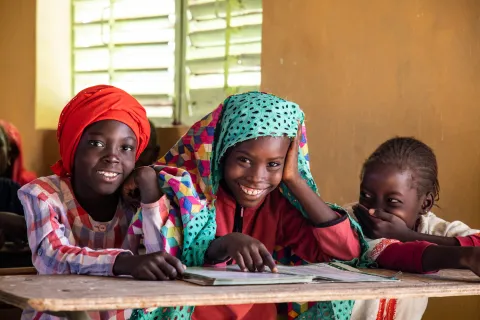
In her intervention, Adama came up with the story of a 12 years-old girl she met recently in Senegal. “I had the opportunity to meet Mariama, a 12 years-old adolescent girl from the region of Kolda. She told me menstruation is a source of stress, shame, embarrassment, confusion and fear for girls in some villages. Many girls do not attend school during their monthly cycle. For many girls, getting their period means putting their lives on hold. In some places, menstruation is associated with stigma and girls feel embarrassed, often excluding themselves from school and other social activities during their periods. We need to support girls to overcome the barriers that prohibit them from managing menstruation with dignity.”

“Adama, you said it so well. You shared the story of one girl but this is the story of our future as a humanity. You are a real champion and a model for all girls and boys in Senegal and today for the whole world. Thank you for your courage and your work.” said Kelly Ann Naylor, UNICEF Water, Sanitation, Hygiene (WASH) & Climate, Environment, Energy, and Disaster Risk Reduction (CEED) Director.
The session has been an opportunity for participants to feature promising innovative solutions on girls’ health and education; learn from Member States and share experiences from UNFPA, UNICEF and civil society on gender transformative programing and the realization of girls’ health and education; and call on other Member States, implementing partners, civil society and the private sector to further invest time and resources on girls’ health and education.

The session also underscored the mutual returns to making gender-transformative investments in the education and health of adolescent girls so that they can make their own choices regarding school, work, sex, childbearing and marriage. It highlighted examples of a girl-specific lens being brought to education - through interventions such as skills for girls both in and out of school, menstrual health management, and meaningful participation - with the aim of redistributing power and resources for girls. It has also highlighted how critical health interventions - such as access to contraceptive services and gender-based violence services - can improve reproductive transitions and have positive spillover effects on girls’ school enrolment and attainment.
In Senegal, UNICEF acknowledges the hard-fought gains for women and girls and the remarkable achievements of women and girls, however the fight for gender equality is far from over. To help the Government to accelerate its efforts, UNICEF continued to promote gender equality across its programme interventions in the areas of Child Survival and Development, Education, Child Protection, Social and Behaviour Change, and Advocacy.