Papua New Guinea Launches the New Civil and Identity Registration Act
New law aims to boost birth registration and secure legal identity and essential services for all citizens

Papua New Guinea has taken a critical step toward ensuring every citizen is officially recognised and able to access essential services, with the launch of the Civil and Identity Registration Act (CIR Act 2024) during a ceremony in Port Moresby on Tuesday.
The new law, passed by Parliament in December 2024, replaces outdated legislation dating back to 1963 and establishes a modern, inclusive framework to strengthen civil registration services across the country. The CIR Act 2024 aims to make registration services more accessible, efficient, and secure, with a focus on reaching remote communities. The government has committed to the 50 by 50 target — ensuring 50% of children have their births registered in this 50th Jubilee year.
UNICEF Papua New Guinea Chief of Child Protection Paula Vargas said the transformative law is designed to improve access to birth registration and ensure that all citizens — starting with every child — are counted, protected and granted access to essential services through legal identity documents such as birth certificates and national identification cards.
Ms Vargas pointed out Papua New Guinea has the lowest birth and death registration levels in the Asia-Pacific region and is among the lowest in the world.
“Only 13% of children are registered, and of those registered, approximately only 7% have birth certificates,” Ms Vargas said.
“This significantly hinders children’s ability to access essential services and legal protections.”
Echoing Ms Vargas’ remarks, the Registrar General of the Papua New Guinea Civil and Identity Registry (PNGCIR), Salome Bogosia-Keari, said people who are unregistered are excluded from education, healthcare, and social benefit programs.
“The act ensures that every child’s birth must be registered as a basic right — representing a commitment to building a Papua New Guinea where every citizen is visible, empowered and included in our national development,” Ms Bogosia-Keari said.
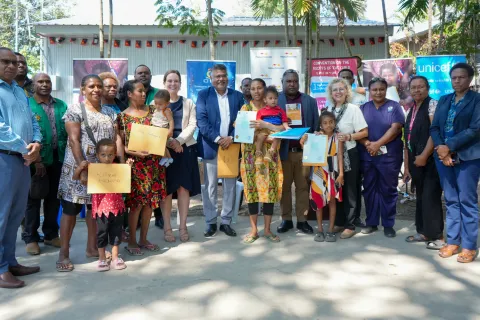
Tuesday’s launch event, attended by Prime Minister James Marape, Minister for Administrative Services Richard Maser, UNICEF Papua New Guinea Representative Dr Veera Mendonca, and other dignitaries, marked the start of practical efforts to roll out the new civil registration system established under the Act.
Dr Mendonca said the child rights organisation is pleased to support this important initiative and remains committed to working with the Government and partners to help ensure that every child in Papua New Guinea can obtain a legal identity.
“Ten years in the making, this act is a great leap forward to ensuring every child has the right to a legal identity,” Dr Mendonca said. “We are proud to stand with the Government of Papua New Guinea to help build a future where no child is left behind.”
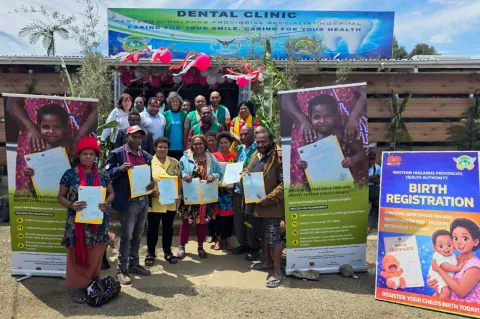
Ms Vargas outlined the current efforts under way to support the implementation of the Act, including strengthening birth registration services, training civil registry officers, rolling out mobile birth registration kits to reach remote communities, and supporting the digitalisation of birth certificates to improve accessibility and security.
“These measures will help more children access the official documentation required for essential services such as protection, health care and education,” Ms Vargas said.