Eliminating HIV among children in Papua New Guinea
Ten per cent of an estimated 25,000 people living with HIV in Papua New Guinea are children.
Ten per cent of an estimated 25,000 people living with HIV in Papua New Guinea are children. The majority of children acquire the infection from their mothers during pregnancy, delivery or after delivery through breast feeding.
Every year, about 1,000 HIV pregnant women need services to avert the transmission of HIV to their infants. If no effective intervention is provided, over 300 children will be infected annually through vertical transmission. HIV infected children face a high risk of mortality and morbidity and about 60 per cent will die before their second birthday.
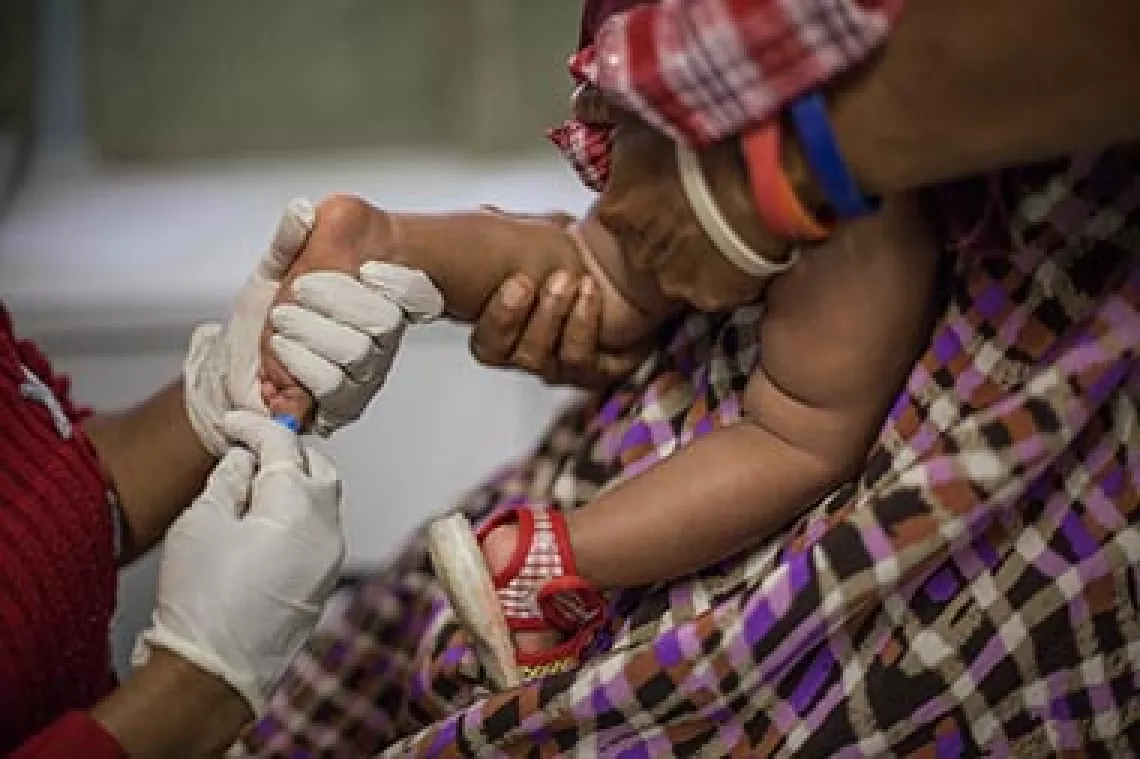
Every year, about 1,000 HIV pregnant women need services to avert the transmission of HIV to their infants
If no effective intervention is provided, over 300 children will be infected annually through vertical transmission. HIV infected children face a high risk of mortality and morbidity and about 60 per cent will die before their second birthday.
Papua New Guinea started implementing a Prevention of Parent To Child Transmission (PPTCT) of HIV programme in 2004 with support from UNICEF. Progressively some health facilities are providing PPTCT and while stakeholder commitment and support has improved, access to services is still very low and the quality of PPTCT services offered is affected by system constraints. By December 2012, less than five per cent of all health facilities were providing antenatal care and integrated PPTCT; only 30 per cent of pregnant women were tested and given HIV results, while 40 per cent of HIV positive mothers were receiving antiretroviral drugs for PPTCT.
Although about 66 per cent of pregnant women antenatal clinics at least once, a fewer number return to the health facility to receive a comprehensive package of service. According to the 2006 PNG Demographic and Health Survey, only 50 per cent make the recommended four visits and some 52 per cent deliver in health facilities.