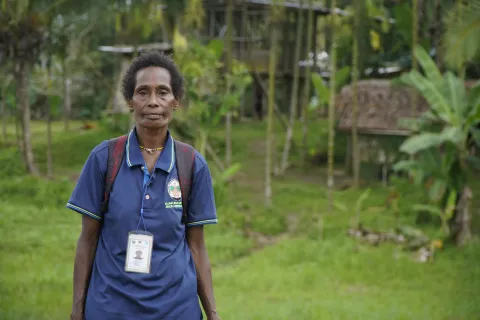
Bridging the gap between communities and health services
One Village Health Assistant’s Mission to Reach Every Child

Until recently, Shaun Penias (pictured above) spent one Sunday each month walking for three hours along narrow bush tracks, carrying a height board, weighing scale and nutrition supplies on his back to reach Vugum, an isolated community in East New Britain’s Gazelle District.
There are no roads to Vugum. Fewer than 20 children under five live there, but that does not make Shaun’s journey any less important. His mission is to reach every child under five in his ward with basic nutrition services and essential health information.
“I have a heart for these children. I want them to be healthy, develop well, succeed in school and become responsible adults who can contribute positively to our communities."
After navigating rough terrain and crossing rivers, Shaun arrives in Vugum in time for church. His work begins when the service ends.
As families leave the service, he shares advice on nutrition, immunisation and hygiene before weighing, measuring and screening children for malnutrition. He does not think about the three-hour return journey until he has seen the last child. For many families, this is their only opportunity to access these services.
Shaun is one of 230 Village Health Assistants trained by UNICEF under the Child Nutrition and Social Protection (CNSP) Project implemented by the National Department of Health to support the delivery of basic nutrition services at community level. Since joining the programme in 2021, Shaun has helped bridge the gap between communities and the health system.
Village Health Assistants are a vital link between communities and health services. Sometimes, they are the first people families turn to when they need help.
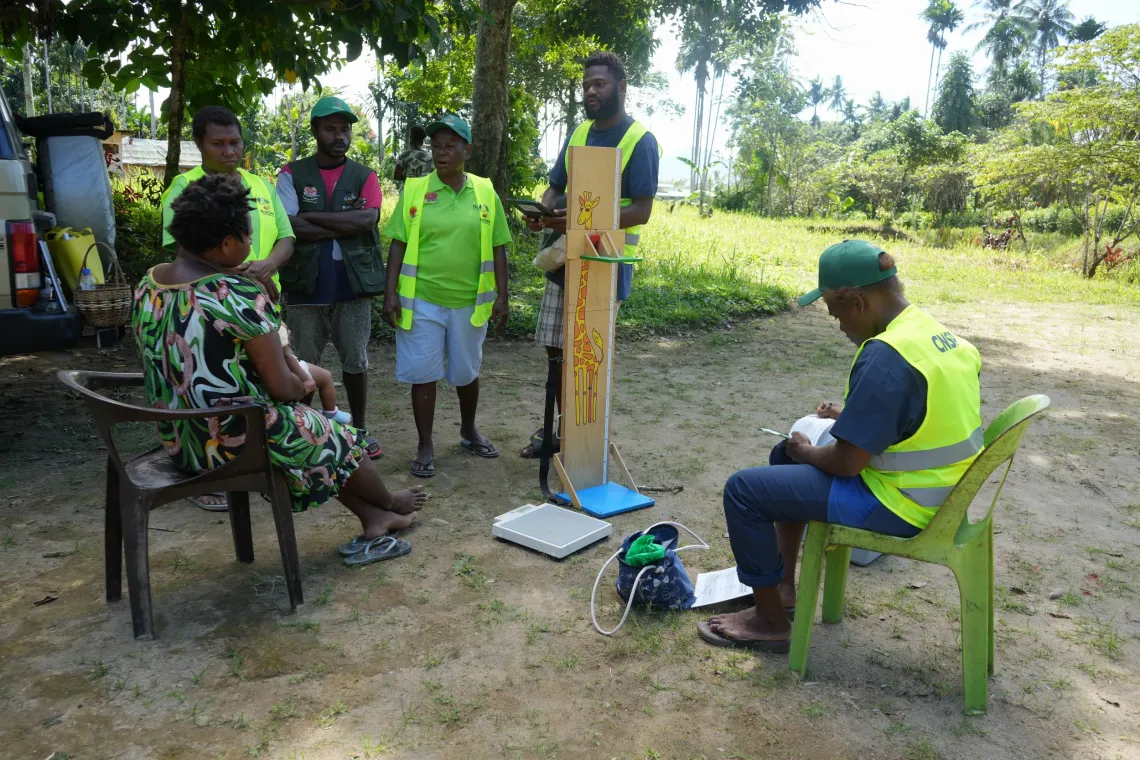
"Our role is to reinforce healthy practices and help families give their children the best possible care. We share key messages and encourage families to improve their lives. The bigger picture is to reduce malnutrition and stunting in our communities.”
Today, Shaun is helping to lead a household monitoring survey under the Child Nutrition and Social Protection Project. Funded by the Government of Papua New Guinea and supported by the Australian Government and the World Bank, the project aims to improve nutrition and well-being among vulnerable families, especially pregnant women and children under five.
On the first day of the 10-day survey, Shaun leads his team on foot into a remote hamlet in Avungi Ward. Their target is to visit 15 households each day. At the first household, while Village Health Assistants collect information and record responses on a tablet, a community health worker vaccinates a child who had missed a routine immunisation.
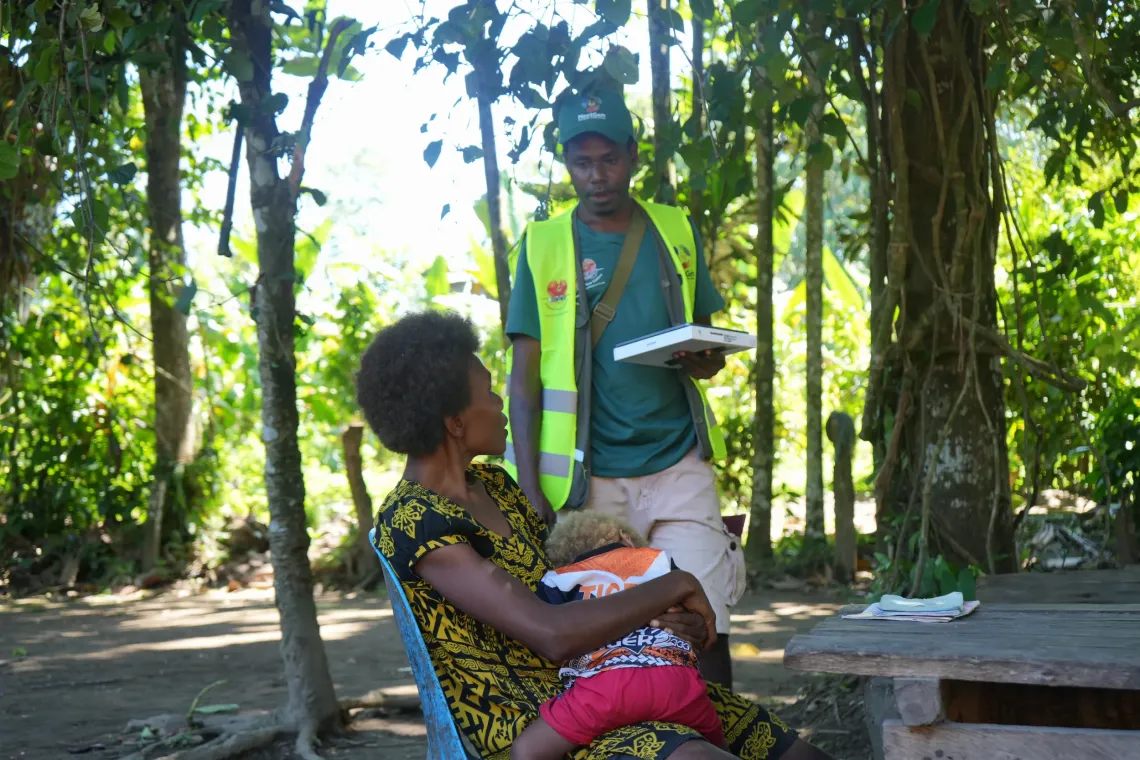
The survey is gathering information on nutrition, immunisation, and water, sanitation and hygiene practices. This will help decision makers better understand community needs and strengthen programmes that support the health and well-being of children.
As a team leader, Shaun works alongside 17 other Village Health Assistants serving communities across Avungi Ward, within the Gaulim Health Centre catchment area in the Inland Baining area of Gazelle District.
Up to 20 days each month, they travel across the ward to monitor and check on 103 children under 5 living in scattered hamlets, educate families about child health and nutrition and raise awareness of malnutrition.
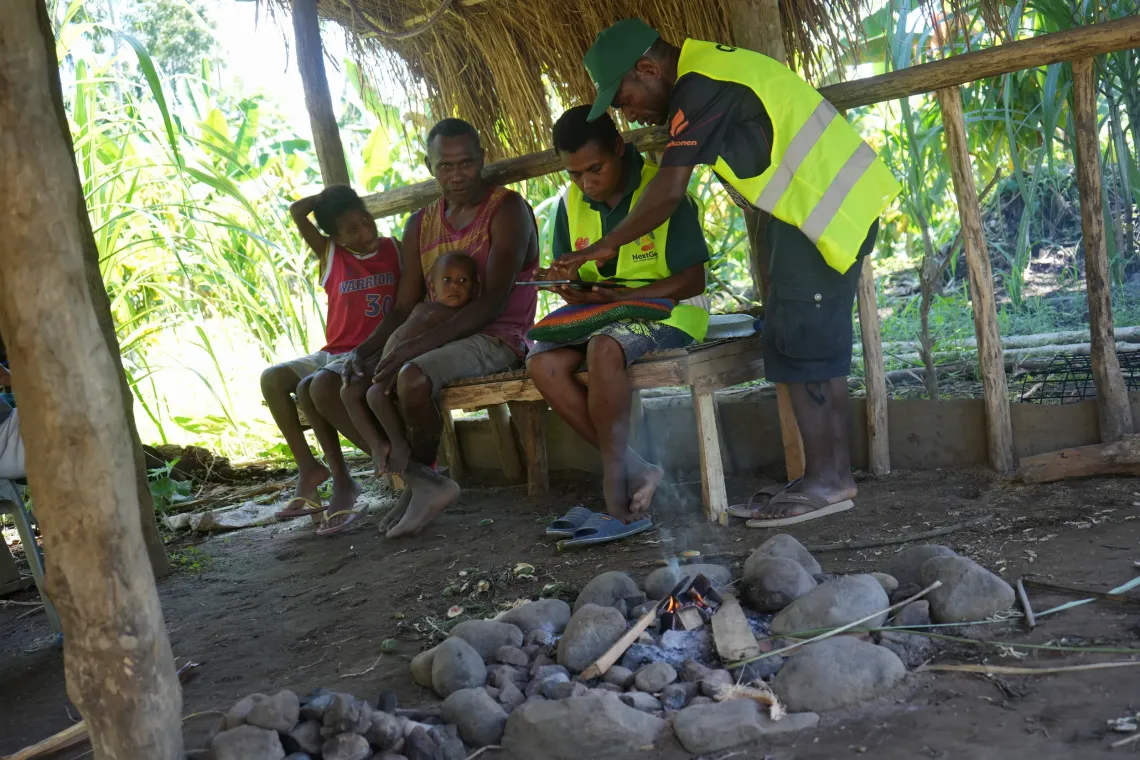
The Village Health Assistants are trained to deliver basic nutrition services and identify children at risk of malnutrition. Carrying height boards and weighing scales as they travel from house to house on foot, they monitor children’s growth and nutritional status and support pregnant women.
“We monitor children’s growth by weighing and measuring them to make sure they are growing well. If we identify a malnourished child, we refer them to the health clinic for further treatment. For children who are underweight, we provide micronutrient powders to complement their meals and monitor them regularly."
As the team walks towards the next hamlet, Shaun reflects on the progress he has seen since joining the programme.
“When we first started this work, we identified many malnourished children and referred them for further treatment. The parents did not even know their child was sick,” he says.
“Now we see fewer cases. Most parents listen to us and improve their care practices. Some still do not pay attention, and it frustrates us, but we don't give up.”
As Shaun sets off for the next hamlet, he knows his work is far from over. In the coming days, he will cross more rivers, climb steep slopes and follow rugged tracks to reach families living across the scattered communities.
His commitment has already carried him into some of the most remote parts of East New Britain. He will continue walking, one community at a time, to help ensure every child has the opportunity to grow healthy and thrive.