Working hand in hand to strengthen nutrition for every child
How the Philippines is helping build better food systems and better futures through stronger local action

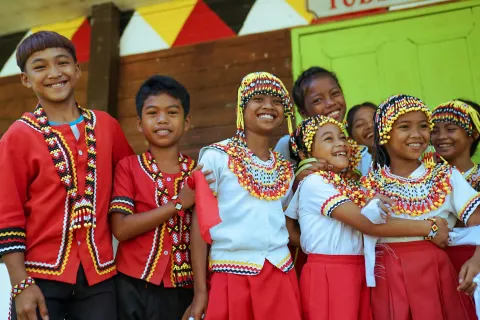
Every child deserves the right to better foods and a better future. Yet almost half of children under five in the Philippines live in food poverty or eat from fewer than five food groups each day. An estimated 2.6 million children are stunted while 600,000 are wasted.
Children’s diets today also show the weaknesses of the food system. Many households rely on a narrow set of staples, while fruits, vegetables, and nutrient-rich foods are often unaffordable or absent in local markets. More frequent typhoons push prices higher still and make diverse meals even harder to provide. This is the reality of child food poverty, and it shows why local governments need stronger capacity to link nutrition response across agriculture and food systems, health, education, and social services.
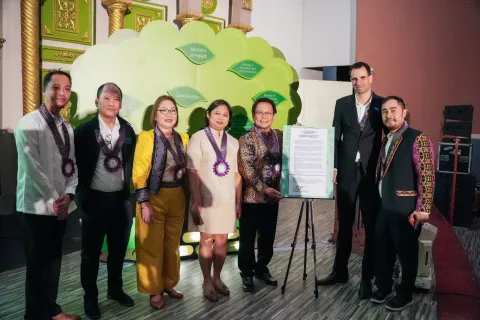
UNICEF, through the Philippine Multisectoral Nutrition Project (PMNP), provides technical assistance to turn national nutrition policy into local action. Municipal workshops serve as platforms for agriculture and food systems, health, education, and social welfare sectors to coordinate action and use data for setting clear priorities. With UNICEF’s technical assistance, these local plans are evidence-based, responsive to what communities need, and built into municipal budgets so they can be sustained over time.

On the ground, this means frontline workers can act earlier and more consistently. Barangay nutrition scholars and health workers are trained to monitor children’s growth, counsel parents on proper feeding, and refer cases of malnutrition without delay. Technical support through the PMNP also gives frontline workers the skills and standardized tools to monitor child nutrition, compare data across municipalities, and take timely action.
To strengthen local action, the PMNP offers performance-based grants that municipalities can access after reaching milestones in their nutrition plans. These grants help cover common gaps that prevent services from reaching families, including such as transportation to remote villages, growth charts, or allowances for community workers. At the same time, the grants also connect local progress to measurable results and create clear lines of accountability to guarantee that resources reach the children who need them most.


For Fredric Carl Te, project manager for PMNP in Central Visayas, this approach has changed how municipalities view nutrition. “Nutrition is not the work of one sector alone,” he says. “With this project, health, agriculture, and social welfare are working together. That makes plans sustainable and ensures that the First 1,000 Days remain a priority for every community.”
For children, the impact is seen in a system that catches undernutrition before it worsens, supports families with practical guidance on feeding, and gives local governments the means to sustain these services over time.
On World Food Day, with the call for “Hand in Hand for Better Foods and a Better Future,” Central Visayas shows how government leadership and technical support can translate into stronger nutrition systems. UNICEF remains committed to working with partners and calls for broader investment so that every child grows up with the nutritious food and care they need to survive and thrive.