Providing youth a second chance to complete their education amid COVID-19
A case study on education in emergencies in the Philippines

In the Philippines, the Government closed schools on 9 March 2020 one month before the planned end of term, prematurely ending the school year for almost 25 million students, and postponed the usual start of the 2020-2021 academic year from June to the end of August due to concerns about COVID-19. As cases are still increasing, coursework will remain by distance only. At the end of the recently concluded campaign for the upcoming school year, enrolment stands at 77 per cent of the previous academic year, highlighting the serious negative impact of the pandemic on students.
COVID-19 is also affecting the Alternative Learning System (ALS), which is the Government programme to respond to the needs of those who are unable to continue in formal education through alternative, flexible learning pathways. This programme typically combines self-paced study with in-person instruction by teachers in Community Learning Centres (CLC). Currently, it provides over 800,000 learners annually with a vital second chance and alternative pathway to complete their basic education. In the context of COVID-19, UNICEF is supporting learning continuity not only for formal education but also the non-formal ALS programme, which focuses on reaching the most vulnerable and marginalized children and youth.
Key features
- Cross-fertilising lessons on blended learning – The ALS programme relied on blended learning long before the COVID-19 pandemic, offering important lessons for the formal education system expected to open back up gradually using a blended approach. These include the use of individual learning agreements, pre- and post-tests, and self-directed learning modules, complemented by radio, TV and internet resources.
- Offering flexible learning – The flexibility of the ALS programme allows learners to study where and when they want to, enabling them to balance their learning with other commitments.
- Providing individual support – At the beginning of the programme, teachers establish individual learning plans for every student, which provide a personalised road map for both the learner and the teacher. Teachers can use the plans to provide ongoing monitoring and individual support to help learners achieve their learning goals.
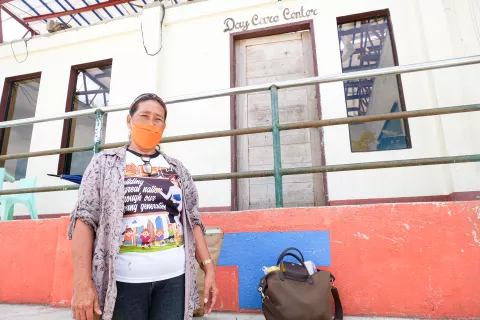
- Enabling the safe operations of Community Learning Centers – Learners visit CLCs to review learning progress with their teacher and collect modules and assignments. To ensure their safe operations, UNICEF is providing supplies called Community Learning Centers in a Box, modelled on UNICEF’s School in a Box, which contain learning materials as well as soap, cleaning supplies, menstrual hygiene items, and COVID-19 awareness materials, such as handwashing posters. Teachers in the Centers also manage risk by using a staggered schedule, wearing face masks and regularly disinfecting classrooms and offices.
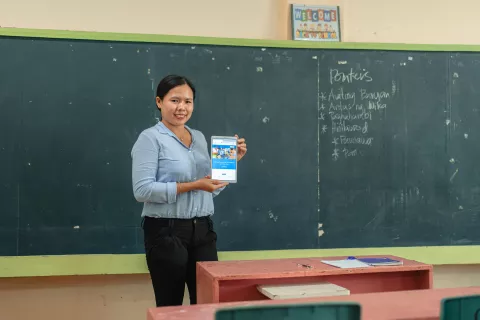
- Leveraging relationships and programmes – UNICEF leveraged its existing relationships with the Department of Education to provide learners and teachers with access to learning materials and COVID-19-related resources through the newly established ICT4ALS platform early in the COVID-19 response. UNICEF is currently in the process of expanding the platform with additional 60 interactive multimedia learning modules. The platform has currently over 26,000 active users.
- Prioritising low-tech solutions – The programme uses low-tech learning materials, such as printed modules and worksheets and educational resources broadcast on TV and radio, in addition to providing online access through the ICT4ALS platform. This ensures that everyone has access, even learners in rural areas or vulnerable households who may lack internet connectivity or devices. Similarly, teachers provide feedback and support in a variety of ways, for example, through text messages and messages on social media platforms.
Emergent lessons learned
- Continuity of learning – The well-established blended learning programme enabled children and youth to continue their education despite the pandemic and continued school closures across the country.
- Providing a second chance – Indications of COVID-19 resulting in lower enrolments in formal education for the upcoming school year underscore the importance of offering non-formal education options and second-chance education programmes such as this one to provide learners an alternative pathway to keep learning. UNICEF is currently in the process of finalizing a communication campaign aimed at ensuring that young people return and continue learning in formal and/or non-formal education programmes.
- Leveraging local partnerships and investments – The ALS programme relies on local communities, youth associations, government, and businesses to reach out to out-of-school children and youth. Support can include enrolment campaigns, programme subsidies and scholarships, the provision of learning spaces and/or teaching and learning materials, or the active participation in the programme and courses, for example, as resource persons on topics including financial literacy, business planning, entrepreneurship, etc.
- Investing in teachers – Teachers are central to the success of the programme. To meet their needs in the context of COVID-19, UNICEF collaborated with the Department of Education to provide teachers with COVID-19-related awareness and teaching materials though the ICT4ALS platform and in co-developing teacher training specifically for the programme, as part of the Basic Education Learning Continuity Plan.
Click here to download a copy of this case study.