

Displaced from home
How to support your children if you are forced to leave your home.
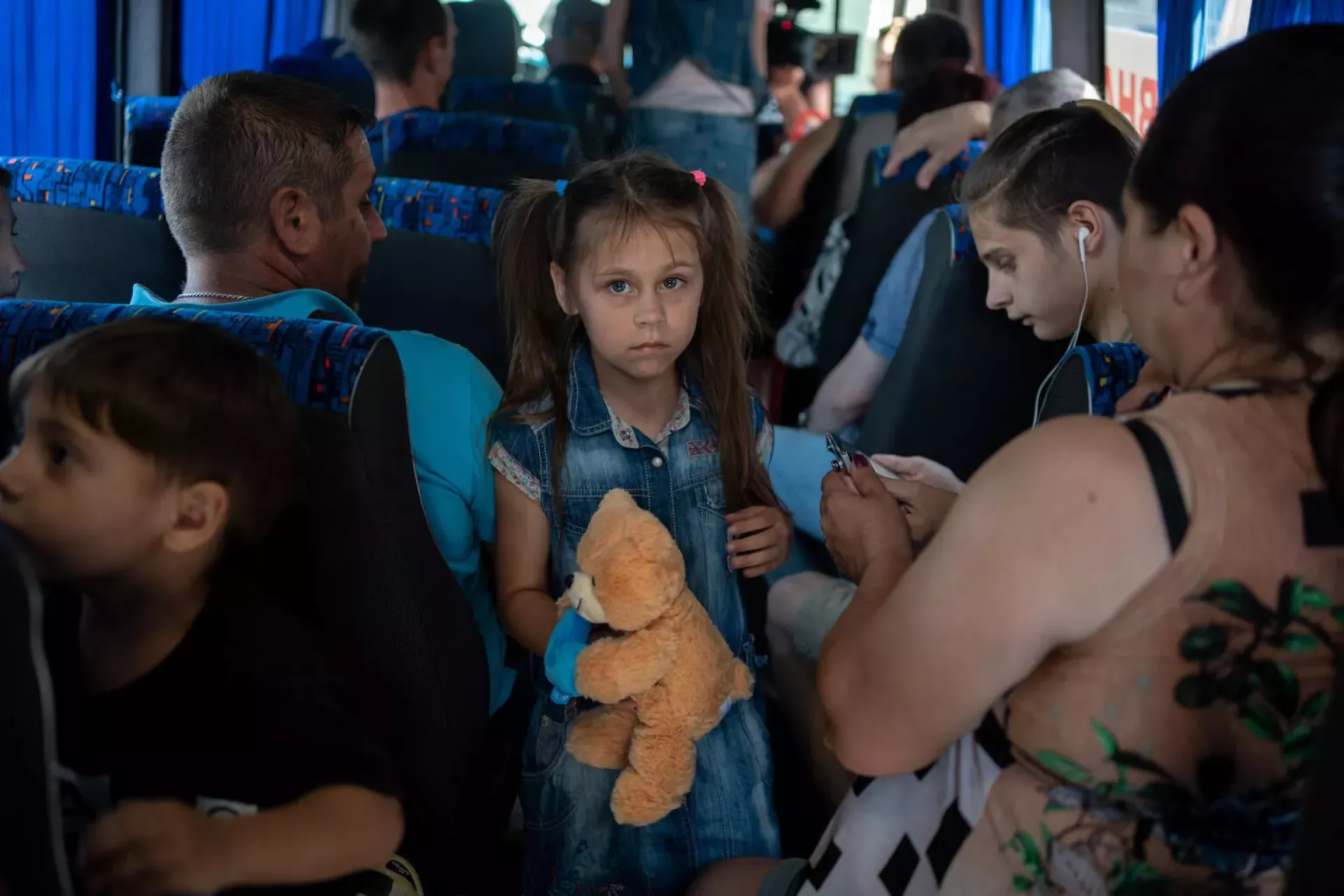
Whatever the reason, having to leave your home is a difficult and scary time for any family. To help you navigate this situation, we’ve collected expert tips on ways to support your child and stay safe.

Preparing your child to leave
It is important for children to understand what is happening and to know what to expect. Explain to your child in an age-appropriate way that you will leave your home and why. As much as possible, tell them what you expect to happen next.
If a family member has to stay back home, help your child to understand why and explain that you will all be together again as soon as possible.
Try to give truthful information about what is happening, but keep it at a level that your child can understand and cope with. Try not to overload them with things that you are worried about, such as finances, loss of property or concern about other family members. Speak to another adult if it will help to share your feelings about these things.
Because of the situation, you may not be able to make promises for the future, but you can assure your child that you will do everything you can to keep them safe.
Because of the situation, you may not be able to make promises for the future, but you can assure your child that you will do everything you can to keep them safe.
Try explaining things in steps. For example: "First, we are going to put our things in backpacks and then we will move to a safer place." Knowing what is going to happen can help your child feel safer, give them a sense of control and reduce feelings of uncertainty and confusion.
Remember that it is OK to not have an answer to every question. Depending on your child’s age, you could say: “That’s a good question. I don't have the answer right now, but I will let you know when I do,” or “Good question! Let’s figure that out together.”
Reassuring your child
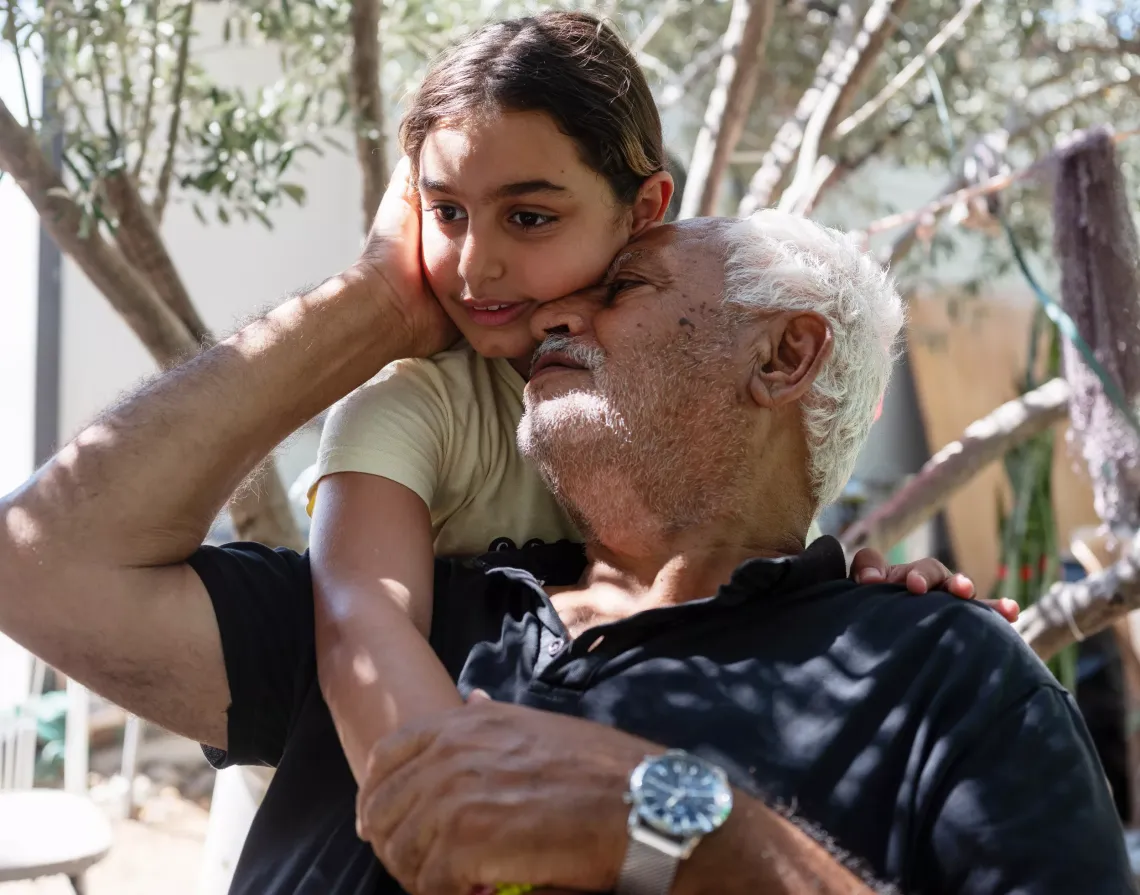
Reassure your child that there are many people around the world working hard to help. If you are fleeing conflict or violence, it may be helpful to explain that even though some people do bad things, most people around the world are kind, peaceful people who are trying to make this violence stop. Share positive experiences and stories that you hear with your child, such as people providing help and support.
Acknowledge how your child is feeling. For example: "I can see that this is really hard for you," or "it seems like you are feeling worried," or "it sounds like you are feeling angry." Do not tell your child what emotions they 'should' or 'should not' feel. Telling a child "don't be sad" or "don't be angry" or "don't cry" usually does not stop them from feeling this way, but it can make them feel more alone and misunderstood. Help them to understand that it is natural to feel sad and cry.
Telling a child "don't be sad" or "don't be angry" or "don't cry" usually does not stop them from feeling this way, but it can make them feel more alone and misunderstood.
Sometimes children can feel like the bad things that happen are their fault. If this happens, try to reassure them that you are not leaving because of anything they have said or done.
As you end any conversation you have with your child about what’s going on, it’s important to make sure that you are not leaving your child in a state of distress. Try to assess their level of anxiety by watching their body language, considering whether they’re using their usual tone of voice and watching their breathing. Remind them that you care about them and that you’re there to listen and support whenever they’re feeling worried.
You will need to give your child time to understand this information. Young children may react by appearing not to listen. Be patient and wait for their attention. Be prepared for younger children to ask the same questions again and again, both at this moment and over the days and weeks to come.
Reassuring your teenager
Teenagers may have different ways of interpreting this new reality. They may feel stressed and overwhelmed by everything that is happening around them and have difficulty dealing with these feelings, communicating with others and asking for help.
Remind them that it is natural to feel intense emotions (such as fear, anger, grief, sadness, guilt, shame and hopelessness) during a crisis. Help them to understand that emotions can help us in such situations. For example, fear in dangerous situations tells us to run or fight the thing that makes us feel like we are in danger, while sadness helps us to rest up, so that we can mourn for what was lost before we move forward.
Encourage your teenager to recognize and accept the emotions they are experiencing and to take the time to think about how to manage and respond to them.
Things to remember
- Encourage your child to take their favourite toy or belonging with them.
- Ask your child if they would like to take a picture of your home (if intact).
- If possible, bring some of your child’s favourite books that you can read together in your native language (especially if you are going to another country).
- Make backup photocopies and/or digital copies of key documents, such as passports, ID cards and birth certificates (for example on a smartphone, in an email account or in cloud storage like Dropbox or Google Drive). Whenever possible, prepare and store these backup copies before travelling.

On the road
Names and contact details
Teach each child their full name and parents’/caregivers’ full names and phone numbers. Review this information and have children practice by repeating it.
For very young children, prepare an identity tag (such as a label on clothes, necklace or bracelet) with your child’s name and your (or another caregiver’s) contact details.
For children with their own mobile phones, save the phone numbers of a few relatives or trusted friends as “AA_Emergency Contact 1”, “AA_Emergency Contact 2”, etc. If anything happens or your child needs help, these numbers will appear at the top of the contacts list.
Safety and security
Do not allow your children to be taken out of your sight or to another location without you or by someone you do not trust.
Talk with your children about potential risks and encourage them to share any worries with you.
Set the rules with your child. For example: Do not run away, stay close to family and trusted friends.
Stay together during movement. Take extra precautions to keep your children close to you, especially in crowded settings. Hold children’s hands or find a way to connect them to you, such as by using a rope.
Identify a meeting point together and plan what to do in case you get separated. If your child has just gone missing, stay where you are to maximize the chance that your child will find you if they return. Alert others around you that you are looking for your child. If it is clear your child is not nearby, try to reach your family’s agreed meeting point.
Explain to your child how they should behave when stopping at checkpoints (for example, be quiet, do not leave the vehicle).
Once you know the destination you are headed to, show pictures of this new place to your child. It may be less worrying for them once they know what to expect.

Supporting your child’s well-being
As much as possible, allow your children time to rest, play and sleep. Try to maintain everyday routines, such as a bedtime story. Taking time to sit together, tell stories or sing songs at the same time every day (for example, in the morning or before bed) can help establish a predictable routine.
Children react to stressful experiences in different ways, but common reactions include: Becoming unusually active or aggressive, or becoming more shy, quiet and withdrawn. Remember, it is not possible for children to control all of their reactions. Try to take a gentle approach and avoid getting angry or punishing them for these reactions, which may make them more worried and make the situation worse.
It’s important to acknowledge how your child is feeling. Help them to understand that it is natural to feel sad and cry.
> Learn: How to recognize signs of distress in children
Coping with emotional stress
You can help your child cope with emotional stress by talking about it and identifying helpful ways to manage it. For example, if your child is emotionally exhausted you can sing songs together or tell a story that is comforting. If they are angry, they can extend their arms, clench their fists, close their eyes tightly, and then open their palms, shake their hands and open their eyes again.
Try to stay hopeful and positive when speaking with your children. A helpful exercise is to spend some time at the end of each day sharing something you are grateful for, something you found fun and praising them for something they did. You can also ask your child to think of something positive or fun that they experienced during the day.
Give your child a task that they can handle, such as keeping an eye on their backpack or toy, or reminding the family to drink water. Children cope better when they feel they can help others. It makes them feel needed and important.
Praise your child for how they are coping and when they have done something good or helpful, however small it may seem.
Show your child that you care about them – be affectionate, smile, tell them that you love them, give them hugs and hold hands.
Reassure your child that you will do everything you can to keep them safe.
For teenagers
Coping methods may look a little different for teenagers. Some ideas you can suggest include encouraging them to be kind to themselves, to write their feelings down to help them feel less overwhelmed, to keep busy and to try and find ways to help others, or to talk to an adult they trust. You can also support them in using relaxation exercises when they are feeling stress or anxious, which can be done anywhere, anytime.
> Explore: Simple and effective relaxation exercises
Taking care of yourself
Remember to look after yourself as much as possible and to try and rest when you can. Taking care of yourself will help make you stronger and better able to look after your children and the people you care about.
It is important to be patient with yourself. Try to be as kind to yourself as you would be to a friend in the same situation. It may help to recognize that this is a challenging time and that you are not alone in what you are experiencing and feeling. Remember that you have also tackled hardships at other times in your life.
Allow yourself and the people around you to mourn any losses you experience. Support each other and accept help from friends, relatives and helpers that you meet.
Finally, try to keep a hopeful and positive outlook. It can help the children around you to have hope for the future.
> Read: Self-care for parents


